
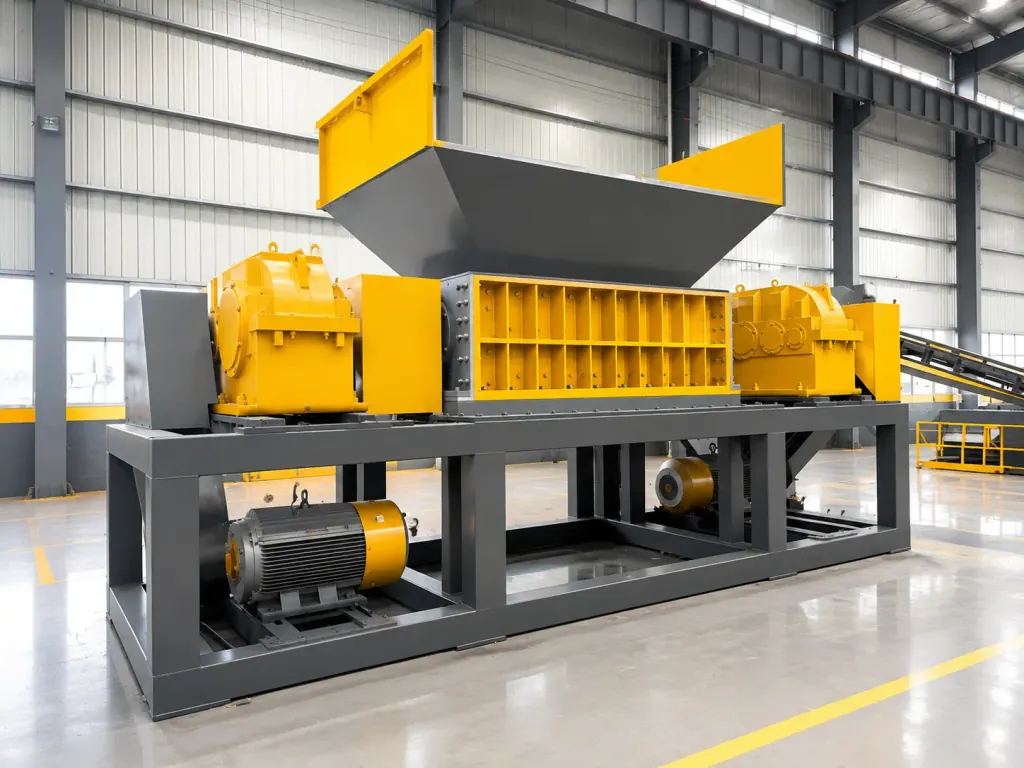
A Double-Shaft Shredder sits at the front end of a Waste Cable Recycling Line. Low-speed, counter-rotating alloy blades on two shafts intermesh to shear coiled heavy wire, armored cables, and loose harnesses, feeding the downstream granulator.
Jams and edge chipping during commissioning usually stem from inaccurate feed load estimates. Sizing the drive against loose bulk volume leaves the knives underpowered once teeth bite into solid copper cores and steel sheaths. When tough metal wire mixes with polymer insulation, excessive shaft speed or insufficient torque causes copper wire to stretch and wrap tightly around the rotor shaft.
Selecting the right unit starts with analyzing material properties, shaft torque, and wear-resistant tool configurations. Cables with high-tensile spring wire or heavy metal armor require thick knife profiles with fewer hooks. This pairing uses high-ratio gearboxes to deliver high shearing forces at low speeds, preventing vibration and friction-induced overheating from excessive rotor speeds.
| Process Module | Cable Condition | Function | Selection and Operating Criteria |
|---|---|---|---|
| Double-Shaft Shredder primary cut unit | Sheathed cables, baled tangled wire | Shearing, ripping, and pre-liberation | Select high-torque gearboxes with low shaft speeds; tighten scraper-to-spacer clearance to stop wrapping |
| Thick-body low-hook alloy knives | Armored cable, heavy metallic wire | Absorbs heavy shocks and cuts hard metals | Increase blade thickness for thicker armor; double-hook designs grab better than multi-hook tools |
| Thin-body multi-hook alloy knives | Multi-strand flexible copper wire, automotive wiring harnesses | High-frequency short-interval cutting | Prevents wire stretching and bypass; reduce blade pitch if output length runs high |
| PLC overload reverse control | Mixed scrap containing unknown tramp metals | Motor overload protection and jam clearing | Reverse rotation initiates instantly on overcurrent; three consecutive reverse attempts trigger safety shutdown for manual clearing |
| Downstream fine liberation system | Coarse-shredded cable segments | Milling to 3-5 mm for copper-plastic separation | Maintains uniform primary sizing to prevent oversized wire from bridging downstream infeed chutes |
1. Feedstock Characteristics and Blade Stress and Anti-Wrapping Demands in Double-Shaft Shredders
Feedstocks commonly include BV single-core wire, RV multi-strand flexible wire, automotive harnesses, and metal-sheathed armored cables. Ductile soft copper wire tends to wind around rotor shafts inside the cutting chamber. Armored cables present hard outer casings that strike blade tips with sharp shock loads on impact.
Anti-wrapping performance depends on knife-to-knife lateral clearances and spacer fit. For automotive harnesses or multi-strand flexible wire, stationary scraper spacers must sit flush against rotating blade faces, sealing axial and radial gaps to keep thin copper strands out of the bearing bulkheads. Wide clearances let soft wire wrap around the rotor body, bogging down the drive and overheating the journals.
Processing heavy armored cable demands combined shearing and crushing forces to split metal outer jackets. The cutting chamber walls require dedicated discharge radii so cut cable pieces drop cleanly out of the cutting zone rather than wedging at the bottom. Material buildup below prevents incoming feed from dropping through.
2. Blade Thickness, Hook Count, and Hard Alloy Wear Configurations
Blade thickness and hook count dictate output length and single-tooth cutting force. Multi-hook blades increase cut frequency with a smaller load-bearing contact area per tooth. Single-hook or double-hook geometries provide deeper draw to pull and shear thick cables.
Tooling must match material hardness and cable diameter. For thick jackets or steel wire armor, select heavy blade bodies with double-hook configurations. Knife tip thickness resists intense shearing loads and prevents chipping. For fine domestic wire, thinner multi-hook blades provide more cuts per revolution, stopping long strands from passing through unsevered.
Operating directly against metals creates heavy abrasions and shock loads. Heat-treated alloy steel must combine high wear resistance with sufficient core toughness. Technicians should verify rotor-to-stator gaps during every shift and hardface or sharpen worn edges to maintain clean cuts.
3. Low-Speed High-Torque Drives and Overload Reverse Protection
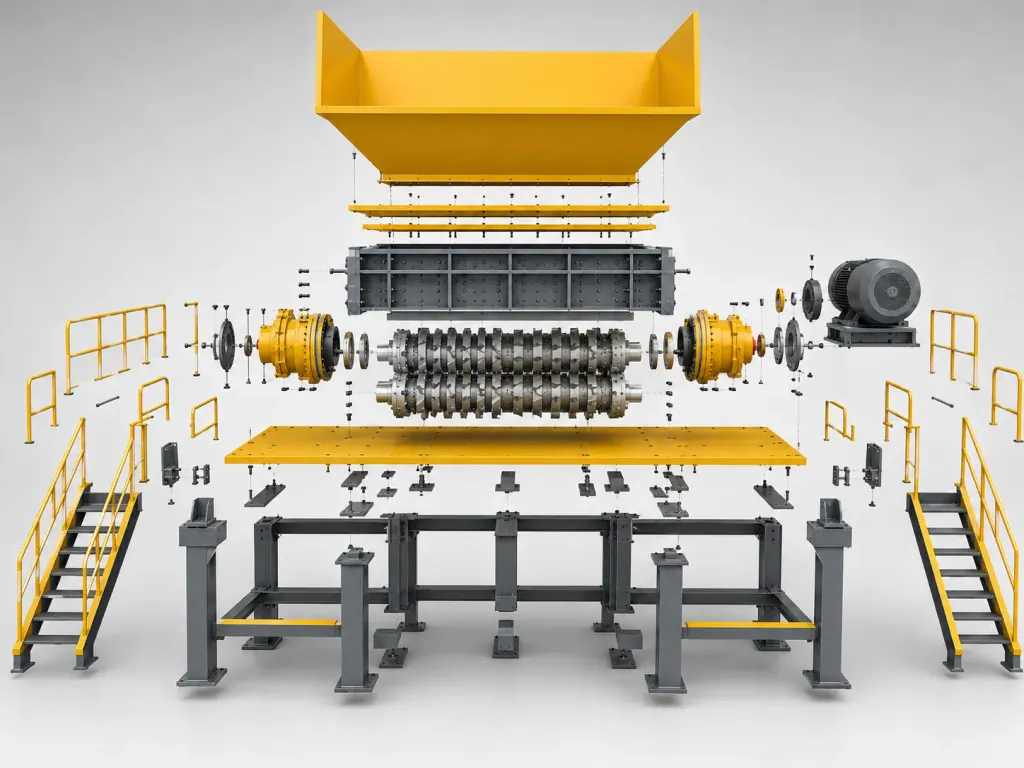
The drive assembly integrates electric motors, heavy planetary gearboxes, and rotor shafts. Excessive speed causes thin wire to wrap the shaft and overheats knife edges. Low speeds and high torque cut thick insulation and heavy copper cores cleanly. Heavy-duty gearboxes absorb sudden shock loads and hold differential shaft speeds under load.
Fast-acting jam protection prevents mechanical gear damage. Current sensors monitor motor load continuously. When uncrushable metals cause current spikes, the electrical control reverses the rotors within milliseconds to clear trapped bundles before returning to forward rotation.
Drive evaluation goes beyond motor power ratings alone. Buyers must assess gearbox reduction ratios and control response times during reversals. Primary shredding prepares feed for secondary granulators to mill down to 3-5 mm, enabling clean separation of copper, aluminum, and polymers across eddy-current and electrostatic sorters.
Machine in Action
FAQ
- Can a Double-Shaft Shredder process steel-wire armored scrap cable directly?
- Yes. Processing armored cables requires a low-speed, high-torque drive combined with thick, wear-resistant alloy blades to shear the metal sheath. For heavy steel armor, reduce the rotor speed and verify that overload auto-reversal is enabled to protect gear teeth from current-spike shock loads.
- How can you prevent thin, flexible copper wire from wrapping the rotor shaft during shredding?
- Keep tight clearances at the spacers. Press the counter-knives and spacers tight against the shaft body to eliminate lateral gaps along the moving blades. This forces wire into the cutting edges and prevents strands from reaching the shaft journal.
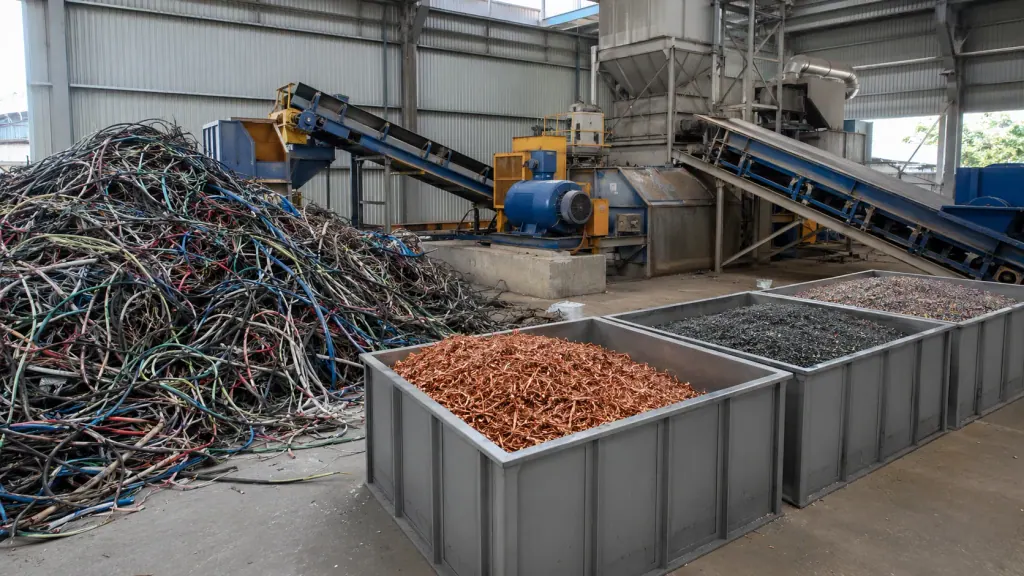
- How does primary shredded cable discharge feed into the downstream Waste Cable Recycling Line?
- The Double-Shaft Shredder cuts long cables down, then a belt conveyor transfers the material to secondary granulators to reach 3-5 mm sizes. This granulated mix enters eddy-current and electrostatic sorters to extract clean copper granules, aluminum granules, and plastic chops.