
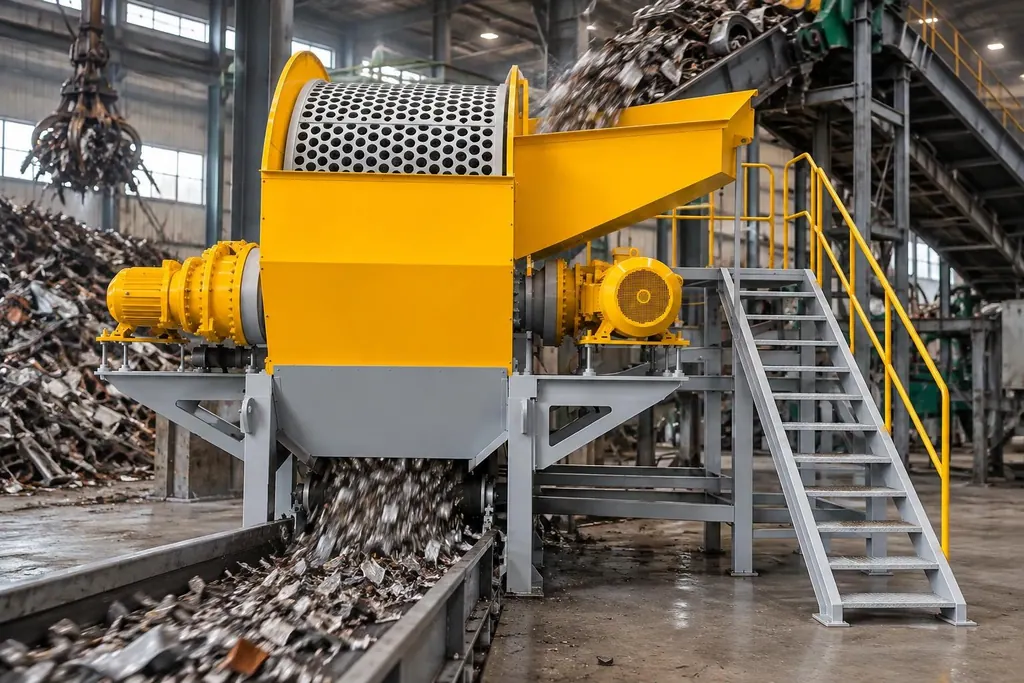
Operating as primary shear equipment in a Ferrous Metal Shredding Line, the Double-Shaft Shredder uses two low-speed, counter-rotating shafts equipped with interleaved alloy knives to flatten and cut car bodies and bulky industrial scrap before discharge into a downstream Hammer Shredder.
Feeding bulky or high-tensile mixed scrap directly into a single-shaft machine causes slippage or jamming on solid sections. A double-shaft unit pulls material in through counter-rotating knives, discharging shredded strips suited for primary coarse shearing.
Sizing requires matching rotor torque and knife hook geometry to feed rigidity, while aligning coarse output dimensions with the secondary fine crusher intake to prevent bridging at downstream transfer chutes.
| Equipment Type | Process Station | Core Mechanism Features | Selection Criteria |
|---|---|---|---|
| Double-Shaft Shredder | Primary coarse shredding in Ferrous Metal Shredding Line | Counter-rotating dual rotors with alloy knives, heavy-duty gearboxes, and reinforced bearing assemblies | Volume reduction and unbundling of bulky car shells and industrial scrap, torque sized to maximum cut thickness |
| Hammer Shredder | Secondary fine crushing in Ferrous Metal Shredding Line | High-speed rotor with wear-resistant impact components for densifying metal fragments | Refining shredded strips from primary stage, sized by target bulk density and sorting purity targets |
1. Mixed Scrap Coarse Shearing Conditions and Double-Shaft Operating Principles
Mixed scrap metal frequently contains heavy-wall tubing, wheel hubs, and elastic structural parts. Direct impact crushing risks ejection hazards and rotor stalling. The Double-Shaft Shredder uses two shafts operating at differential speeds to shear metal across the opposing knife edges.
Selecting a double-shaft unit depends on feed ductility and bulk volume. Bulky, thin-walled materials like car bodies contain large hollow cavities. Dual rotors grip and flatten the structure, allowing specialized alloy knives to sever pillar frames and reduce initial volume.
The gearbox and heavy-duty bearings absorb cyclic radial shock loads generated during shearing. Proper knife profile design minimizes cutting resistance, maintaining smooth drivetrain operation under high load and promoting balanced knife wear.
2. Low-Speed High-Torque Drive Systems and Shaft Configuration Parameters
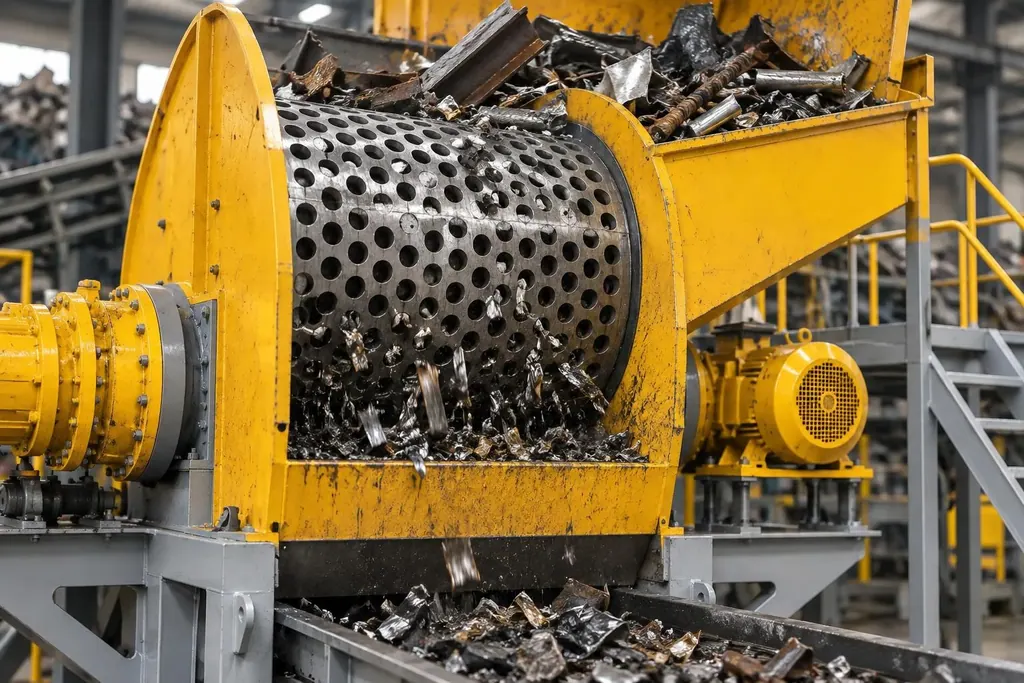
Severing heavy-gauge metal requires high instantaneous torque. When configuring the drive train, calculate reducer torque margin from maximum material thickness rather than average loads of light sheet. High torque combined with low speed enables continuous shearing through localized dense sections.
Knife configuration depends on target output specifications. Single-hook knives provide deep penetration for tearing large hollow structures. Multi-hook knives increase cut frequency, making them suitable for loose sheet metal. Knife width determines strip width, which must be sized to prevent material from bridging crosswise in conveyor transfer chutes.
The electrical cabinet requires integrated load protection logic. If the shafts encounter an uncrushable solid iron piece, motor current spikes. Upon sensing this load surge, the control system initiates shaft reversal to clear the material before attempting another cut, protecting shafts and speed reducers from mechanical overload.
3. Layout Schemes for In-Line Double-Shaft and Downstream Hammer Shredders
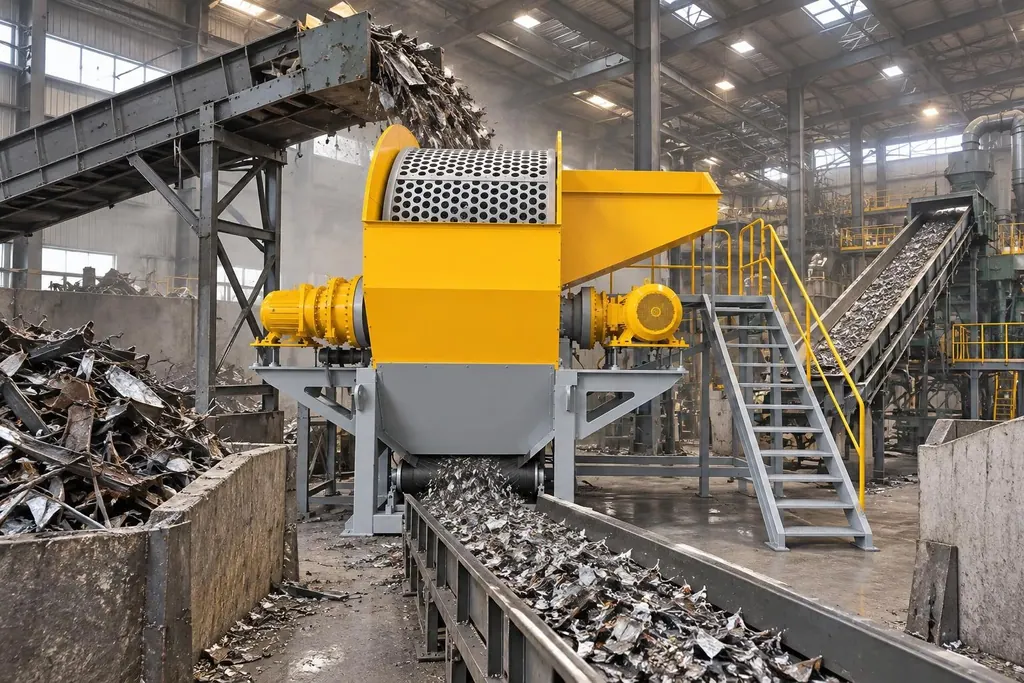
A Ferrous Metal Shredding Line generally uses a two-stage process combining a Double-Shaft Shredder with a downstream Hammer Shredder. The primary double-shaft unit unbundles compacted scrap and cuts long tangled pieces prior to downstream feeding.
Process efficiency between the two machines depends on continuous, regulated feed rates. Variable discharge from the primary shredder subjects the downstream high-speed rotor to shock loads, accelerating wear or causing motor stalls. Regulated coarse feed allows high-speed hammers to strike metal fragments repeatedly, producing dense pellets.
Material flows to downstream sorting equipment after secondary reduction. Densified metal pieces exhibit stable flow characteristics. A Magnetic Separator extracts ferrous metals, followed by an Eddy Current Separator that recovers non-ferrous metals to over 98% purity for furnace charging.
Machine in Action
FAQ
- What scrap metal feeds are suited for the Double-Shaft Shredder?
- The machine processes bulky, complex materials including vehicle bodies and industrial scrap. Interleaved alloy knives apply compression and shearing at low speeds to cut and flatten loose structural assemblies.
- How are the knife shafts protected against uncrushable foreign objects?
- The system tracks main shaft motor current. When an uncrushable solid piece causes torque to exceed limits, the drive reverses shaft rotation to eject the obstruction, preventing tooth fractures or reducer damage.
- What downstream equipment typically integrates with a Double-Shaft Shredder?
- Downstream lines incorporate a hammer-type Hammer Shredder to break strips into dense pellets. The processed metal passes through a Magnetic Separator to extract ferrous material, followed by an Eddy Current Separator to isolate non-ferrous metals.