

A Double-Shaft Shredder relies on interlaced alloy blades on two low-speed shafts to shear, tear, and crush car bodies and industrial steel scrap. This initial reduction sizes bulky metal down for downstream separation by a Magnetic Separator.
Mixed scrap contains heavy structural sections alongside light sheet metal that tangles easily. Tracking production output alone will not reveal early mechanical fatigue. Dull blade edges, drive vibration, or brief stalls can escalate into bent shafts and broken gearbox teeth if neglected.
Operators decide to stop for service based on three main indicators: cutting edge wear patterns, oil condition in the bearing housings and gearbox, and electrical response during overload reversals. Monitoring these areas pinpoints emerging mechanical faults.
| Inspection Area | Inspection Item | Condition Assessment | Action Required |
|---|---|---|---|
| Alloy Blades | Cutting edge wear and chipping | Continuous tearing of sheet metal with rounded cutting corners | Regrind blades or replace with a new blade set |
| Shaft Assembly | Blade axial clearance | Material wedging between blade faces with axial spreading forces | Adjust spacer shim thickness and retorque retaining locknut |
| Gearbox | Lubricant color and particulates | Oil emulsification or visible fine metal particles | Flush housing and refill with specified gear oil |
| Main Bearing Housings | Operating temperature and thermal differential | Abnormal temperature spread between ends or rapid heating | Inspect grease volume and cleanliness, verify bearing clearance |
| Electrical Controls | Overload auto-reverse cycle | Drive trips out after three failed auto-reverse clearing attempts | Lock out machine and clear chamber manually; do not jog forward |
Visual Inspection and Assessment of Blade Wear and Axial Clearances
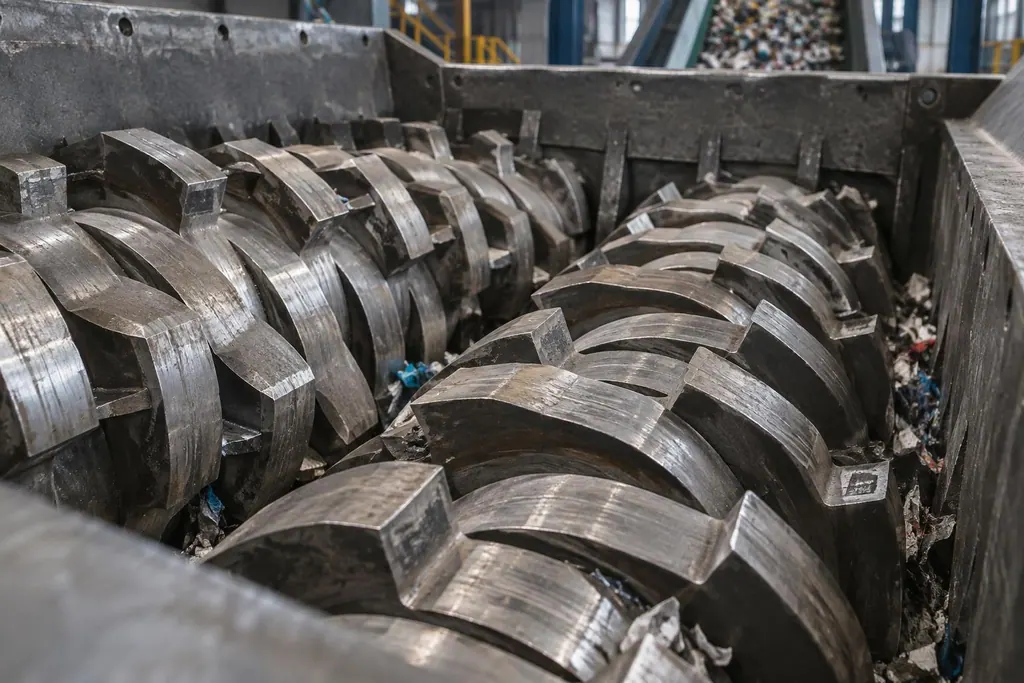
Lock out the power, then inspect the cutting edge radius and look for spalling on the mating faces. Under normal load, the feed-contact face stays bright and smooth. Chipping or rounded edges turn clean shearing into blunt wedging and dragging, which drives rotor load up quickly.
Next, check the side clearance between the interlocking blades of both shafts. Thin scrap wedging between blade sides without shearing indicates worn spacers or a loose shaft nut. Wider side gaps let scrap wedge axially against the blade discs, subjecting the shaft to bending forces that require shim adjustment and retightening.
When sheet metal clusters into uncut bundles at the discharge, the blades have lost their cutting edge. Stop the machine immediately to grind the set or run hardfacing on-site instead of running on one working shaft. Cleanly sheared scrap allows continued operation, while drawn, twisted clusters require immediate blade service.
Drive System Vibration, Gearbox Oil Monitoring, and Shaft Bearing Temperatures
Listen to the motor, reducer, and main bearing housings while the shredder runs under load. Interlocking shafts generate a steady, dull crushing rhythm. Sharp metallic impact sounds or low-frequency machine vibration indicate a fractured bearing cage or pitted gear tooth profiles.
Inspect the oil level sight glass and examine oil appearance. Dark gear oil carrying fine metal particulate indicates active tooth or roller spalling. Emulsified oil that turns whitish and foams points to failed seals allowing water or dust ingress.
Check both main bearing housings with an infrared thermometer. A wide temperature difference between drive and non-drive ends, or rapid localized heating, points to dried grease, over-greasing that restricts heat dissipation, or lost internal clearance from axial thrust. Large splits require pulling the cover to inspect the grease condition and bearing internal clearance rather than adding more lubricant.

Root Causes of Scrap Shredder Overload Stalls and Jam Recovery Procedures
Uncrushable solid castings or heavy structural channels drop into the cutting chamber and trigger a sharp current spike, prompting the control panel to reverse the shafts and back out the blockage. If three consecutive reverse cycles fail to clear the feed, the control system locks out the drive to prevent shaft neck shearing at the reducer.
Do not pulse the forward start button after an overload shutdown. Remove the safety lockout pin, open the inspection hatch, and clear the material lodged between the blade hooks with a long-reach hook. Bottom jams occur when sheet metal twists around thick box tubing and knots tightly between both shafts.
Follow a strict sequence during machine reset. Bar the shafts over manually or jog the reverse circuit twice to confirm free rotation, then run the unit empty for two minutes. Resume feeding from the upstream conveyor only after the reducer runs quietly and current returns to normal base load levels.
FAQ
- What scrap grades does a Double-Shaft Shredder process within a Ferrous Metal Shredding Line?
- A Double-Shaft Shredder performs primary reduction on car body sheet, mixed baling scrap, and industrial profiles. High torque at low rotational speeds crushes bulky feed into palm-sized fragments, preparing material for downstream recovery on a Magnetic Separator.
- How can operators tell during inspection that blades require reconditioning?
- Discharge characteristics provide the quickest assessment. Sheet metal that twists into ropes and wedges between the discs instead of shearing cleanly points to dull edges. During downtime inspections, check the blade hooks for worn radii or chipped edges that signal the need for hardfacing or replacement.
- Can the shredder be restarted in forward mode after an auto-reverse overload stop?
- Direct forward restart must be avoided. A shutdown after three reverse attempts confirms that uncrushable material is mechanically locked within the blade pockets. Forcing the drive forward risks ripping off blade hooks or deflecting the shaft. Disconnect electrical power, access the service door, extract the blockage manually, and rotate the shafts by hand before re-energizing.