
What Equipment Makes Up a Complete Waste Cable Recycling Line? | Jushengding
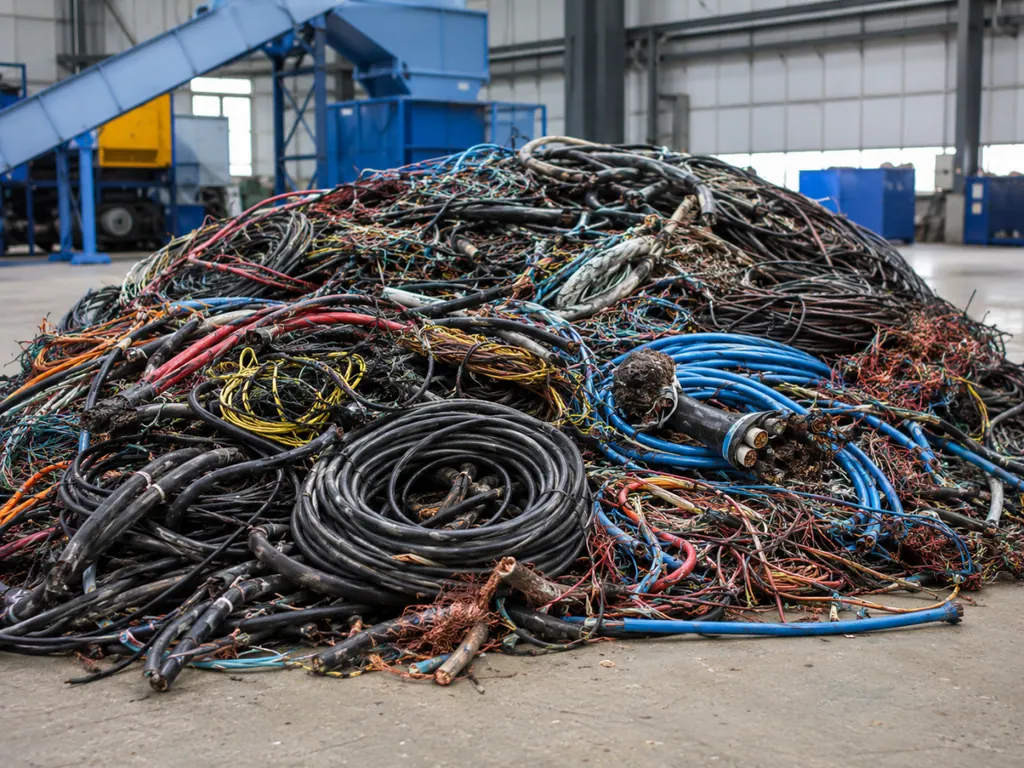
Grid upgrades, building demolition, vehicle dismantling and telecom refits are flooding the market with waste wire and cable. Copper and aluminum conductors carry high recovery value, but they come wrapped in PVC, PE and rubber insulation, mixed with steel tape, wire armor and plastic sheathing. Manual stripping is slow and separation incomplete, dragging down metal recovery. An automated cable recycling line — multi-stage shredding, granulation, metal sorting and dust control in one process — separates copper and aluminum from plastic sheathing efficiently: clean metal granules sell directly to smelters while the plastic sheathing is collected for resale, a double income stream. Jushengding supplies the complete line as a one-stop package for cable of every gauge, fully automated sorting that lifts both metal recovery and project profit.
1. Cable Feedstocks Suited to the Recycling Line
Jushengding's complete cable recovery equipment handles household, industrial, engineering and automotive wire of all kinds — thick, thin, mixed and armored:
1. Thin household and low-voltage wire
Home-wiring copper, network cable, CCTV cable, earphone and data cable, internal appliance wiring and fine sheathed copper wire — thin, miscellaneous and badly tangled, extremely hard to strip by hand.
2. Heavy power cable
High- and low-voltage power cable, site engineering cable, copper- and aluminum-core power lines — large diameters with thick rubber or PVC sheathing, some with steel-tape armor.
3. Automotive cable
Complete vehicle harnesses, EV cable and motorcycle harnesses — fine, soft, tangled wire mixed with plastic clips and small steel fittings.
4. Armored composite cable
Steel-tape armored cable, steel-wire wrapped cable and aluminum-plastic composite cable — containing steel tape and wire that must be removed up front to protect the core sorting equipment.
5. Waste telecom cable
Optical cable, outdoor communication cable and filled signal cable — dusty to shred, needing a dust-collection system for compliance.
Cables differ widely in gauge, hardness and armor. Jushengding combines multi-stage shredding with copper granulation to match the customer's feed mix — heading off the blockage, incomplete separation and capacity problems that trouble new plants.
2. The Complete Cable Line's Core Equipment in Detail
The full process: coarse shredding → intermediate shredding → copper granulation → ferrous removal → non-ferrous purification → line-wide dust collection. Six core machines each play their part in automated production:
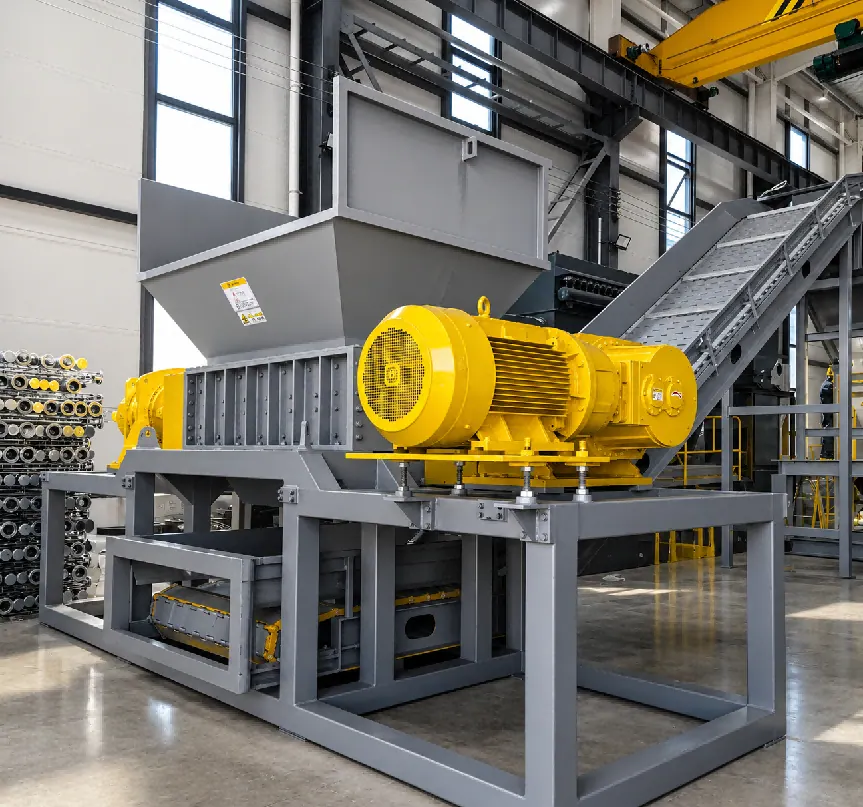
1. Double-Shaft Shredder (front-end coarse shredding)
The line's first pre-processing machine, using low-speed, high-torque twin-shaft shear to process whole reels of heavy cable, armored cable, baled tangled harnesses and thick industrial cable. Role: tears bulky, thick-sheathed, steel-taped cable apart, reduces volume, opens tangled bundles and cuts cable into uniform sections while removing large armor — easing the load on the single-shaft shredder and granulator downstream. Highly wear-resistant cutters withstand steel tape and wire without stalling.
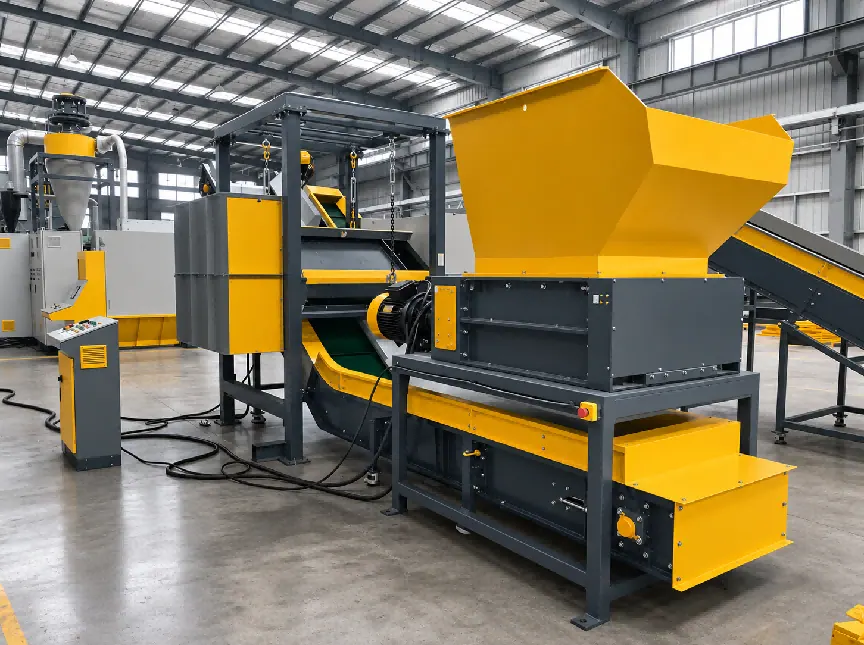
2. Single-Shaft Shredder (intermediate shredding)
Takes the cable sections from the double-shaft shredder for a second, finer cut — suited to thin wire, automotive harnesses and soft tangled cable. It brings the material to the standard feed size for the copper granulator, opens up bonded fine bundles and starts separating conductor from sheathing, improving downstream liberation — the standard intermediate machine for small and mid-sized fine-wire projects.
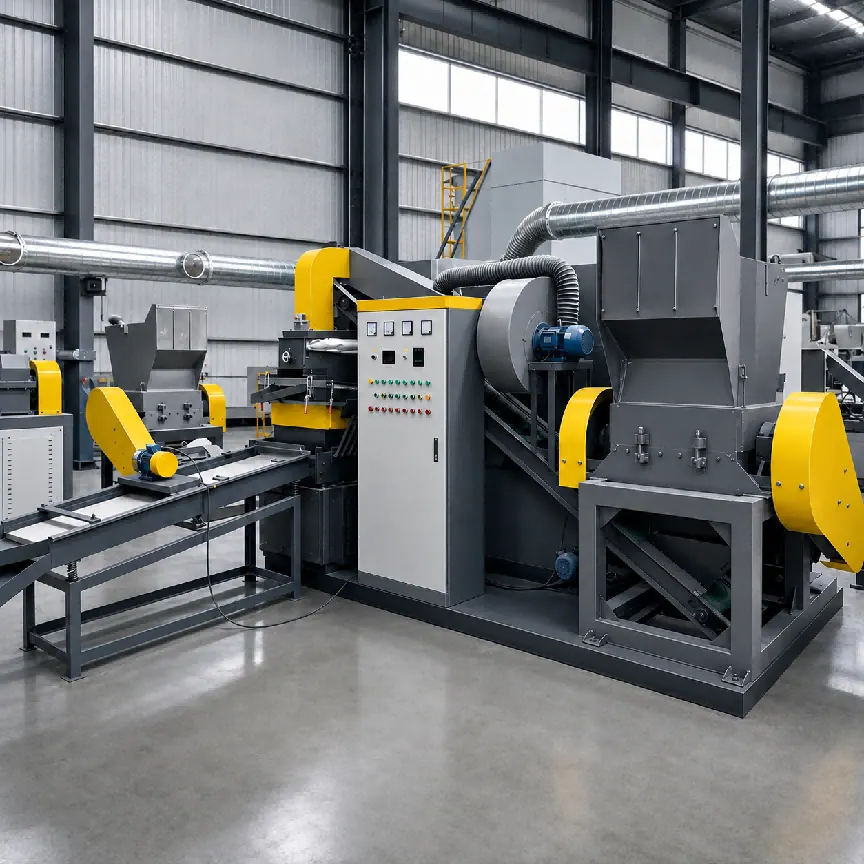
3. Copper Granulator (metal-plastic liberation core)
The line's core profit machine. Twice-shredded cable fragments enter the granulator, where high-speed grinding and air-flow screening fully liberate copper and aluminum strands from PVC and rubber sheathing — producing clean copper granules, aluminum granules and plastic pellets. Fine multi-stage screening grades coarse and fine metal, substantially raising copper and aluminum recovery. Dry and wet models are available for different site environmental requirements, and the high-purity metal commands a premium from buyers.
4. Magnetic Separator (ferrous removal)
Armored cable, automotive harnesses and old wire routinely carry steel tape, nails and sheet iron — hard ferrous contamination that wears the granulator's grinding discs quickly and drives up repair costs. Installed between the shredder discharge and granulator feed, the high-strength magnetic drum captures all ferrous metal and rejects it automatically — protecting the granulator's core grinding assembly while the separated iron sells on its own for extra income.
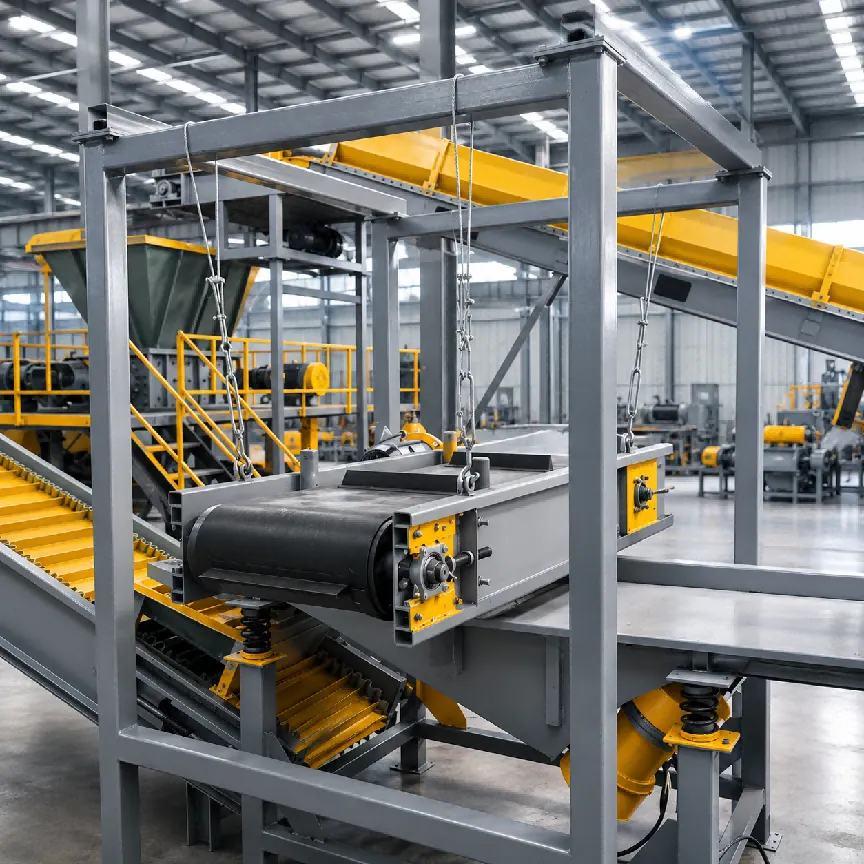
5. Eddy Current Separator (copper/aluminum purification)
Magnetic separation removes only iron — not copper or aluminum. Using electromagnetic induction, the eddy current separator parts copper and aluminum granules cleanly from insulation plastic, collecting metal and plastic as separate streams. It re-purifies the fine copper and aluminum still lodged in the plastic fraction, stopping metal from escaping with the sheathing and directly raising total recovery — indispensable high-value sorting for mid-sized and large cable lines.
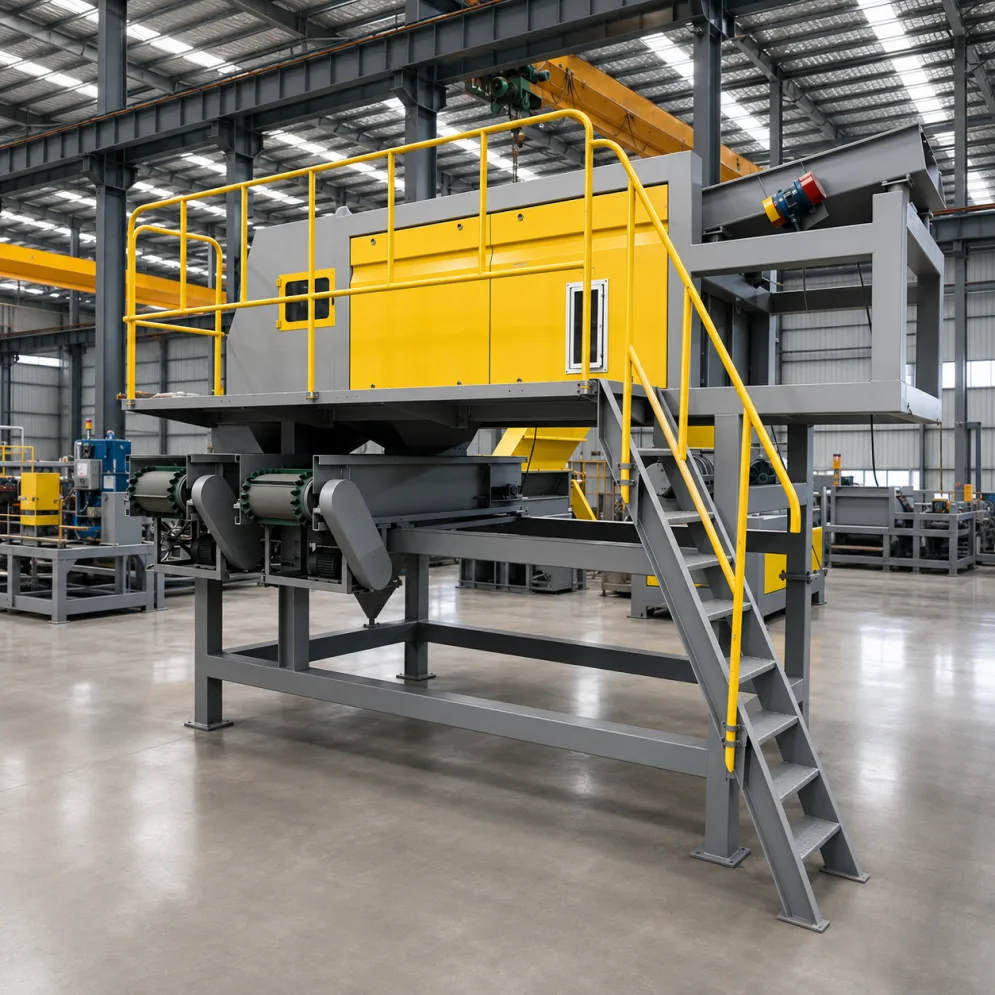
6. Pulse Dust Collector (line-wide dust control)
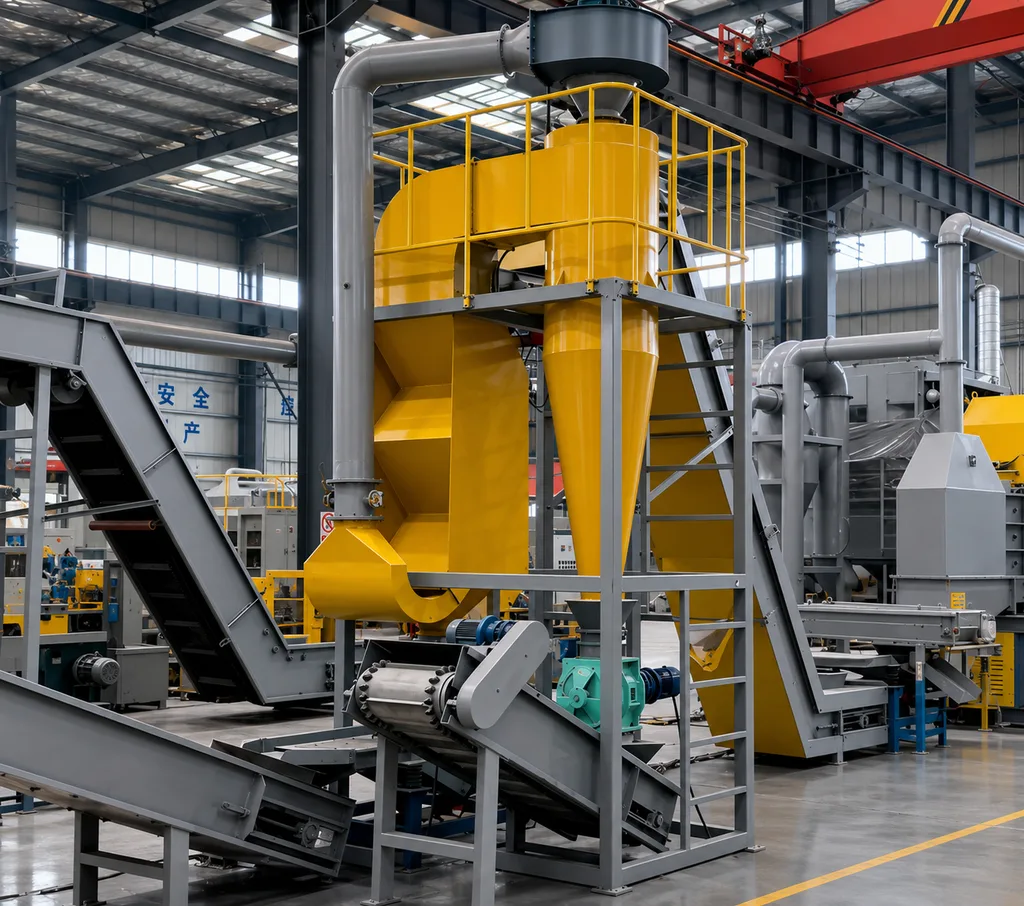
Cable shredding, grinding and air separation raise large amounts of plastic dust, rubber debris and fiber. Without dust control, the workshop pollutes and inspections force shutdowns. The pulse dust collector holds the whole line under sealed negative pressure with automatic pulse cleaning — dust captured centrally with no spillover, meeting local emission standards, improving the workshop environment and eliminating dust-explosion risk.
3. Equipment Configurations for Different Cable Feeds
- Mostly thin wire, home wiring and automotive harnesses: single-shaft shredder + copper granulator + magnetic separator + eddy current separator + pulse dust collector.
- Mostly heavy and armored site cable: double-shaft shredder + single-shaft shredder + copper granulator + magnetic separator + eddy current separator + pulse dust collector (the full standard line).
- Small independent fine-wire recyclers: single-shaft shredder + dry copper granulator + pulse dust collector.
- Large comprehensive cable plants (mixed gauges, armored and household wire together): the full six-machine automated line for efficient processing of every cable type.
4. Jushengding's Customization Advantages for Cable Recycling Lines
Cable-recycling profit hinges on metal recovery. A granulator alone, without multi-stage shredding and sorting, loses large amounts of copper and aluminum into the plastic and shrinks returns badly. Jushengding specializes in solid waste metal-sorting equipment, covering every core machine and environmental accessory in the cable-recovery process:
- Equipment combinations tailored to daily throughput, cable types, site area and local environmental policy — no redundant configuration, controlling up-front plant investment;
- Automated conveying across the line for minimal staffing and long, stable continuous operation;
- Dry or wet copper granulation as required, with eddy current + magnetic double purification pushing copper and aluminum recovery above 99%;
- One-stop service: line layout design, on-site installation and commissioning, operator training, long-term wear-part supply and lifetime after-sales support.
If you are planning a waste wire and cable processing plant and need capacity calculations, a tailored equipment package or a metal-recovery revenue estimate, contact Jushengding anytime for a detailed process proposal and accurate quotation.