
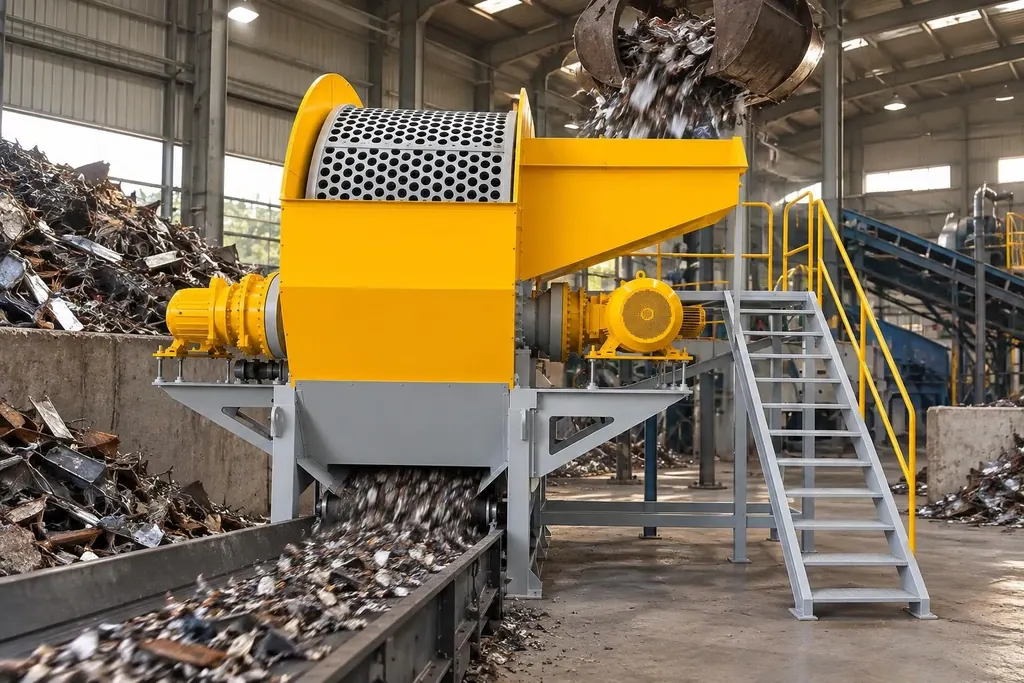
Double-Shaft Shredder and Hydraulic Shredder units operate routinely in primary ferrous metal processing. Two interlocking knife shafts shred car bodies and industrial scrap steel to prepare feed material for downstream magnetic separation and smelting.
Feed purity and initial capital budget dictate the drive selection. Electric drives with gearboxes have low transmission loss, working well with uniform stamping offcuts. Scrap piles mixed with heavy uncrushables can stall equipment, requiring hydraulic drives to absorb the shock.
This guide compares both drive systems in torque delivery, jam-clearing reversal mechanisms, and long-term maintenance to support equipment selection.
| Drive Type | Power Transmission | Overload Protection | Suitable Material Feed | Key Maintenance Areas |
|---|---|---|---|---|
| Electric motor with hardened-tooth gearbox | Motor reduces speed and multiplies torque via heavy-duty gearbox | PLC monitors current spikes to trigger electrical motor reversal | Uniform light sheet, light scrap steel, home appliance casings | Gearbox oil quality and shaft bearing condition |
| Direct-drive hydraulic motor | Hydraulic power pack drives low-speed motor via high-pressure lines | System pressure spikes trigger automatic relief dumping and reversal | Mixed-thickness car bodies, industrial structural steel scrap | Hydraulic oil cooling, filter element cleanliness, and seal replacement |
Low-Speed, High-Torque Operation: Power Transmission in Gearbox Reducers vs. Hydraulic Drives
A mechanical gearbox reduces electric motor speed in stages to produce cutting torque. Cutting rhythm remains stable at rated speed, processing sheet metal pressings and profiled roofing sheets cleanly. When uncrushable solid parts enter the chamber, the rigid gear train cannot cushion the impact, transferring peak shock loads directly to the housing.
Direct-drive hydraulic motors rely on a power pack delivering high-pressure oil to rotate the knife shafts. The motor delivers full torque near zero rpm, maintaining steady bite force. Adjusting valve block flow regulates shaft speed directly, eliminating mechanical gear-shifting assemblies.
Material uniformity guides drive selection here. For homogeneous scrap like baled light sheet or dismantled home appliance casings, an electric motor with gearbox reducer is suitable. For unsorted end-of-life vehicles containing heavy structural sections, hydraulic motor drives offer greater operational reliability.
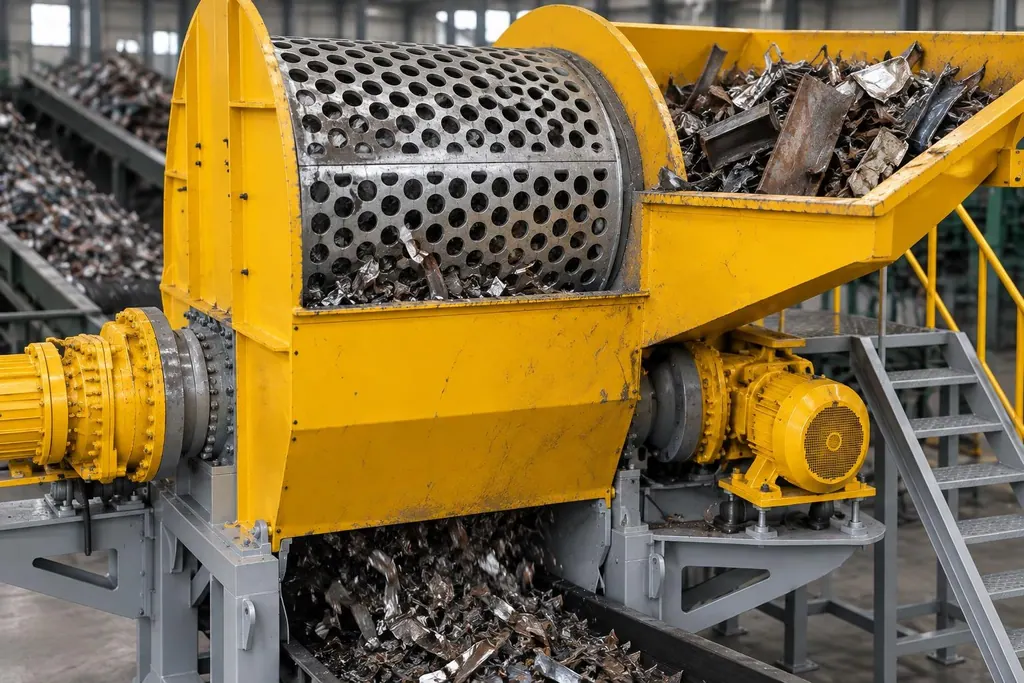
Shock Load Resistance: Reversal Protection and Response Times During Heavy Scrap Infeed
When an uncrushable obstruction enters the chamber, an electric motor setup depends on PLC current monitoring. Once current exceeds the threshold, the control system disengages forward rotation and initiates reverse operation to eject the material. Mechanical braking and reversing introduce a brief delay; during those seconds of stalled rotation, bearings heat up and cutter teeth can chip.
In a hydraulic system, relief valves manage overload protection. If a shaft stalls, system pressure spikes instantly, directing high-pressure fluid through a bypass line to dump the shock load within milliseconds. The valve block then reverses flow, so the shaft pauses briefly before rotating backward to clear the obstruction.
Upstream sorting determines the correct configuration. When grapples feed mixed scrap directly with unpredictable thickness variations, hydraulic drives provide necessary protection. If operators remove oversized solids upstream or shear material to size, feed dimensions remain controlled, making current-triggered reversing with a gearbox reducer sufficient.
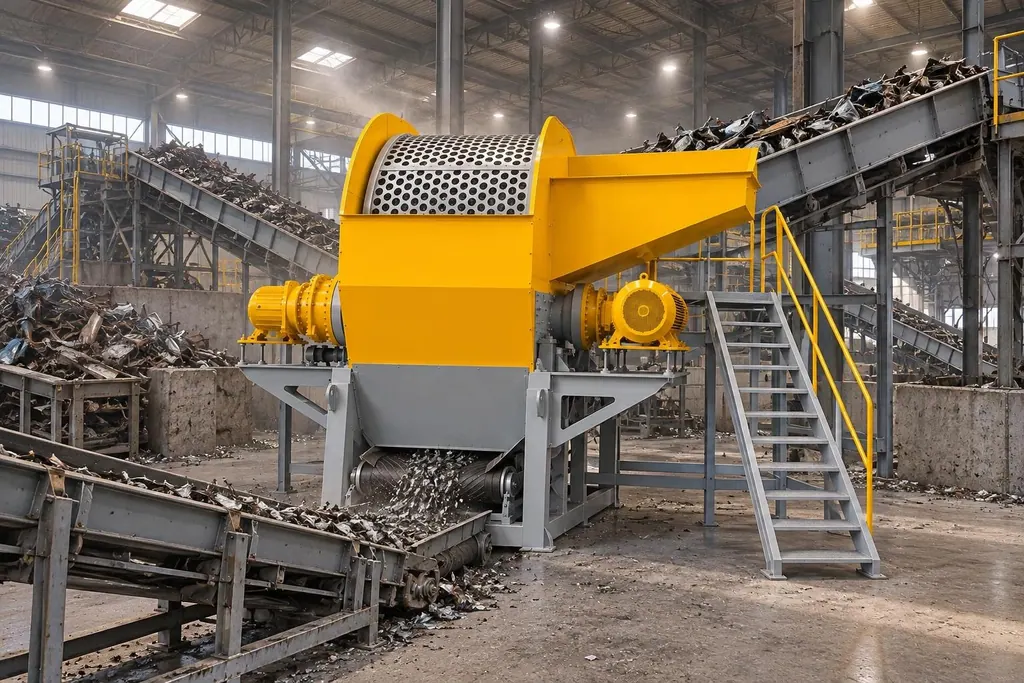
Production Duty and Maintenance Costs: Energy Consumption and Wear Profiles in Metal Shredding
Electric motor and gearbox configurations are compact, requiring inspections focused on bearing grease and gear oil. Electrical components have few failure points, perform well in dusty plant conditions, and convert electrical energy directly into mechanical force.
Hydraulic systems require knife upkeep along with fluid circuit monitoring. Heavy continuous loads raise oil temperature, requiring constant cooling. High-pressure oil requires frequent filter element changes to protect valve spools from contamination, while hoses and seals must be replaced on schedule by technicians trained in hydraulic diagnostics.
On-site service capability determines the final choice. Plants lacking specialized hydraulic technicians should select mechanical gearbox reducers for straightforward troubleshooting. Facilities with hydraulic maintenance personnel handling mixed feed streams benefit from hydraulic motors protecting shafts against deflection.
Machine in Action
FAQ
- Should a Double-Shaft Shredder processing car bodies use an electric or hydraulic drive?
- A hydraulic drive is recommended. Car bodies often contain structural reinforcements, engine mounts, or bearing assemblies. Hydraulic motors deliver full torque at low shaft speeds and clear jams through rapid pressure relief and reversing, avoiding shock loads that crack alloy cutters.
- How does a gearbox-driven Double-Shaft Shredder prevent jamming and shaft failure during routine operation?
- The system uses a PLC to monitor real-time motor current. When shredding resistance pushes current over the preset limit, the control system signals the shafts to reverse and reject the obstruction. If multiple reversal attempts fail to clear the chamber, the machine shuts down and triggers an alarm for manual removal.
- Where is the Double-Shaft Shredder typically positioned within a Ferrous Metal Shredding Line?
- The Double-Shaft Shredder sits at the primary stage of the entire line. It performs initial volume reduction by shredding whole car bodies or bulk mixed scrap, discharging loose material into a downstream vertical shredder for secondary sizing before magnetic separation.