
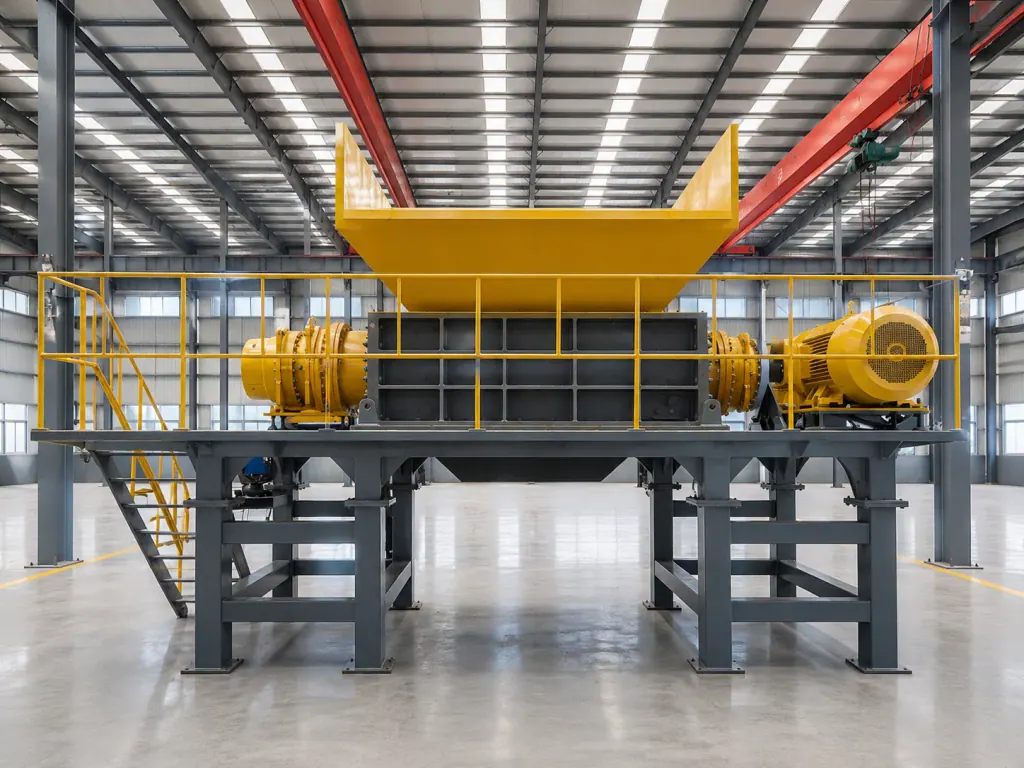
A Double-Shaft Shredder serves primarily at the initial coarse reduction stage of a Plastic Crushing & Recycling Line. Two sets of counter-rotating alloy blades intermesh to shear and rip stretch films, bulk bags, or plastic drums, preparing the stream for downstream washing and sorting.
Processing soft films and rigid materials carries distinct risks of shaft winding or motor stalls. Equipment sizing requires looking beyond motor power alone. Material ductility and tensile strength dictate the selection of rotor hooks, counter-knife clearances, and drive shaft torque.
| Configuration Item | Flexible Stretch Film and Bulk Bag Duty | Rigid Hollow Plastic Duty | Engineering Rationale |
|---|---|---|---|
| Rotor Blade Geometry | Multi-hook fine-pitch alloy blades | Single-hook or two-hook deep-gullet alloy blades | Flexible streams require controlled intake to stop wrapping; rigid streams need wide throats for forced engagement |
| Counter-Knife / Scraper Assembly | Deeply recessed comb scrapers mounted tight to spacers | Heavy-duty flat-bottom lateral support counter-knives | Soft materials require continuous core scraping; rigid materials demand resistance against radial shear loads |
| Drivetrain and Reduction Gearbox | Precision gear reducer with standard variable-frequency motor | Heavy-duty industrial gearbox with low-speed high-torque drive | Rigid plastics generate high bite resistance, requiring higher instantaneous peak torque reserves |
| Line Protection and System Control | Current overload monitoring with auto-reversing anti-wrap logic | Precision torque sensing with auto-reverse tramp reject routine | Motor current load thresholds signal feed stalls and mechanical blockages |
1. Contrasting Shear Force Demands: Flexible Films vs. Rigid Plastics
Stretch wrap, agricultural films, and woven bulk bags feature high tensile elongation and tear resistance. Dull cutting edges or wide clearances allow thin films to pull through uncut, wrapping tighter around the shaft core until the rotor locks. Processing these soft streams relies on tight blade tolerances and clean, scissor-style direct shearing.
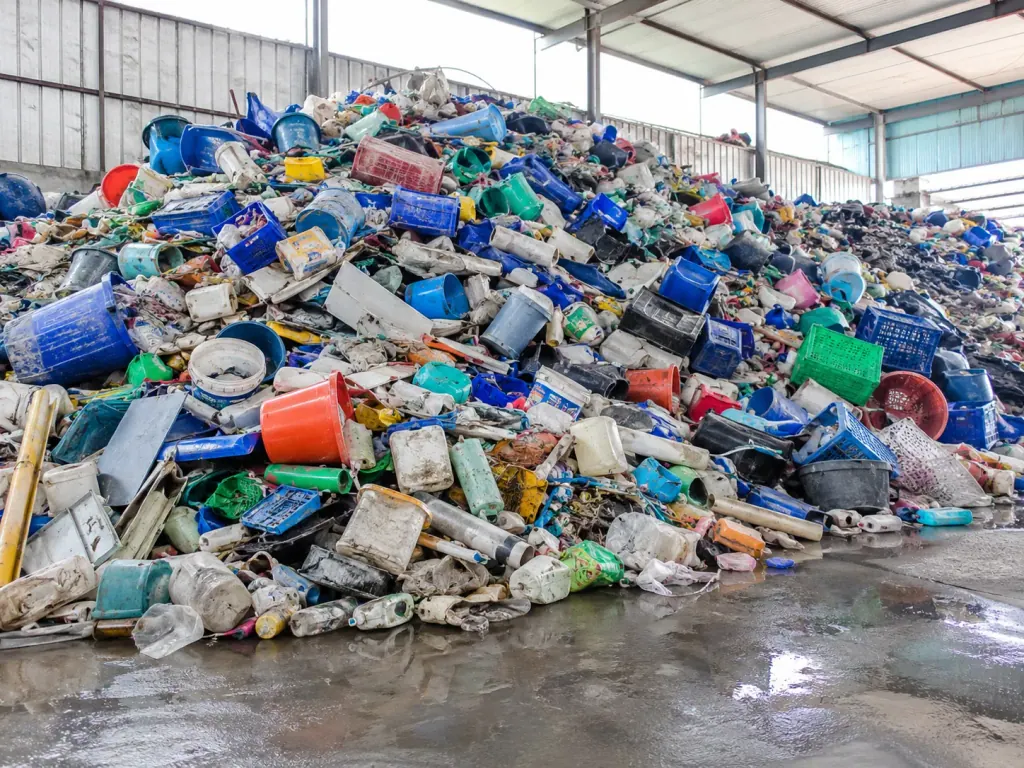
Rigid items like tote boxes, hollow drums, and thick injection purgings present a different challenge. They tend to float and skid atop the cutting chamber, making initial blade penetration difficult. The machine relies on high shaft torque to grab the material with blade tips, pulling it into the cutting chamber for forced counter-rotational reduction.
Selection depends directly on deformation behavior under stress. For whole film bales or woven bags, shaft designs must maintain minimal side clearance to prevent material from drawing into blade gaps. For thick-walled rigid plastics, the shaft and drive must handle high peak shock torques to protect the gear train when hard masses enter.
2. Anti-Wrapping and Jam Prevention: Counter-Knife Layout and Rotor Blade Hook Geometry
The number of hooks on each rotor blade determines single-pass feed volume. Single-hook or two-hook blades feature deep gullets and wide openings that pull in volume quickly, making quick work of large plastic drums. If fed with wound film bales, these aggressive hooks take bites that are too large, packing material onto the shaft core and choking the motor.
Film and woven streams require multi-hook rotor blades. The higher tooth count limits individual cut volume, distributing resistance evenly across the shaft. Blades are machined from high-strength wear-resistant alloy steel to extend service intervals under abrasive loads.
Counter-knives prevent material from wrapping around shaft spacers. For film processing, counter-knife tips must sit tight against the rotor spacers in an intermeshing comb arrangement, clearing film before it can loop around the core. Deeply recessed scraper combs suit flexible films, while heavy-duty flat-bed clearing bars provide the structural backing needed for rigid plastic impacts.
3. Low-Speed, High-Torque Power Transmission and Drive Selection
Primary plastic reduction involves severe shock loads. Double-Shaft Shredder designs rely on high reduction ratios to drop shaft RPM, converting motor speed into high cutting torque. Heavy gearboxes and reinforced shafts absorb mechanical deflection when hard plastics bite.
Drive selection depends on contamination levels and operating duty cycles. An electric motor paired with an industrial gearbox provides a compact footprint with straightforward maintenance, ideal for pre-sorted plastic waste. Direct-drive hydraulic motors eliminate mechanical gear trains, providing variable speed control and hydraulic relief damping against uncrushable tramp items.
Decisions rest on infeed purity and acceptable downtime costs. Clean, uniform streams run cost-effectively on standard electric motors with heavy-duty gearboxes. If bales contain hidden steel or rigid tramp objects, control systems must include overcurrent trips and automated forward-reverse cycles to clear blockages without manual intervention.
Machine in Action
FAQ
- How should the blade configuration be adjusted if a Double-Shaft Shredder frequently winds and stalls on plastic stretch film?
- Winding happens when the blades bite off too much material at once or counter-knife clearances are too loose. Switch to multi-hook rotor blades to take smaller cuts, and adjust the comb scrapers closer to the rotor spacers so film is scraped away immediately.
- How does the Double-Shaft Shredder integrate with downstream equipment in a Plastic Crushing & Recycling Line?
- The machine handles primary breakdown, shredding bulky parts into rough strips and chunks. Discharged material travels by conveyor past magnetic separators or air classifiers to strip contaminants before entering secondary granulators or pelletizing extruders.
- When should a buyer select an electric gearbox drive over a hydraulic motor drive on a Double-Shaft Shredder?
- Clean streams with low contamination run efficiently on electric motor and gearbox systems, offering steady energy draw and routine maintenance. When processing baled materials that conceal heavy tramp metal or uncrushable solids, direct-drive hydraulic motors handle the shock loads better.