
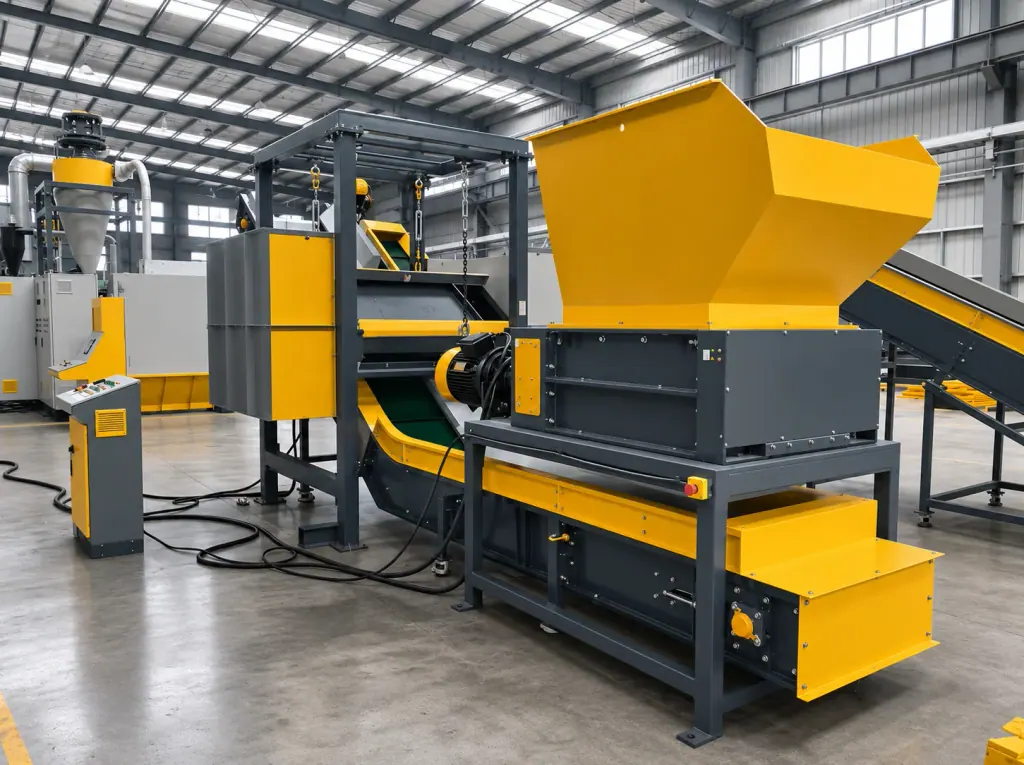
The Single-Shaft Shredder serves as primary secondary-reduction equipment within a plastics recycling line. The unit pairs a turning knife rotor with a hydraulic ram for guided material feed, while a curved bottom screen governs output size. Operations commonly apply it to injection purge lumps, hollow containers, woven bags, and agricultural film.
Machine selection relies on the impact resistance and winding tendency of the infeed. Solid injection purges demand constant pressure feeding from the ram system to sustain cutting engagement. When sizing for film and stretched tape, operators set minimal clearance between counter and rotating knives to prevent material wrapping around the rotor shaft.
Ram thrust profiles, rotating blade materials, and screen apertures must align with incoming material properties. Calculating capacity based solely on motor nameplate ratings risks rotor stalls caused by excessive cutting resistance.
| Configuration Item | Film and Soft Packaging | Purge Lumps and Thick-Walled Rigid Plastic | Selection and Operational Criteria |
|---|---|---|---|
| Ram Feed Mode | Continuous stepping feed with base comb teeth | Load sensing with auto-retract under pressure | Prevents compaction melting for soft feed; prevents rotor stall on dense purges |
| Rotor and Knife Design | Close-pitched tool seats with anti-wrap end discs | Staggered array with four-way indexable square inserts | Anti-winding protection for fibers; shock dispersal for solid blocks |
| Screen Geometry and Structure | High open-area slotted or hexagonal perforations | Heavy-duty staggered round hole screen plate | Open-area selected by thermal melt point to prevent screen blinding |
1. Material Morphology and Ram Thrust Matching Standards
Bulk density and elasticity dictate ram motion. Film and woven bales retain high elasticity. Running a ram at a rigid constant speed packs bales tightly over the rotor, generating frictional heat that melts plastic surfaces. High-resistance materials like purge blocks and thick pipes push back against weak rams, causing the rotor to run idle.
Processing bulky solid plastics requires hydraulic ram force feedback. Once rotor motor current hits its upper threshold, the hydraulic system retracts the ram, resuming feed once current falls. Selecting a feed strategy depends on the compressive strength of the infeed and overload frequency.
Loose films and packaging soft plastics require comb teeth along the hopper base. These teeth hold the lower feed material, preventing springback along the faceplate. This eliminates material drag during retraction and stabilizes cutting feed during forward strokes.
2. Rotor Configuration and Carbide Tooling Selection
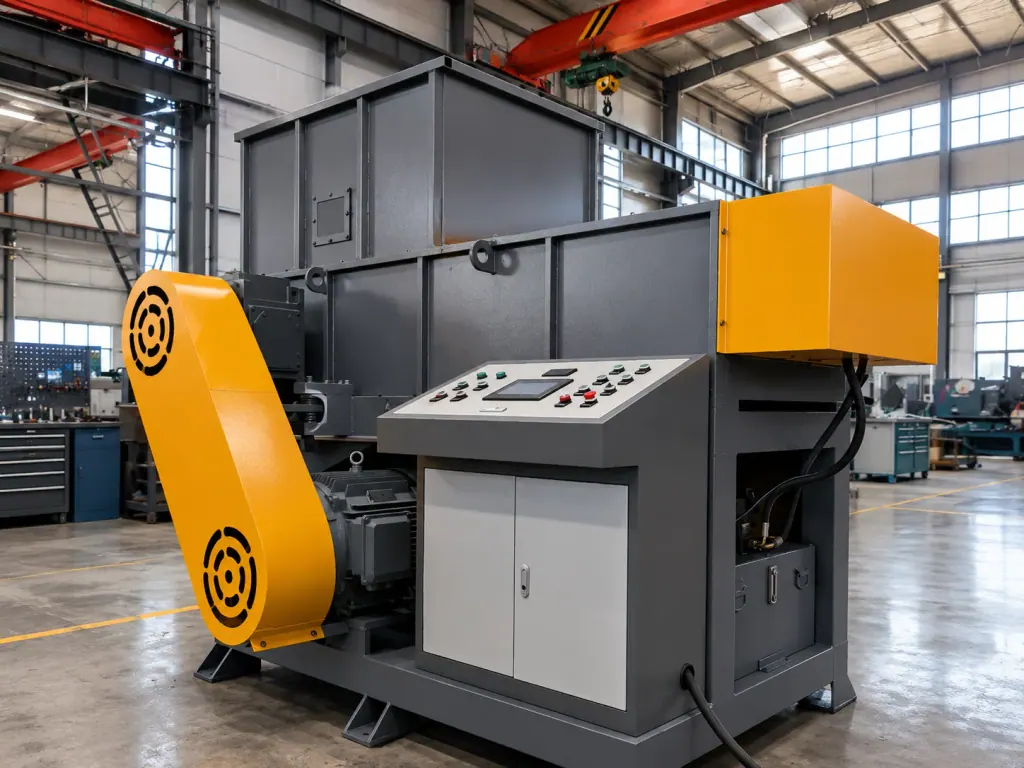
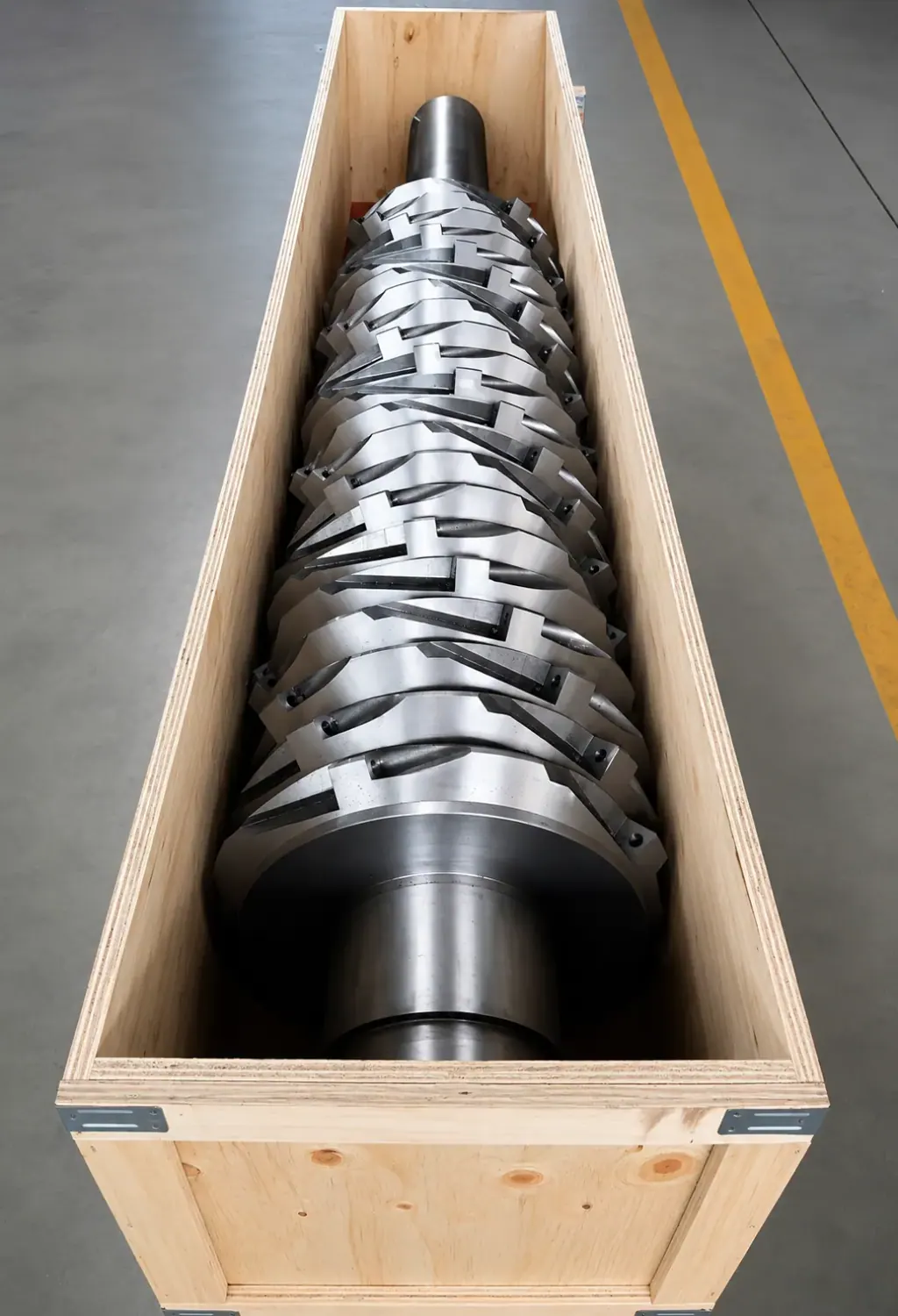
Material dimensions and winding characteristics dictate shaft design. Agricultural film and long fibers tend to migrate toward shaft ends, grinding down bearing seals or locking the rotor. Handling these materials requires densely arrayed tool seats fitted with end containment discs. Bulky purges concentrate cutting loads, requiring staggered stepped rotor layouts that distribute shock across multiple edges.
Contaminated plastics often contain grit or metal fines, requiring carbide cutting edges. Square four-way indexable blades simplify purge processing. Once an edge dulls, service technicians loosen the countersunk bolt and rotate the insert 90 degrees to expose a fresh cutting face without dismounting the entire assembly.
The clearance between rotating and stationary knives governs soft plastic cutting quality. Frayed cut edges indicate incorrect clearance settings. Wide clearances drag thin film into the shear gap, causing frictional heating. Gaps set too tight risk blade collisions from thermal shaft expansion. Technicians verify knife gaps cold using feeler gauges before tightening bolts.
3. Detachable Curved Screens and Discharge Size Control
Screen aperture controls output particle geometry and grinding chamber circulation volume. Cut flakes exit once they fall below hole diameter, while oversized pieces circulate back to the cutting circle. Undersized perforations prevent timely discharge, causing material to churn between the screen surface and blade tips until heat softens low-melting resins across the openings.
Sizing screen perforations depends on downstream demands and plastic melt temperatures. Direct feed into washing plants or extruders permits larger screen holes, elevating throughput. Lines running to fine granulators must balance screen diameter against granulator feed limits. Thick purges produce shock loads best handled by heavy staggered round perforations. Film lines switch to hexagonal or slotted hole geometries to increase open surface area.
Screen cradles benefit from hydraulic actuation or slide-out guide rails. Contaminants can blind the screen during operation, making opening speed critical to turnaround. Integrated mechanical safety pins allow single-operator screen changeouts.
Machine in Action
FAQ
- What is the primary inspection point when a Single-Shaft Shredder repeatedly stalls on purge lumps in a Plastic Crushing & Recycling Line?
- Check ram hydraulic pressure settings alongside motor load threshold limits. An overdriven ram jams oversized blocks into the rotor, spiking cutting resistance beyond motor capability. Adjust forward hydraulic pressure downward and enable load-activated auto-retract functions.
- What causes material melting and screen blinding when shredding agricultural film or stretch wrap?
- This issue stems from either excessively fine screen perforations or wide knife clearances. Dull edges fail to sheer thin film cleanly, generating friction heat within the cut gap. Trapped material that cannot clear the screen circulates repeatedly, warming until softened plastic blinds the apertures.
- How do maintenance teams identify when blades require indexing or replacement?
- Frayed edges on discharge flakes, elevated base motor current, and drops in throughput indicate edge wear. Operators lock out the machine, open the access door, and loosen the retention bolts to index the square inserts to an unused edge.