
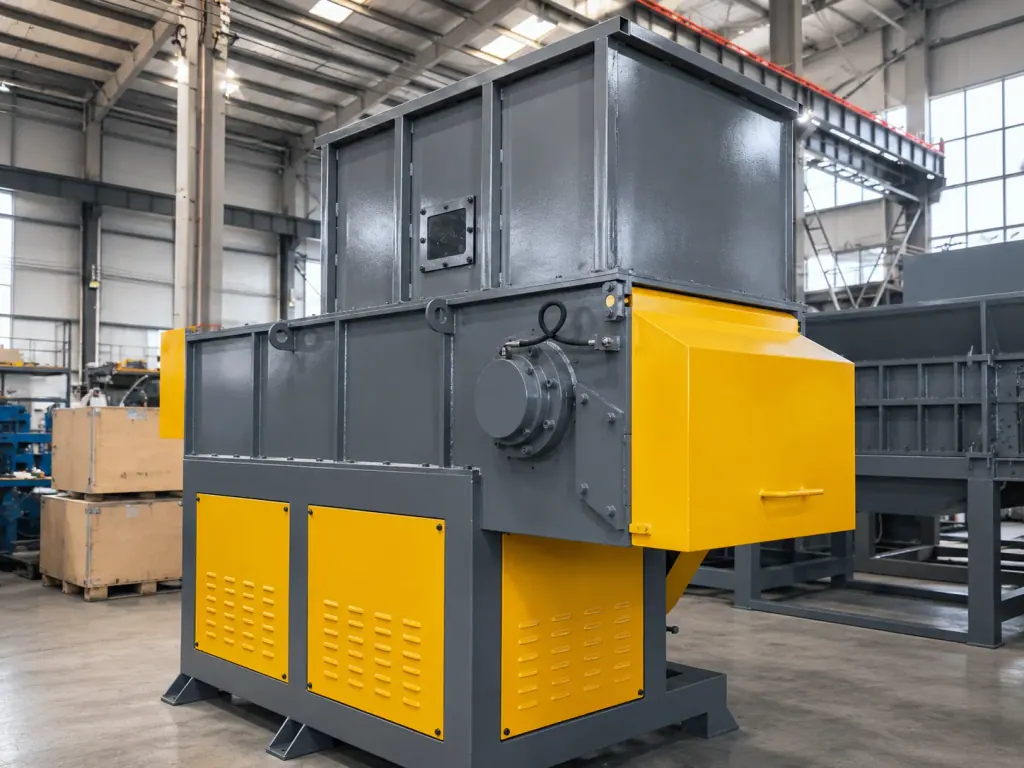
A Single-Shaft Shredder serves as the fine-reduction stage following primary shredding in a Ferrous Metal Shredding Line. Moving rotor knives rotate at high or moderate speed against fixed bed knives to shear the feed continuously, while curved bottom screens regulate discharge sizing. The machine handles sheet metal, light stampings, and production offcuts, establishing uniform sizing and target bulk density.
Coarse-shredded ferrous feed presents jagged edges and uneven tensile ratings. Running light scrap directly through heavy hammer mills wears liners quickly and generates excess fines. The shearing action between the fixed and rotor knives in a Single-Shaft Shredder sizes irregular sheet scrap into consistent target fractions.
Selection depends on raw material thickness and ductility. Cutting torque across the rotor is sized to these material limits alongside the hydraulic ram feed cycle to avoid material bridging or wrapping the rotor. Screen opening diameter is chosen to match downstream magnetic separation and furnace bulk density requirements.
| Process Stage | Core Mechanism | Target Material Condition | Selection Criteria |
|---|---|---|---|
| Fine Shredder Feeding | Hydraulic pusher ram | Loose stamping skeletons and baled thin-gauge sheet | Fitted with comb hold-down teeth to stop roll-over; requires load-sensing auto-retract and speed regulation |
| Primary Cutting | Helical rotor with four-way indexable inserts | High-tensile strip steel and stamping offcuts | Bolted individual cutting inserts; avoids peak torque surges caused by full-width straight knife engagement |
| Sizing Control | Heavy-duty wear-resistant curved screen | Shredded scrap requiring specific bulk density for melting | Thick punched plate on rigid cradle; hydraulic opening mechanism preferred for high-rebound spring scrap |
| Drive Protection | Torque limiter with auto-reverse control | Uncrushable solid steel components or heavy shaft ends | Electrical current-sensing retraction combined with mechanical release to prevent gear teeth damage from shock loads |
Rotor and Wear Part Requirements for Fine Reduction After Primary Ferrous Shredding
If the feed contains long strips with alloy steel stampings, the rotor must feature a hardfaced surface and bolted blade seats. Welded one-piece tool designs require scrapping the entire shaft assembly when an edge chips. Bolted four-way indexable cutting inserts allow single-point replacement at lower maintenance costs. Rotor bodies with smooth outer surfaces should not be used.
Knife arrangement governs instantaneous cutting loads. For ductile sheet metal offcuts, cutting inserts must be arranged along staggered helical paths rather than continuous straight lines. A helical layout limits engagement to one or two cutting inserts at any single instant, keeping motor power delivery steady and eliminating the load spikes created by full-width straight blades.
Crushing chamber walls require cast alloy wear plates. When light sheet scrap churns at high speed, abrasive wash against the chamber walls exceeds that found in municipal solid waste operations. Machines exposing their base frame structure to scrap without protective liner plates are not suitable for fine ferrous shredding lines.
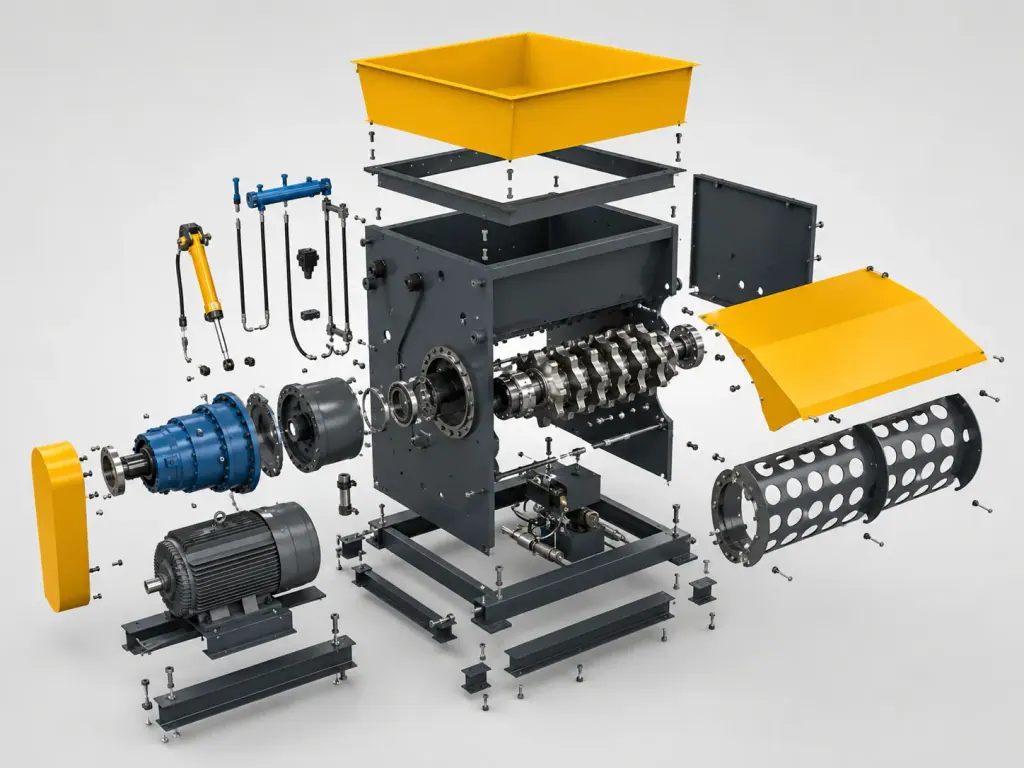
Ram Hydraulic Sizing and Discharge Screen Apertures for Thin Sheet and Stamping Scrap
A Single-Shaft Shredder uses a horizontal hydraulic ram to press metal feed into the turning rotor. For loose stamping offcuts, the ram face needs comb-type hold-down fingers to prevent thin material from folding over the pusher head. The hydraulic power pack requires pressure-sensing adjustments: when cutting resistance drives motor current beyond preset limits, the ram automatically backs off and slows down, preventing metal from compacting around the rotor.
When discharge feed goes directly to smelting furnaces, higher bulk density is required, calling for thick punched plate screens with high open area across their wrap angle. Undersized screen holes hold light sheet metal inside the chamber too long, driving up operating temperatures and dulling cutting edges. Increasing open area cuts parasitic recirculation of on-size fractions.
Spring steel offcuts and quenched stamping scrap show high elasticity, ruling out rolled thin-gauge sheet for screens. The screen cradle must use a rigid hydraulic opening mechanism. When oversize non-shreddables blind the grate, operators swing the cradle open to clear debris rather than cutting it out inside the chamber.
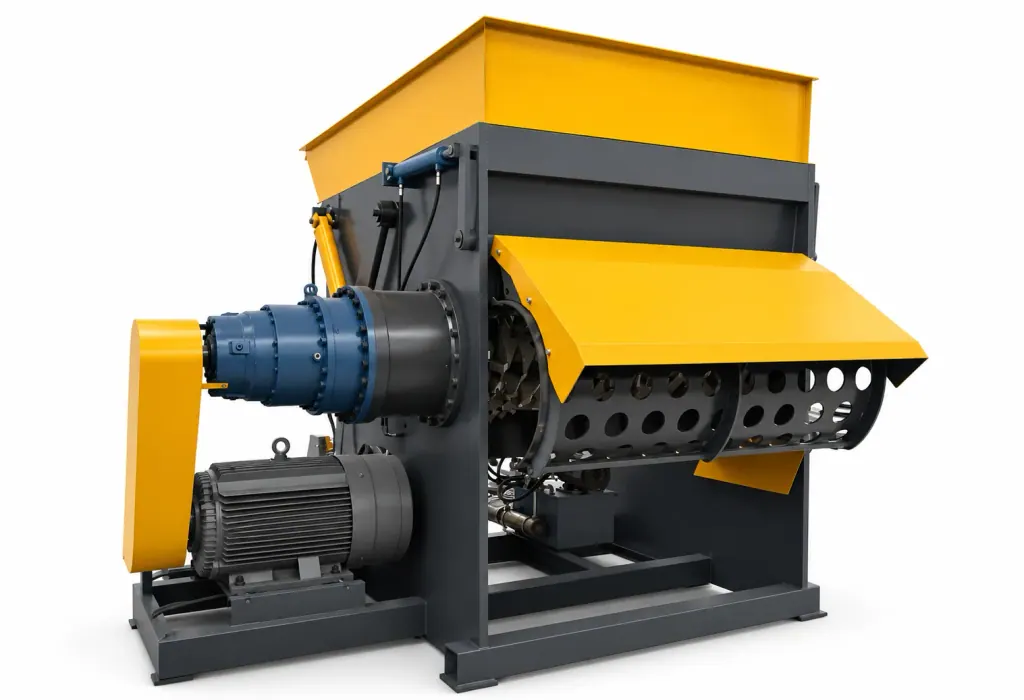
Cutting Clearances, Insert Indexing, and Drive Overload Protection for Lower Downtime
Cutting ferrous scrap demands tight clearances between moving and fixed knives. Excess gap causes thin sheet metal to bend and jam in the shear point, triggering stalls or bending the main shaft. Bed knife holders require independent screw-adjusted slider blocks. As edges wear, operators advance the blocks from outside the frame to restore clearances without tearing down the machine.
Ferrous processing lines standardise on four-way symmetrical square inserts. Once an edge dulls, releasing the mounting bolt lets the technician rotate the insert 90 degrees to expose a fresh corner, replacing the full set only when all four edges are spent. Maintenance centres on torque checks rather than frequent edge regrinding. Running mixed scrap of uneven thickness requires dual overload protection on the drivetrain.
Beyond software-driven auto-reverse routines, a mechanical torque-limiting coupling or shear pin assembly should be fitted between the drive shaft and gearbox. When solid uncrushables wedge into the cutting zone and stop the rotor, the mechanical release trips first, protecting gearbox teeth from direct shock impacts.
Machine in Action
FAQ
- When is a Single-Shaft Shredder required in a Ferrous Metal Shredding Line?
- A Single-Shaft Shredder is required when coarse-shredded scrap contains tangled, long strips that lower downstream magnetic separation purity or fail to meet bulk density limits for furnace feed. Tight-clearance shearing between rotor and bed knives brings the metal into the required size range.
- What cutting insert material and wear options work best for stamping scrap?
- High-tensile cold stamping offcuts require four-way indexable alloy cutting inserts instead of welded full-length blades. Maintenance revolves around rotating inserts to fresh cutting edges and using bed knife adjustment blocks to close the clearance, using the full service life of each tool.
- How does a Single-Shaft Shredder protect itself when uncrushable solid ferrous parts enter the chamber?
- When motor current spikes, the electrical system retracts the hydraulic ram and reverses the rotor. If an object wedges against the rotor instantly, a mechanical torque limiter on the gearbox output disconnects the drive line before the shaft can bend.