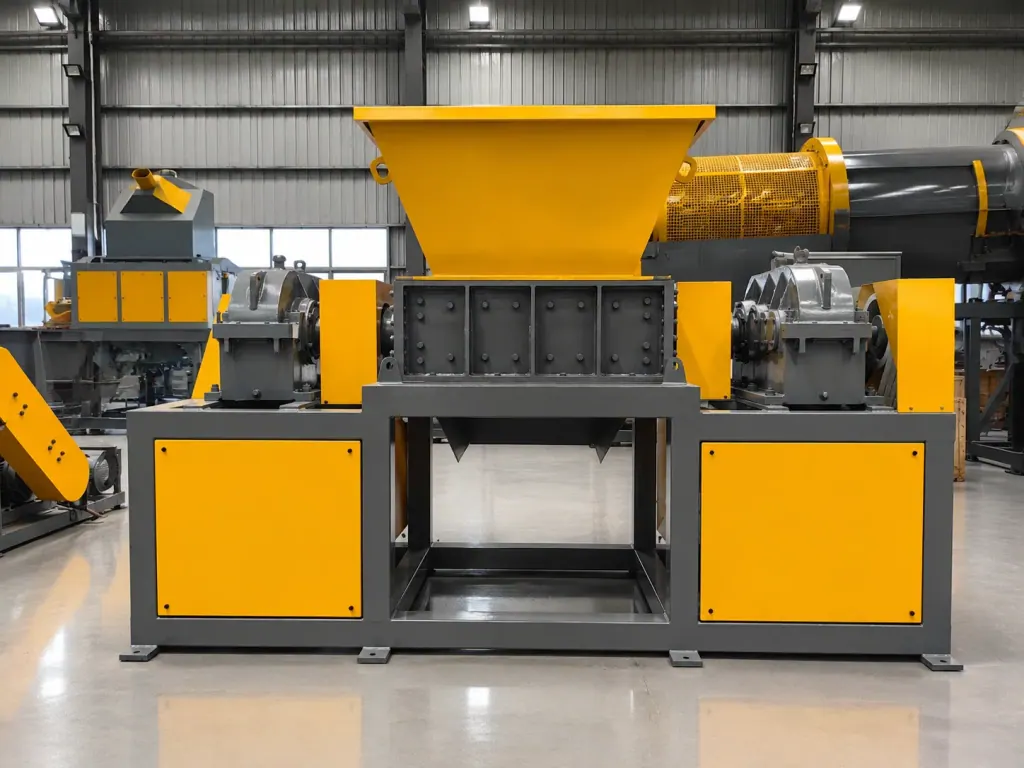
The Double-Shaft Shredder serves as primary pre-shredding equipment in a Ferrous Metal Shredding Line. Intermeshing alloy blades on dual rotors generate low-speed shear, tear, and compressive forces. These actions reduce oversized scrap metals like car bodies and industrial scrap steel into manageable fragments, preparing them for downstream magnetic separation and further processing.
Processing high-resistance materials such as ferrous metals demands shock-resistant drivetrain engineering and reliable electrical control logic. Gear reducer torque reserves during sudden stall conditions must be evaluated carefully to prevent mechanical drivetrain failure.
Correct power matching governs continuous throughput and directly affects downstream separation purity and melt efficiency. Verifying drive configurations, bearing isolation seals, and electrical protection limits remains a prerequisite for sustained plant availability.
| System Component | Operational Factors | Engineering Selection | Failure Prevention Goal |
|---|---|---|---|
| Gearbox and drive mechanism | High resistance from car bodies and industrial scrap steel | Precision gearboxes paired with high-torque motors | Preventing gear tooth fracture under peak shock loads |
| Main rotor bearing arrangement | Metal fine dispersion and axial impact transfer | External heavy-duty bearings with mechanical labyrinth seals | Preventing fine metal ingress and premature bearing wear |
| Overload protection logic | Current spikes caused by unshreddable contaminants | Sensor monitoring with millisecond auto-reverse cycle | Preventing motor burnouts and rotor shaft shear failure |
Power Source Selection and Torque Reserve Sizing Under Heavy Shock Loads
Processing heavy-gauge, ductile scrap like car bodies and industrial scrap steel calls for heavy-duty precision gearboxes with high reduction ratios. Main shaft rotational speed must not drop sharply as scrap enters the cutting chamber.
Without sufficient torque margins, shock loads from stalled material feed straight back along the blade shaft into the gearbox teeth, causing surface chipping or tooth shear. Rated drivetrain input torque must significantly exceed calculated averages for steady-state shredding. Internal gears require case-hardened teeth paired with tough, ductile cores.
Rotor tooling must match power input parameters. Thick cutting discs generate high shear forces when processing heavy scrap steel. The drive system must maintain steady output without tripping thermal overloads during continuous cutting cycles.
Drivetrain Shock Absorption and Bearing Seal Protection
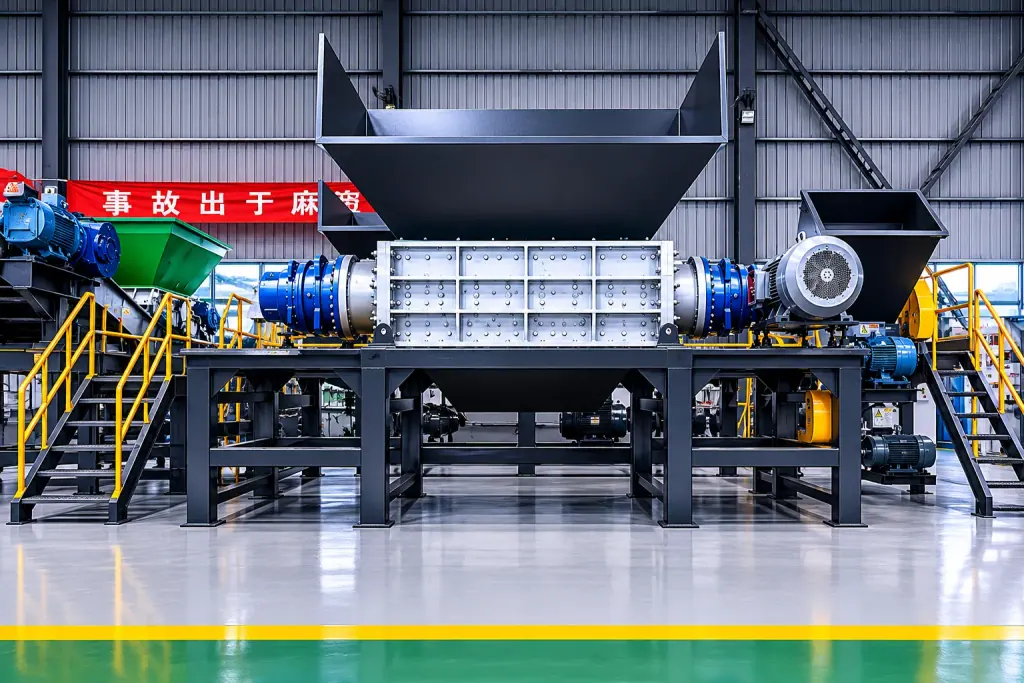
Shredding bulky ferrous scrap generates severe vibration. Heavy-duty couplings between the drive shaft and gearbox output shaft must absorb axial and radial misalignment, isolating gearbox internals from direct mechanical shock.
Bearing housings must sit externally or within an isolated cavity. Fine metal fines and scale are electrically conductive and abrasive. If bearings share housing space with the cutting chamber, compressed metallic dust cuts through standard elastomeric oil seals, causing bearing seizure.
Heavy-duty bearing assemblies with multi-stage labyrinth seals and deflector plates establish a physical barrier. Even with airborne metal fines inside the cutting chamber, grease cavities remain clean, preserving operational clearances under heavy loads.
Parameter Matching for Auto-Reverse and Overload Protection
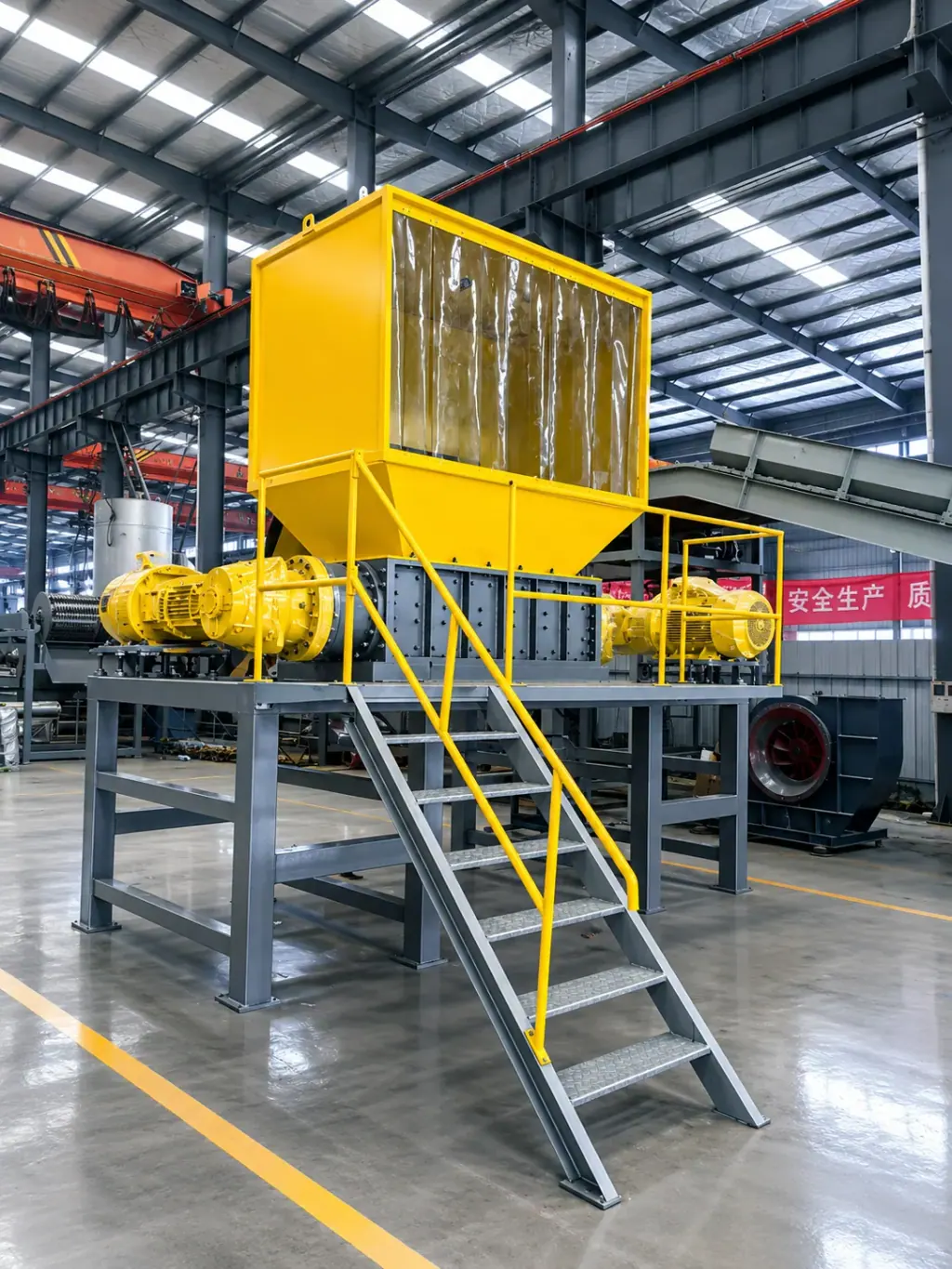
When unshreddable items like thick steel billets enter the chamber, mechanical forces spike within milliseconds. The electrical control system relies on current or pressure monitoring modules to interrupt forward feed once drive load hits a defined threshold.
Protection logic depends on stall duration. On detecting an overload, the main shafts stop immediately and reverse to release trapped feed, clear the blockage, or reorient the material before resuming forward cutting. If three consecutive reverse cycles fail to clear the condition, the unit halts, cuts off the infeed, and triggers an alarm.
Independent rotor drives offer clear advantages over single-drive configurations. When processing tangled materials, each shaft adjusts speed and rotation independently based on dedicated load sensors, preventing full-system stoppages caused by a single jammed rotor.
Machine in Action
FAQ
- What is the primary role of a Double-Shaft Shredder in a Ferrous Metal Shredding Line?
- Operating as primary shredding equipment, the Double-Shaft Shredder cuts, tears, and compresses bulky scrap like car bodies and industrial scrap steel into uniform fragments. Shredded scrap separates more cleanly downstream and reduces smelting energy consumption by 20%.
- How does the equipment protect itself when unshreddable metal jams the cutting chamber?
- Load-monitoring controls identify overloads in real time. Once current spikes beyond normal limits, the unit executes an auto-reverse sequence to clear jammed scrap. If the blockage persists after repeated attempts, the shredder shuts down and triggers an alarm to prevent drive component damage.
- Why do bearing assemblies require dedicated isolation when processing ferrous scrap?
- Shredding ferrous metal releases hard, sharp metal fines that rapidly damage bearing raceways if sealing fails. External heavy-duty bearing housings paired with multi-stage seals isolate the bearings from mechanical shock and metallic contamination, maintaining drivetrain stability under continuous operation.