
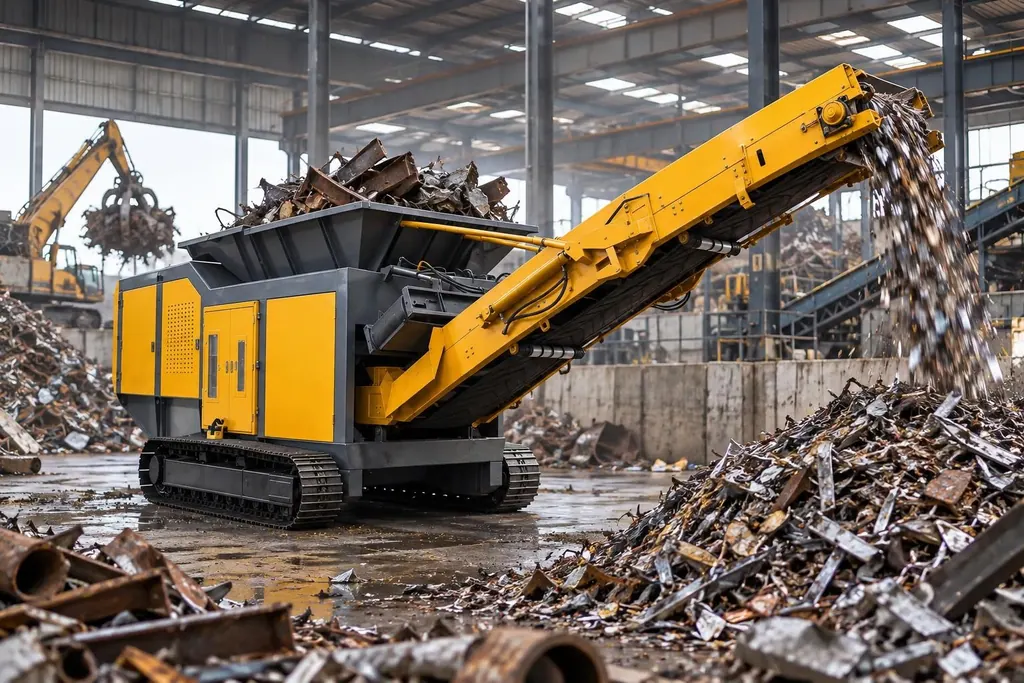
A Mobile Shredder relies on interleaved alloy knives to apply shear, tear, and compression forces. It processes demolition debris, car bodies, and industrial solid waste, while also handling primary size reduction upstream of a Ferrous Metal Shredding Line.
Working on remote stockpiles or scrap yards requires looking beyond the rated hourly throughput. Buyers must check ground load-bearing limits and hopper intake dimensions first, which prevents chassis sinking and shredding chamber stalls.
| Equipment Type | Target Materials | Throughput | Output Size Range | Selection Criteria |
|---|---|---|---|---|
| Mobile Shredder | Demolition waste, end-of-life vehicle scrap, industrial solid waste | 20-80 t/h | 30-200 mm | Chassis ground load for multi-site jobs; instantaneous anti-overload auto-reverse for volume reduction |
| Double-Shaft Shredder | Solid waste, mixed metals, bulky waste | Configuration dependent | Adjustable via knife setup | Shear torque for high-toughness feed; gearbox and bearing load ratings for steady heavy duty |
1. Chassis Load Ratings and Relocation for Multi-Site Field Operations
Processing car bodies and sheet metal creates intermittent shock loads. When working on uncompacted soil or demolition rubble, a narrow chassis footprint drives cutting chamber impact forces straight into the subgrade, causing the frame to sink and twist.
Selection depends on relocation frequency and surface hardness. If a stockpile is cleared in 2 to 3 weeks and the plant must track over soft ground, choose a self-propelled heavy-duty crawler chassis. When operating on poured concrete pads for months at a time, a wheeled towable chassis cuts track wear and avoids crawler maintenance expenses.
2. Dual-Rotor Shear Mechanics and Power Load Sizing
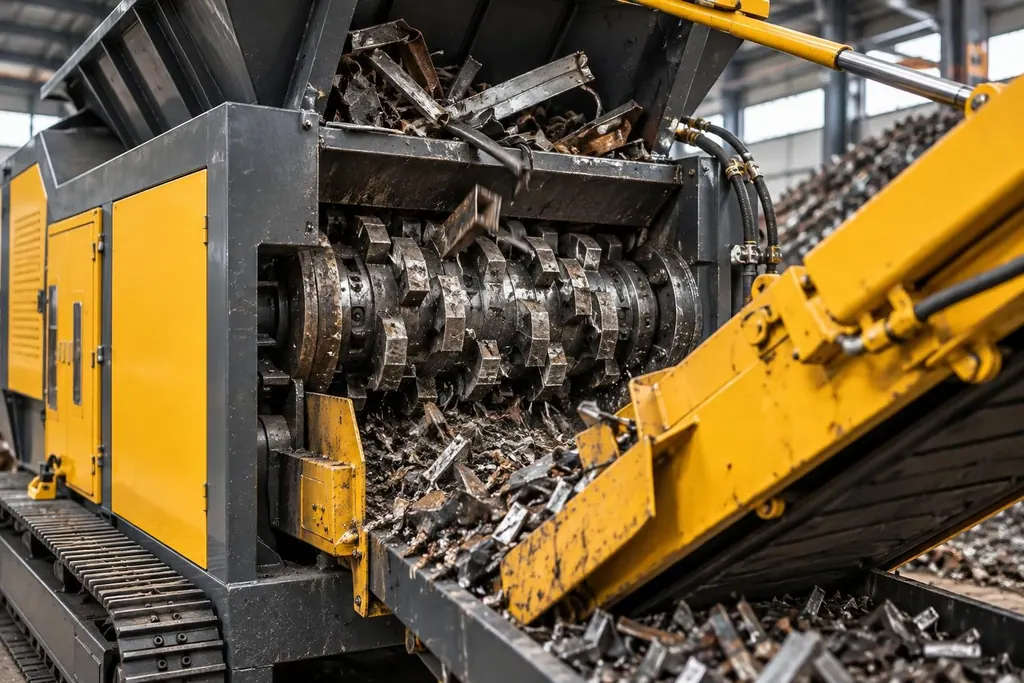
Dual rotors generate sudden stall torque spikes the instant knives bite into structural metal. Gearboxes and bearings must withstand these alternating stress cycles to prevent premature main shaft fatigue failure.
Material wall thickness and tensile strength dictate powertrain sizing. If heavy structural sections enter with the feed, the drive system needs an overload feedback module that triggers immediate reverse rotation on a steep speed drop, rather than letting the drive motor stall under full load.
For field installations, a Mobile Shredder operates in the 20-80 t/h range, producing discharge sizes adjustable from 30 to 200 mm. Excess knife spacing reduces the efficiency of downstream magnetic and mechanical separation equipment.
3. Feed Conveying and Overband Magnetic Separation Layout
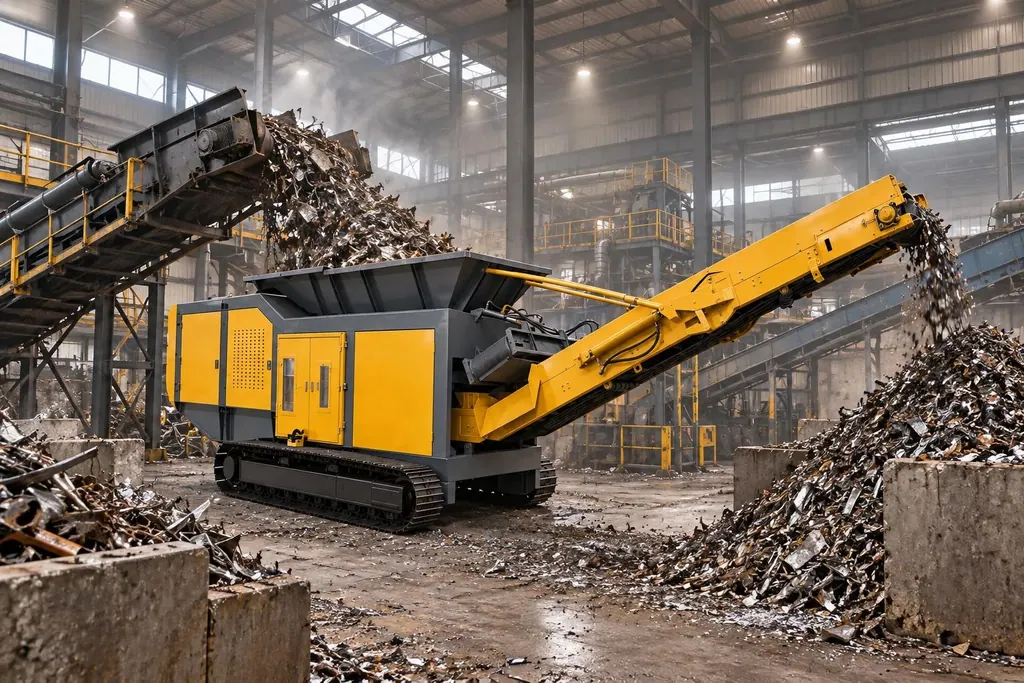
If the discharge conveyor is set too far below the suspended overband magnet, the material layer thickens on the belt. Ferrous pieces at the bottom of the burden will escape the magnetic field.
Selection hinges on downstream impurity limits. If shredded scrap feeds an electric arc furnace directly, single-stage shredding and magnetic separation are sufficient for stockpiling. When feeding into a Ferrous Metal Shredding Line for further purification, ensure the mobile discharge conveyor provides sufficient drop clearance to feed secondary shapers or trommel screens.
Machine in Action
FAQ
- What materials can a Mobile Shredder process in field conditions?
- A Mobile Shredder processes demolition debris, car bodies, and industrial solid waste. It reduces light scrap steel and bulky mixed iron through counter-rotating alloy knife discs inside the cutting chamber.
- How are throughput and output size evaluated on a Mobile Shredder?
- The unit delivers 20-80 t/h, with output sizing adjustable between 30 and 200 mm. Target sizing depends on intake limits of downstream melting furnaces or secondary crushers.
- How does a Mobile Shredder integrate upstream of a Ferrous Metal Shredding Line?
- After primary reduction by the Mobile Shredder, an overband magnet over the on-board discharge belt extracts ferrous scrap. For high-purity specifications, position the discharge head to feed directly into the receiving hopper of secondary shredding and sizing equipment.