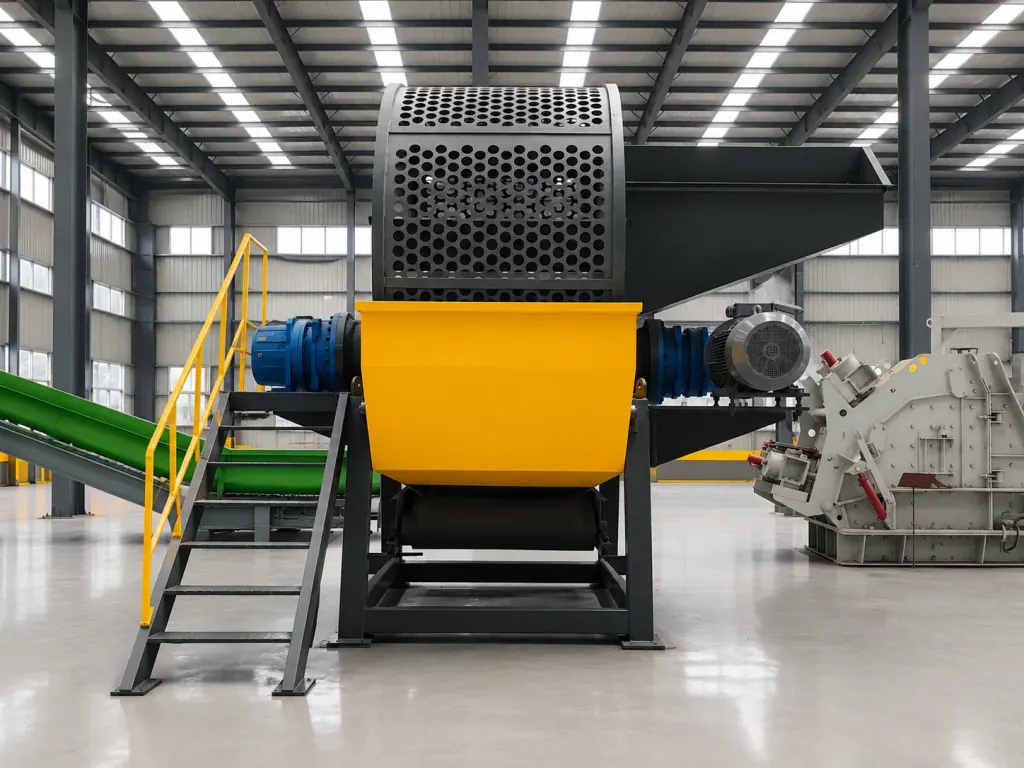
Double-Shaft Shredders handle primary size reduction and volume reduction in ferrous metal processing lines. Two low-speed counter-rotating shafts drive alloy cutting discs to shear, compress, and tear apart bulky scrap steel and sheet metals. This cuts irregular feeds into uniform fragments for downstream sorting.
Processing automotive bodies and industrial scrap exposes the machine to extreme impact shocks. Motor speed is not the primary sizing metric. Shaft torque delivery at low operating speeds determines actual performance. Inadequate shaft stiffness or low blade fracture toughness leads directly to broken shafts and chipped cutting edges under load.
Matching blade thickness, hook profiles, and overload reverse routines limits tool wear while stabilizing discharge sizing, reducing energy demand in downstream smelting by 20%.
| Component | Design Type | Process Stage | Selection Criteria |
|---|---|---|---|
| Double-Shaft Shredder Drive Unit | Electric Motor with Heavy Gearbox | Ferrous scrap primary reduction | Match shaft torque to maximum feed wall thickness, complete with auto-reverse overload logic |
| Alloy Blade Assembly | Interleaved Special Alloy Discs | Shearing and volume reduction stage | Narrow axial clearances for sheet metal to stop binding, large hook profiles for bulky scrap intake |
| Shaft and Bearing Support | Heavy Bearings in Monobloc Housing | Continuous heavy-duty shredding | Engineered to absorb radial cut shock, fitted with automated lubrication for component life |
Feed Material Properties in Primary Ferrous Shredding and Double-Shaft Shearing Mechanics
Decommissioned appliance shells, baled scrap, and industrial offcuts combine high tensile strength with tangled profiles. Single-shaft units push material with hydraulic rams, which often slip or stall against hollow, springy steel assemblies. Double-Shaft Shredders draw bulky scrap directly into the cutting chamber through counter-rotating shaft intermeshing, eliminating auxiliary rams.
The blades penetrate steel via pure mechanical shear rather than kinetic impact. Compared to hammer mills, low-speed shearing generates minimal dust and eliminates flying scrap fragments, raising sizing throughput by over 40% compared to legacy setups.
Sizing a Double-Shaft Shredder depends on wall thickness and ductility. Use dual-shaft shearing for ductile sheet scrap, automotive body panels, or appliance skins. Solid iron castings and heavy rail sections must be sorted out beforehand to prevent direct mechanical lockouts.
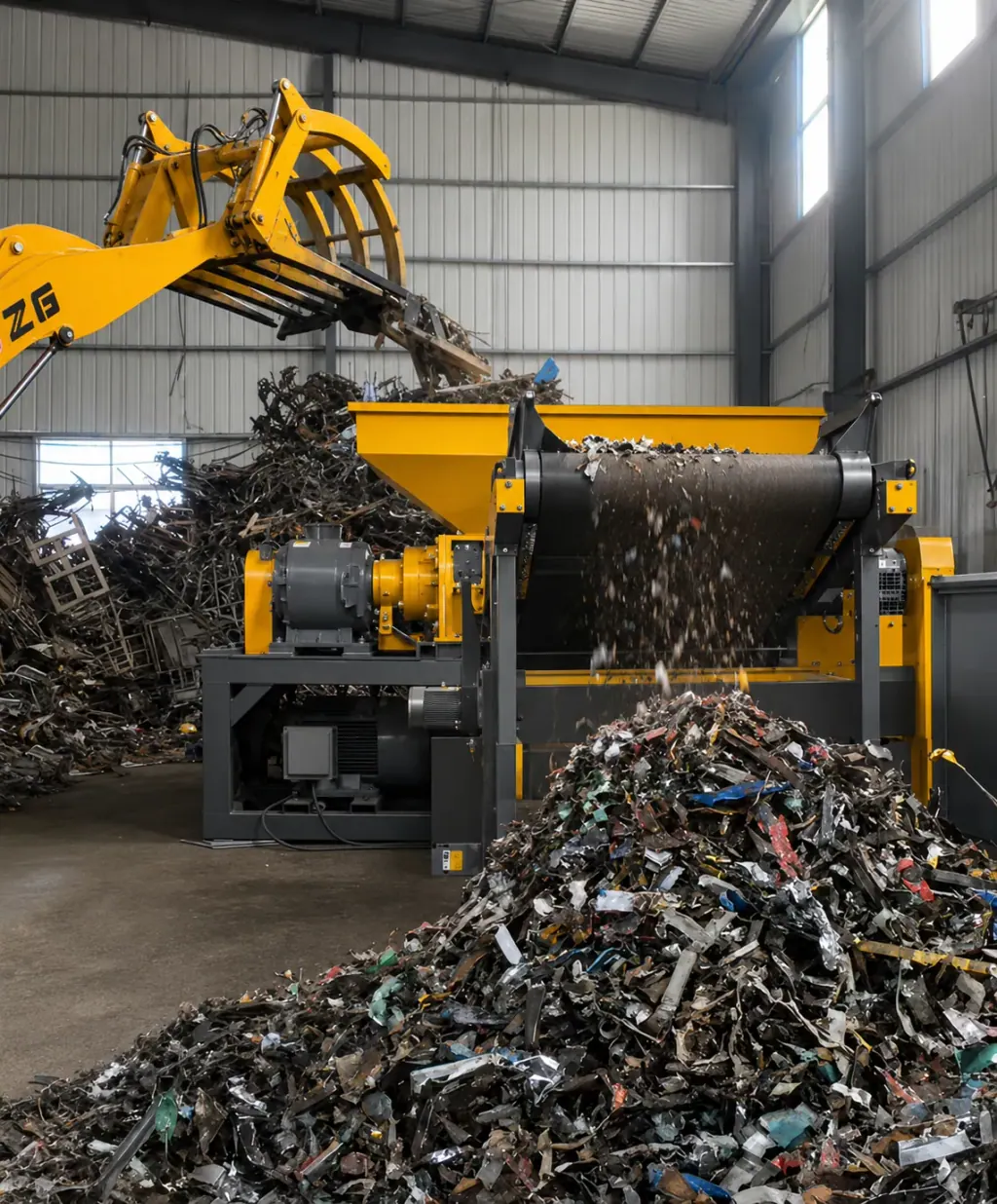
Heavy-Duty Shaft Torque Matching and Auto-Reverse Anti-Jam Logic
Shredding ferrous scrap requires substantial shaft torque. Heavy industrial gearboxes couple directly to the drive shafts, converting motor output into extreme torque at low rotational speeds. This forced torque overcomes the yield strength of distorted scrap steel.
When uncrushable steel sections enter the cutting chamber, drive motor current spikes instantly. The control system registers this overload signal and triggers an auto-reverse cycle to eject the lodged item, then returns to forward rotation. If repeated reversals fail to clear the blockage, the drive trips an alarm and stops the line for manual clearance.
Drive selection depends on peak incoming shock loads. If the feed carries structural steel profiles or solid drop fragments, the drivetrain requires heavy-duty gearboxes and fast-acting reverse logic to protect motors from burnout and preserve gear teeth under locked-rotor conditions.
Alloy Blade Clearances and Heavy Bearing Support Structures
Interlocking alloy cutting discs slide onto hexagonal or splined shafts, with cutting edges absorbing direct cutting resistance. The axial clearance between opposing discs dictates cut quality and bite resistance. Excessive clearances draw thin sheet metal into the gap, causing binding. Tight clearances risk blade-on-blade collisions when the shaft deflects under heavy loads.
Heavy-duty spherical roller bearings support both shaft ends within rigid housings, designed to absorb high radial shock loads during cut-through. Continuous lubrication lines deliver grease to dissipate friction heat and prevent journal scoring under sustained loads.
Hook counts and blade thicknesses are selected based on output specifications. Multi-hook narrow discs yield smaller shreds suitable for magnetic separation. Wide single-hook or double-hook discs deliver aggressive grab for primary volume reduction with minimal edge dulling.
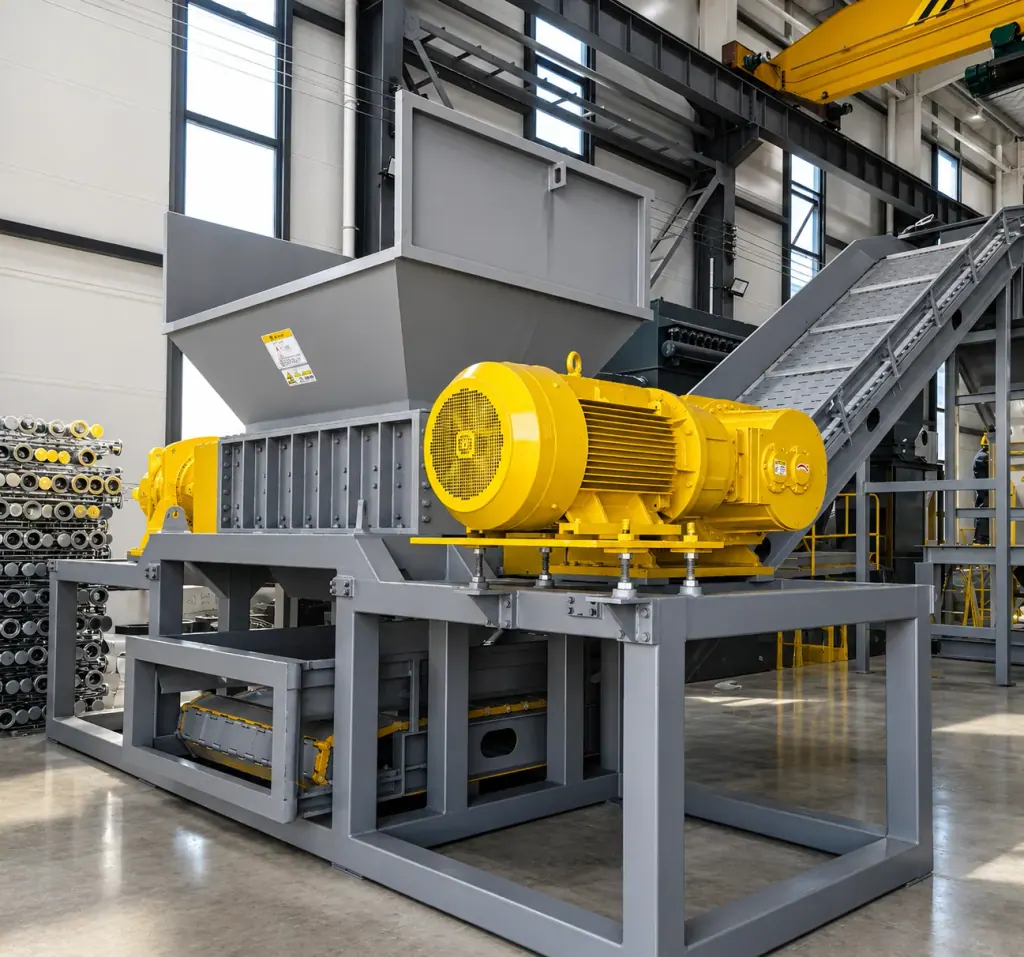
Machine in Action
FAQ
- What materials does a Double-Shaft Shredder process within a Ferrous Metal Shredding Line?
- It processes car bodies, white goods, sheet steel scrap, and assorted industrial ferrous offcuts. High torque at low operational speeds cuts bulky shapes into small pieces ready for downstream sorting equipment.
- How does a Double-Shaft Shredder protect itself against uncrushable metals?
- When motor current sensors detect an overload, the controller reverses shaft rotation to spit out the obstruction before resuming forward cut. If several attempts fail to clear the obstruction, the machine shuts down and alerts operators, preventing motor burnout and shaft failure.
- What downstream machinery completes a production line behind a Double-Shaft Shredder?
- Shredded discharge travels via belt conveyors to magnetic separators for ferrous recovery. Eddy current separators recover non-ferrous metals such as aluminum and copper, while downstream secondary shredders provide further size reduction when required.