
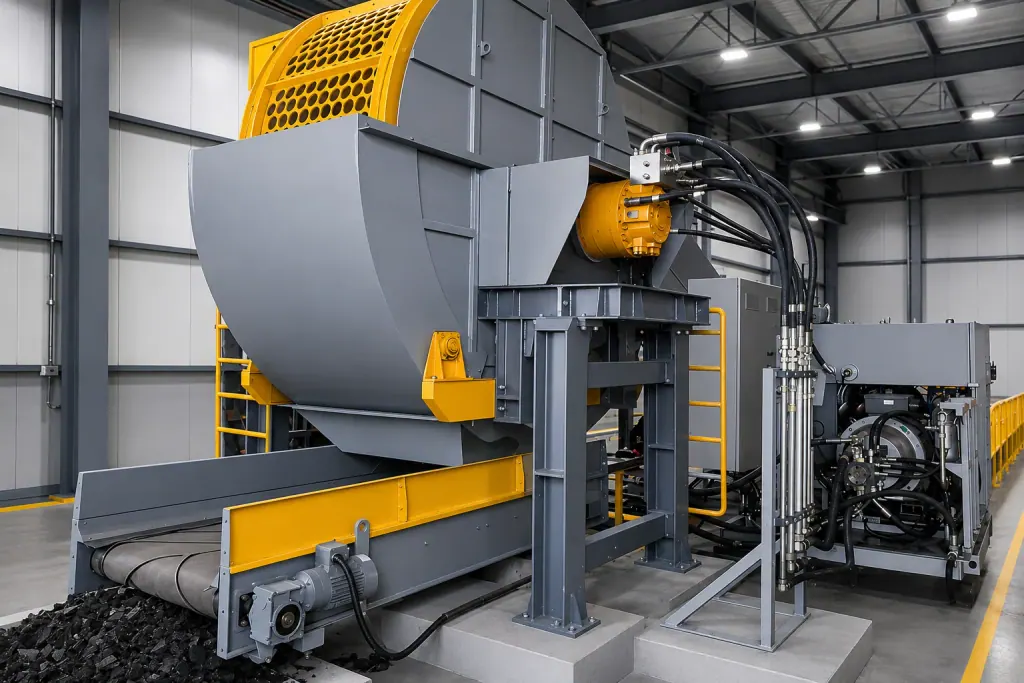
On primary ferrous metal lines, the Double-Shaft Shredder shears, tears, and compresses car bodies or industrial scrap using two sets of interleaved alloy blades, reducing volume for downstream melting or sorting.
Sizing requires checking the reducer output torque and knife wear specs, not just motor power. Radial shock peaks sharply when car shells or thick scrap enter the chamber. Insufficient shaft rigidity or low gearbox service factors can strip teeth or snap the main rotor.
| Application Type | Feed Material Characteristics | Blade Tooth Configuration | Selection Criteria |
|---|---|---|---|
| Light gauge sheet and bale primary shredding | Car shells, sheet metal stamping off-cuts | Multi-hook, narrow-tooth interleaved alloy blades | Prioritizes high bite frequency and volume reduction, relying on multiple edges to tear open compacted bales |
| Heavy-duty industrial scrap shredding | Thick-walled industrial scrap, structural steel | Single-hook or double-hook heavy wide-tooth blades | Requires maximum point penetration and high shaft bending stiffness to prevent stalling from dense tooth spacing |
Torque and Impact Load Demands on Rotors in Ferrous Metal Primary Shredding
Ferrous metal exhibits high shear strength. Both shafts must maintain continuous torque output while handling shock loads caused by jammed structural sections. Heavy-duty rotor cores are forged from solid alloy steel and dynamically balanced to control vibration and maintain concentricity during cutting.
Rigidity shows at the connection between bearing housings and gearboxes. If feed material includes thick-walled items, shaft center distance and diameter must be verified against ultimate yield limits to prevent bending. Heavy-duty self-aligning bearings and reinforced side walls absorb eccentric impacts.
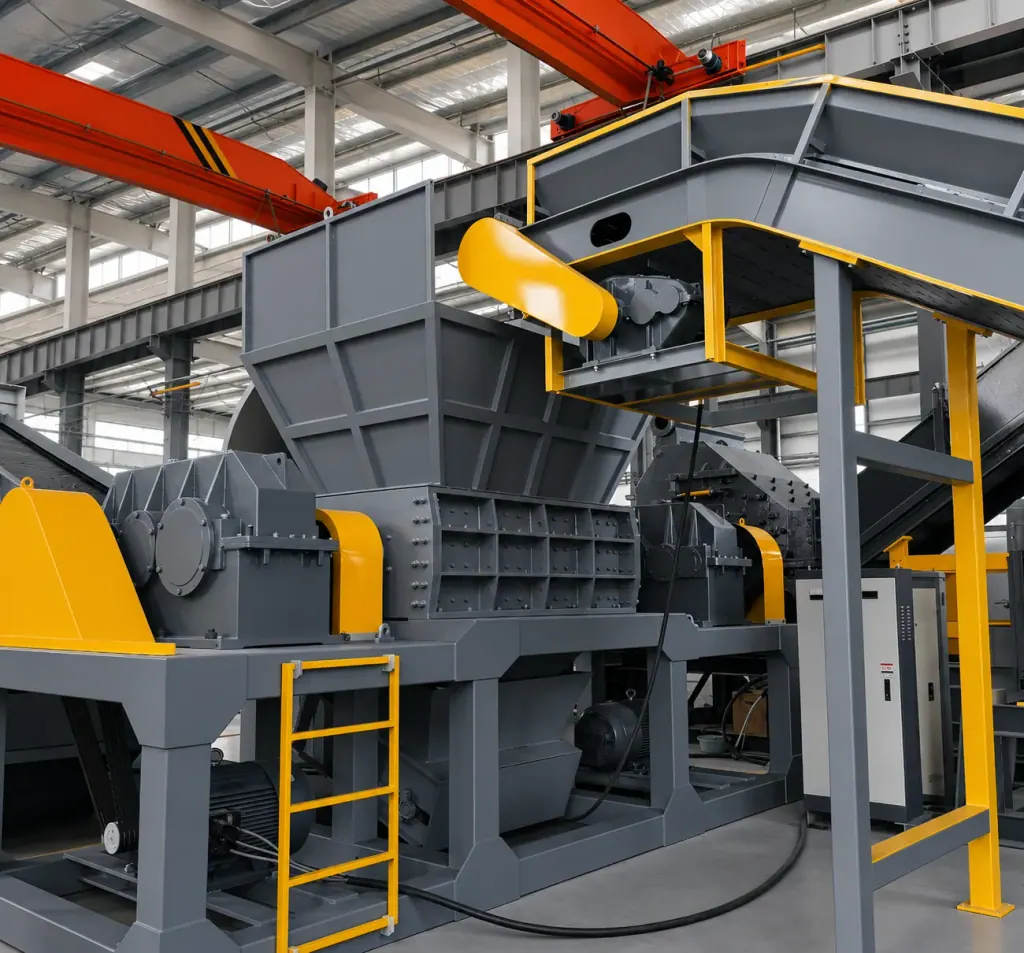
Alloy Blade Metallurgy and Tooth Profiles for Varied Scrap Thickness
Blades directly engage hard metals, demanding a compromise between wear resistance and fracture toughness. Excessive hardness extends working life on uniform feed, but solid steel items will chip the edges. Baled sheet metal and vehicle shells require high-wear alloy blades with multi-hook geometries to tear skins quickly.
Tooth selection depends on feed thickness and target shred size. Thick industrial scrap calls for single-hook or double-hook profiles that provide deep penetration and high tear force. Processing thin sheet requires multi-hook narrow teeth to increase cut frequency. Adjusting blade thickness and spacer clearance prevents thin stock from jamming or smearing along the cutting edge.
Drive Protection and Automatic Reverse Logic on Overload
Ferrous scrap streams regularly contain unshreddable solid items, requiring responsive overload protection. The control panel monitors motor current. If a jam creates a current spike, the system cuts forward power in milliseconds and commands the shafts to reverse, clearing the obstacle.
Sizing must account for automatic re-engagement during continuous feed. The system discharges the tramp material, then resumes forward rotation. If repeated attempts fail to clear the chamber, the shredder shuts down and triggers an alarm, shielding gearboxes and bearings from secondary shock loads.
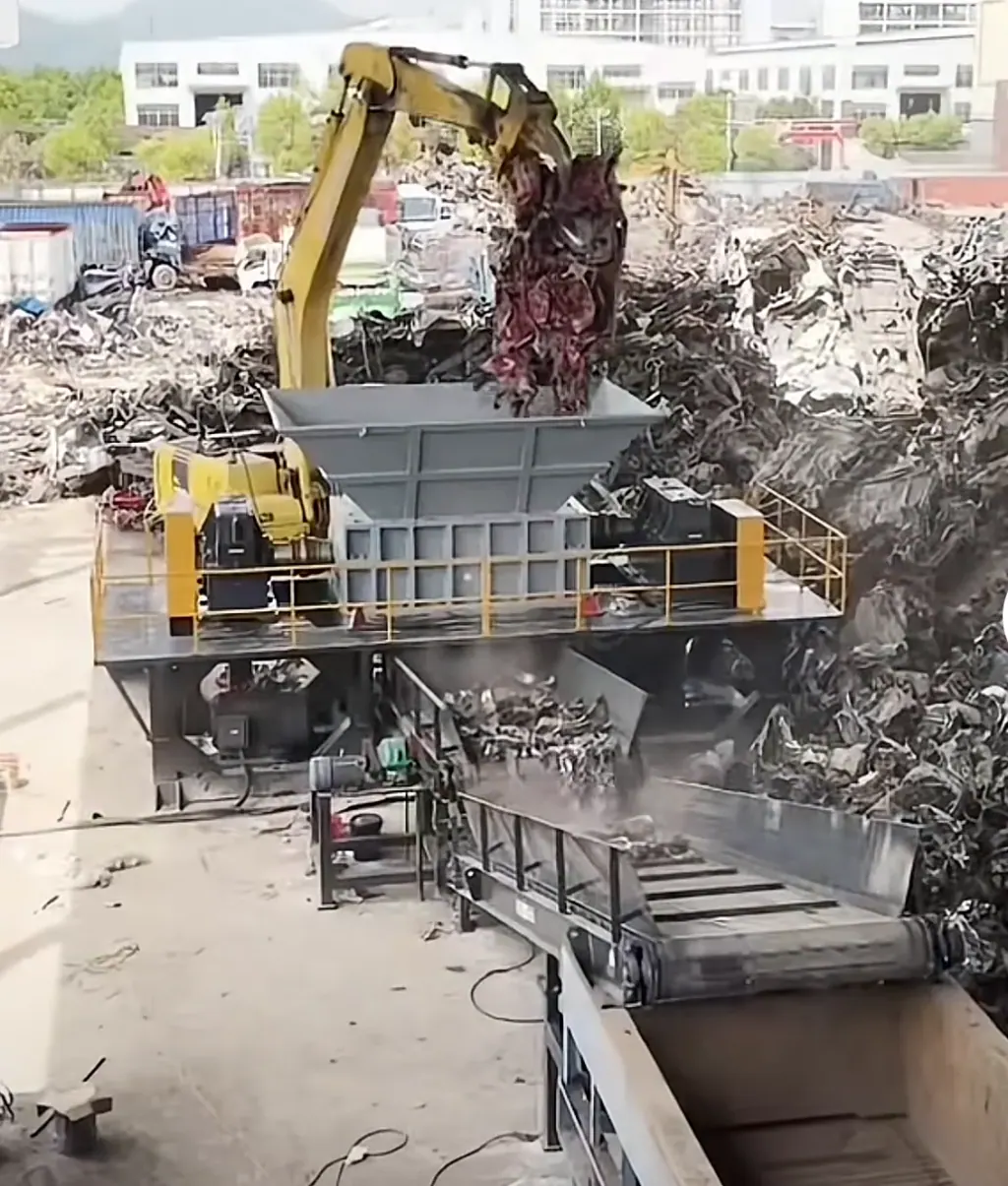
Machine in Action
FAQ
- Can a Double-Shaft Shredder process whole, undismantled car shells directly?
- Yes. The dual counter-rotating shafts grab the vehicle body, flattening and tearing the sheet steel through combined shearing and ripping action.
- How does the equipment protect itself when unshreddable heavy metal enters the chamber?
- The control panel registers the current surge and reverses the shafts immediately to expel the hard object, preventing sustained overload torque on the gearbox and rotor.
- What equipment follows the Double-Shaft Shredder in a Ferrous Metal Shredding Line?
- A discharge conveyor transfers the shredded fraction to a magnetic separator for iron recovery, followed by an eddy current separator to isolate non-ferrous metals.