
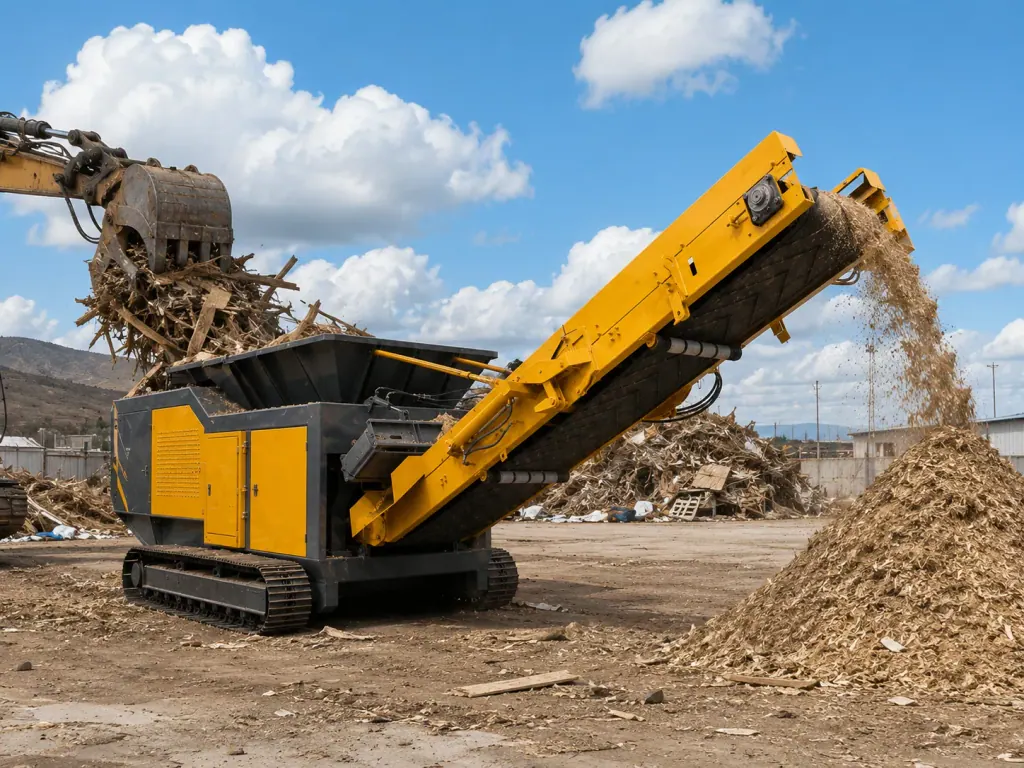
A Mobile Shredder integrates an infeed hopper, a shear cutting chamber, and a motorized chassis, using staggered alloy cutters to shear and tear incoming feed. This unit operates primarily at the front end of a WEEE Recycling Line for primary coarse reduction, large-scale bulky solid waste volume reduction, or multi-site mobile processing.
Processing scrap refrigerators, washing machines, and air conditioner casings with stationary units requires hauling loose scrap to a central yard. For cross-regional processing or distributed collection, moving the Mobile Shredder directly to regional stockyards compacts hollow scrap on site, eliminating long-distance freight costs for light, bulky loads.
| Equipment Parameter | Specification | Process Description |
|---|---|---|
| Throughput Capacity | 20-80 t/h | Continuous primary shredding of mixed appliance scrap and industrial waste |
| Discharge Size | 30-200 mm | Adjustable output sizing for material liberation and magnetic extraction |
| Process Stage | WEEE Recycling Line primary reduction | Upstream volume reduction and liberation before magnetic and eddy current separation |
Mobile Chassis and Mobility Configuration Requirements
Mobile processing operations require a chassis that balances load-bearing rigidity with transfer efficiency. Tracked chassis suit unpaved mud, loose construction demolition waste yards, and steep terrain by maintaining low ground bearing pressure. Wheeled towable chassis rely on tractor units for transport and fit paved highway transfers between industrial plants.
Chassis selection depends on ground preparation and relocation frequency. If relocation between two or three unpaved yards occurs weekly, a tracked mobile chassis prevents wheel entrapment in mud. For continuous operations exceeding one month on cured concrete slabs, a wheeled towable chassis provides practical mobility.
The chassis structure must incorporate mechanical locking stops for the infeed hopper and discharge conveyor supports. Cutting sheet metal from discarded appliances generates heavy vibration. Securing these mechanical stops isolates the chassis suspension from cyclic shock loads and protects the frame from fatigue deformation.
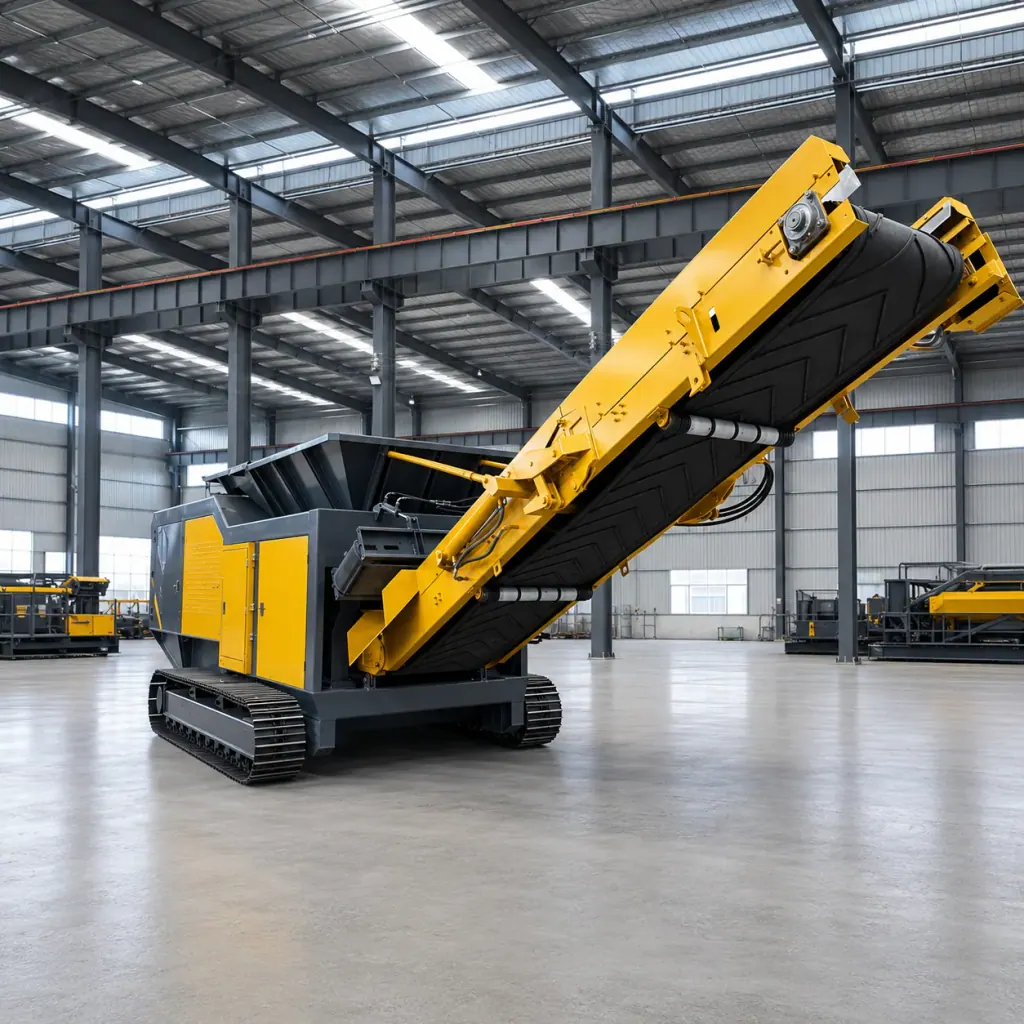
Appliance Shell Cutting Chamber and Low-Speed High-Torque Drive Selection
Feed streams in WEEE processing contain thin sheet metal, rigid plastic liners, foam insulation, and occasional cast iron parts. High-speed grinders risk cutter breakage or jamming when encountering thick-walled components like uncut compressors or motor shafts. A low-speed, high-torque twin-shaft shear chamber forces hollow appliance shells downward through counter-rotating shafts equipped with alloy knives.
Drive selection depends on feed contamination and motor overload resistance. When processing unsorted whole appliances, the cutting chamber must feature high-torque transmission with automatic reverse protection, immediately reversing under hard blockages to clear the chamber and prevent motor stalls. If manual sorting removes all drive motors and thick steel scrap upfront, higher shaft speeds can be applied to maximize throughput.
The Jushengding Mobile Shredder provides a throughput capacity of 20-80 t/h, with output sizing adjustable within 30-200 mm. Operating within this range on refrigerator and air conditioner shells liberates composite sheet materials without over-crushing foam insulation into airborne fines.
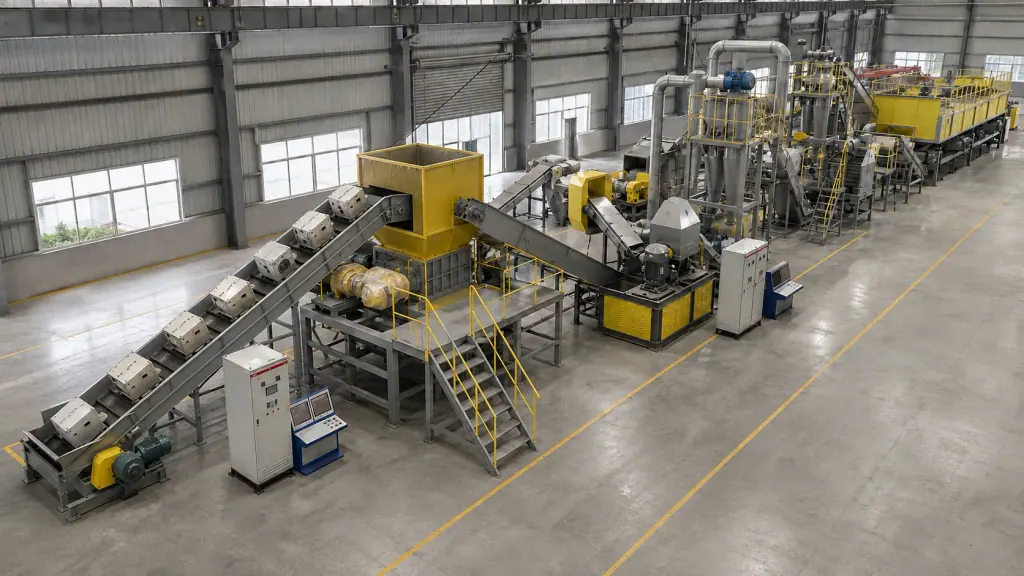
Feed Splash Guarding and Downstream Magnetic Separation Parameters
Appliance casings are light, springy, and laden with foam insulation. Without an active pusher or proper baffles, materials tend to bounce and float on top of the cutters. Feed systems typically use heavy-duty apron feeders or grapples, paired with reinforced hopper side extensions that deflect flying metal fragments away from surrounding personnel.
Discharge layout depends on the downstream separation process. Shredded material exits via a discharge belt conveyor directly beneath an overbelt cross-belt magnetic separator to pull ferrous metal. Once ferrous items are removed, remaining non-ferrous metals and plastic fractions transfer directly to secondary processing.
Mounting a self-cleaning overbelt magnet at the conveyor discharge depends on freight economics. If material moves directly to a centralized sorting facility after primary shredding, separating and stacking compacted ferrous scrap on site removes significant mixed-load transport expense.
Machine in Action
FAQ
- Can the Mobile Shredder directly shred whole scrap refrigerators containing compressors?
- The cutting chamber can rip the outer shell, but heavy compressors feature thick cast walls and contain residual oil, making manual removal upfront advisable. Forcing whole compressors through the cutters accelerates blade wear, while spilled lubricant contaminates shredded plastic fractions.
- How is the output sizing of the Mobile Shredder determined?
- Discharge size on the Mobile Shredder adjusts between 30-200 mm. If material transfers directly to a conveyor for gross magnetic separation, a coarser setting delivers higher throughput. If it feeds directly into downstream fine separation equipment, a tighter setting ensures thorough liberation between sheet steel and plastic.
- Does a tracked Mobile Shredder require a poured concrete foundation on site?
- No concrete foundation is required. The machinery mounts directly on a heavy-duty crawler undercarriage with integrated hydraulic landing legs. Lowering the landing legs on compacted, level ground provides a stable operating base, after which the legs retract to track the unit to the next location.