
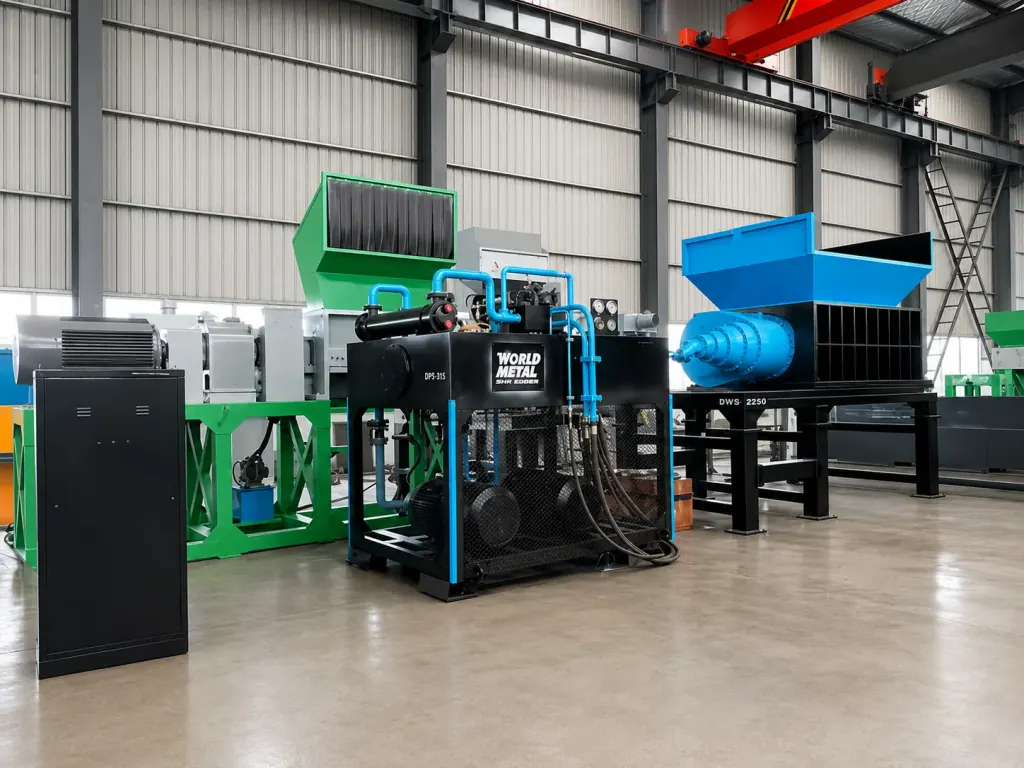
The Hydraulic Shredder operates at the intake of appliance processing lines to perform primary volume reduction. Hydraulic motors drive counter-rotating dual shafts at low rotational speeds with high torque. This setup tears through refrigerator cabinets, washing machine housings, and air conditioner casings while chewing through any heavy internal metal components inside them.
Many recycling plants face chronic jamming and electrical trips because drive engineering only accounts for light sheet steel. Those baseline calculations overlook what happens when sealed compressor housings, motor armatures, or solid counterbalance weights drop into the feed hopper. Mechanical gear trains rely on rigid contact; when they hit solid tramp iron, the result is broken gear teeth or motor stator burnouts. Switching to hydraulic drives routes peak stall forces through relief valves, shedding shock loads straight into the fluid circuit.
Evaluating this machine comes down to two design checks: whether the cutting chamber structure withstands sudden uncrushable hits, and whether the hydraulic valving vents and clears fast enough when an obstruction blocks the blades.
| Drive Configuration | Target Feed Conditions | Overload Protection Method | Engineering Selection Rule |
|---|---|---|---|
| Hydraulic Shredder System | Mixed appliance feed containing compressors, motor rotors, and thick metal sections | Hydraulic relief valve cushions shock loads with millisecond-scale forward-reverse cycling | Mandatory without manual pre-sorting or when uncrushable tramp metal enters the hopper |
| Mechanical Motor Drive System | Pre-sorted appliance scrap limited to plastic housings and thin sheet metal | Thermal overloads and drive inverter current trips under rigid gearbox loading | Suitable only for uniform feeds with controlled top sizes and zero solid cast iron components |
1. Feed Stream Variability and Hydraulic Drive Shock Resistance
Feed stock entering the hopper varies widely. While outer casings consist of thin sheet metal and polymers, inside structures contain compressor cast blocks, washing machine spinner shafts, and heavy wiring harnesses. Deciding whether to install a Hydraulic Shredder depends on upstream sorting labor. If operators feed whole white goods without removing heavy motors or sealed compressors, a hydraulic drive is mandatory rather than a mechanical gearbox.
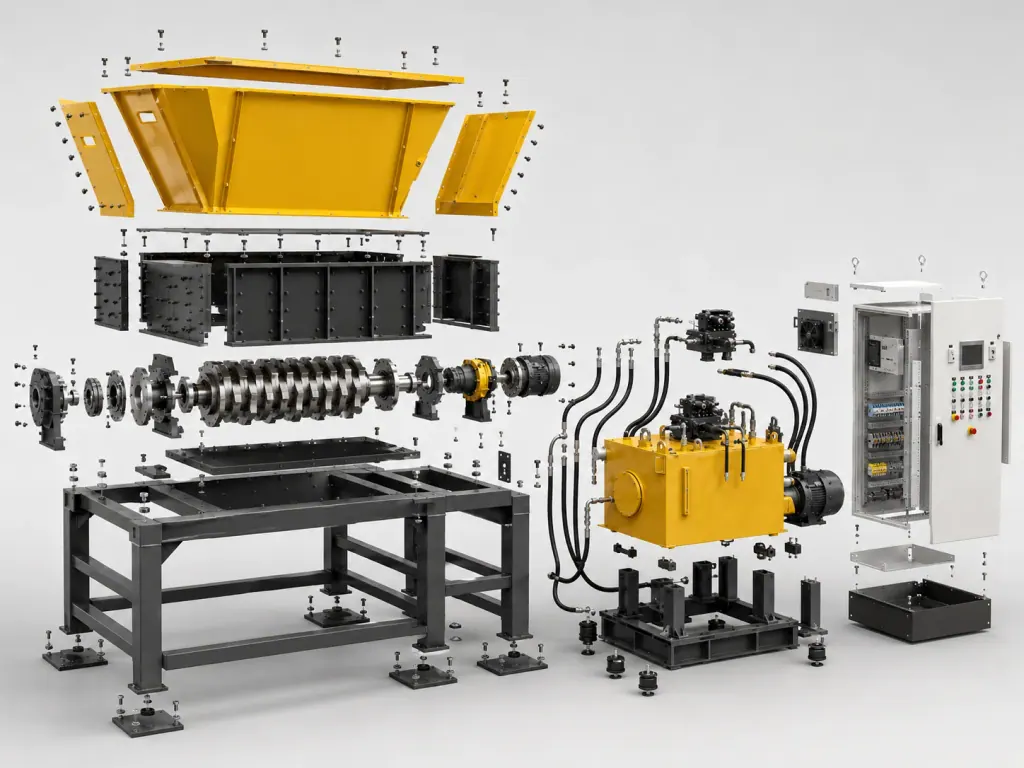
Gearbox reducers provide a rigid transmission path. When rotating cutters strike solid iron, rotor inertia travels straight back through the shaft into the gear teeth, stripping them immediately. A hydraulic power unit uses pressurized fluid to rotate the hydraulic motors. When cutting edges stall against hard tramp metal, circuit pressure surges against relief valves and bypasses fluid back to tank, keeping the shafts and bearings isolated from mechanical shock.
Pressure transducers detect the hydraulic pressure spike and shift directional spool valves to reverse shaft rotation. The reverse cycle displaces the stubborn item so the blades can re-engage, eliminating manual hopper cleanouts by site personnel.
2. Drive Sizing Logic for Low Speed and High Torque
Drive sizing depends on peak shear resistance from the hardest expected single component rather than gross hourly tonnage throughput. When electronic scrap contains intact electric motors, the cutter shafts must turn very slowly under extreme continuous torque. Running at higher speeds reduces cutting penetration and increases stall incidents.
High-displacement hydraulic motors combined with variable displacement piston pumps generate full rated torque at near-zero shaft speeds. When cutting thin sheet steel, the hydraulic pump ramps up flow to accelerate the shafts. When encountering heavy iron sections, system pressure climbs while shaft speed drops, letting hydraulic pressure force the cutters through the metal.
System calculations require sizing maximum operating relief pressure against the cross section of the largest solid metal part likely to pass through the hopper. For processing facilities with limited transformer capacity, electro-hydraulic power packs also avoid the severe electrical current surges typical of direct-on-line electric motor starts under load.
3. Cutter Steels and Anti-Wrapping Wear Protection for Mixed Scrap
Mixed appliance scrap exposes cutters to multiple wear mechanisms. Stamped sheet metal rounds over the cutting edges, thin wiring migrates into clearances along the shaft, and induction-hardened shafts chip cutting tips. Knife selection depends on cable content. When handling high volumes of wiring, stationary cleaning scrapers mounted next to the counter-knives prevent fine copper and aluminum wire from migrating into shaft seals and overheating the bearings.
Rotor knives require high fracture toughness alongside abrasive wear resistance. Conventional high-carbon steels crack when striking uncrushable items. Solid forged alloy steel with differential heat treatment provides a ductile core beneath a hardened wear edge. Multi-hook profiles rip thin outer panels apart, whereas single-hook geometries fail to grab and tear thin sheet.
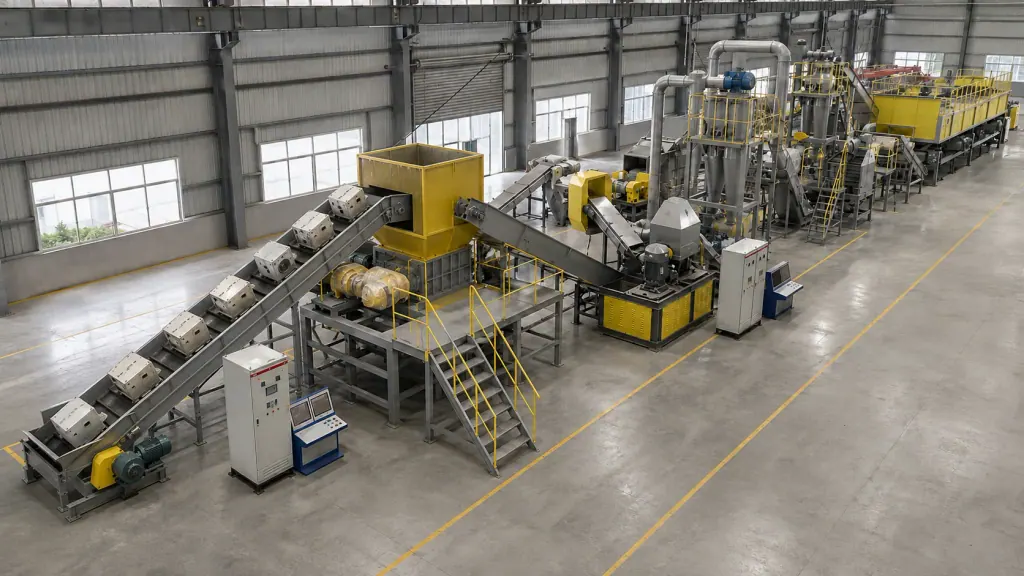
Inside the Jushengding WEEE Recycling Line, primary Hydraulic Shredder discharge travels under magnetic separators to extract ferrous scrap, followed by eddy current separators to recover copper and aluminum. Optical sorters and air classifiers isolate the polymer fraction, reaching over 98% metal recovery and polymer purity exceeding 95%. Primary shredding must pull metal inserts away from plastic frames, making cutter clearance calibration critical for clean liberation.
FAQ
- When does a WEEE Recycling Line require a Hydraulic Shredder instead of an electric mechanical drive?
- A Hydraulic Shredder is necessary whenever the feed stream includes unstripped compressor blocks, drive motor rotors, or heavy cast-iron fragments. The hydraulic circuit vents peak pressures across safety valves during sudden stalls, preventing gear failure inside the driveline.
- What downstream separation equipment follows primary reduction in a Hydraulic Shredder?
- Material discharged from primary reduction enters the Jushengding WEEE Recycling Line downstream stages. Overband magnets pull ferrous metals, eddy current separators extract non-ferrous metals such as copper and aluminum, and air classification paired with optical sorting isolates plastics. The integrated line achieves over 98% metal recovery and plastic purity above 95%.
- What knife configurations prevent shaft wrapping when processing scrap with high wire and cable content?
- The rotor requires wear-resistant alloy knives machined with multi-hook profiles, supplemented by stationary cleaning scrapers positioned between the cutters. These scrapers stop long, thin wires from packing into the shaft spaces, eliminating friction build-up and shaft stalls.