
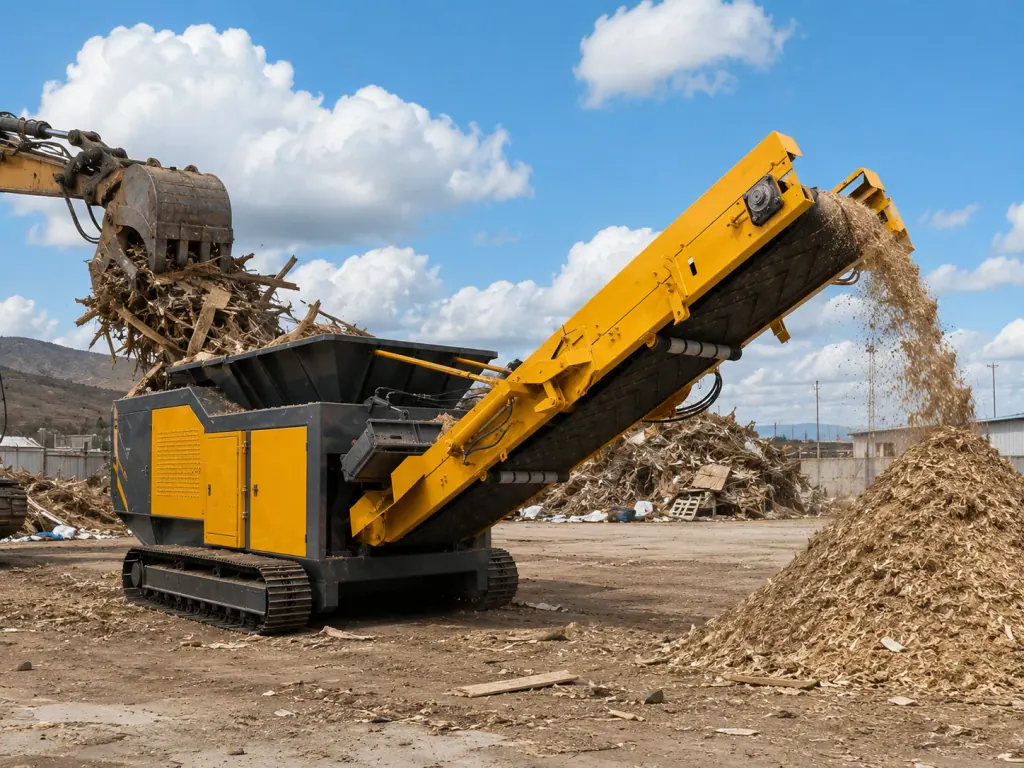
A Mobile Shredder is an on-site primary reduction unit mounted on a tracked chassis and fitted with a high-torque cutting chamber. It shears and crushes industrial plastics through interleaved alloy blades, serving primary volume reduction and frequent site relocation across Plastic Crushing & Recycling Lines.
Stockpiles and dismantling yards often have scattered scrap piles. Transporting them back to a static plant demands repeated wheel loader hauling and trucking. A Mobile Shredder integrates the infeed hopper, shredding chamber, and discharge conveyor on a single crawler frame, moving directly to the feed pile to eliminate rehandling costs.
Specification depends on the tear resistance of the material and site relocation frequency. Processing rigid plastic purgings imposes vastly different torque and anti-wrapping requirements than baled film. Chassis load ratings and drive power must be matched directly against specific infeed conditions.
| Machine Model | Throughput | Discharge Adjustment Range | Core Construction Details | Typical Applications |
|---|---|---|---|---|
| Mobile Shredder | 20-80 t/h | 30-200 mm | Tracked chassis, dual-shaft interleaved alloy blades, heavy-duty gearbox | Scrap plastics, demolition debris, industrial solid waste |
1. Mobile Chassis Construction and Load Evaluation for Difficult Ground
Plastic scrap yards often feature muddy ground or surfaces scattered with sharp debris. A tracked undercarriage provides a broad ground contact patch that distributes machine weight and prevents sinkage, allowing smooth repositioning between scrap piles across the facility.
Chassis selection requires calculating static unit weight alongside dynamic shock loads during active shredding. For units with throughput ratings of 20-80 t/h, blade engagement with hard feed generates cyclic alternating stresses. Insufficient stiffness in the bottom chassis beams causes deflection, leading to misalignment and drivetrain damage.
Chassis choice depends on relocation frequency and ground conditions. For outdoor dismantling yards where the working face advances every few days, a tracked undercarriage with radio remote control allows single-operator repositioning. For paved indoor sheds, a standard wheeled tow chassis is sufficient, avoiding the cost of heavy-duty crawler tracks.
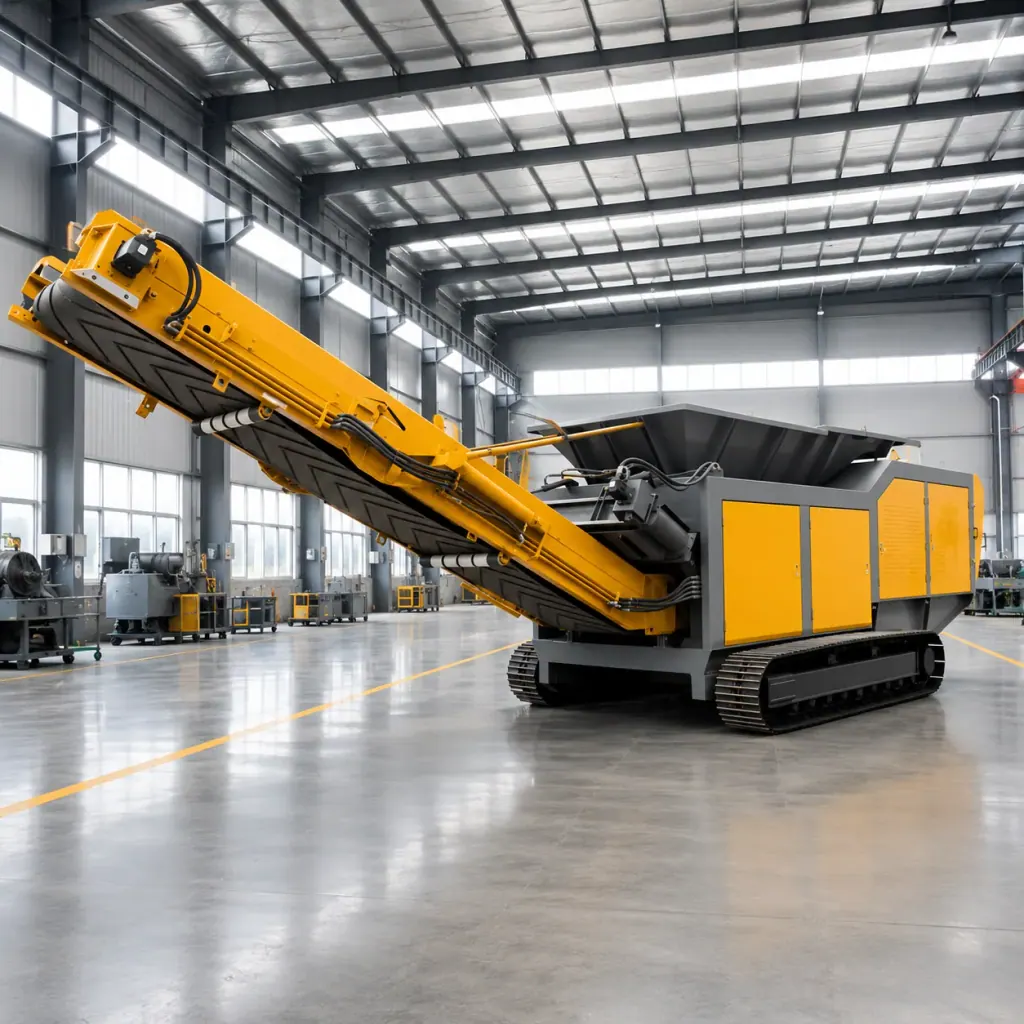
2. Dual-Power Drivetrain and Shredding Torque Requirements
In remote areas or scrap yards lacking transformer capacity, an onboard diesel engine drives the hydraulic pumps directly. In sorting halls with complete industrial power drops, plugging into the grid via electric drive cuts fuel costs.
When purgings or heavy-wall pipes drop into the shredding chamber, rotor resistance surges instantly. A Double-Shaft Shredder utilizes interleaved alloy blades through an industrial gearbox to deliver high torque at low speed, achieving over 40% higher throughput than legacy shredding systems while absorbing dynamic shock loads from incoming materials.
Drivetrain configuration depends on local grid capacity and peak electrical loads. For long-term installations with adequate transformer margin, external line power offers the lowest cost per ton. For remote yard clear-outs without three-phase utility power, a diesel generator set of equal rated power is mandatory to prevent stalling under heavy load spikes.
3. Rotor Design and Anti-Wrapping Systems for Rigids and Films
Rigid plastics and soft films behave differently under shear. Hollow containers and injection purgings fracture readily under aggressive tooth profiles and counter-roll compression. Conversely, high-tensile films and woven sacks tend to wrap around the shafts when not cleanly severed, risking rotor lockup and shaft damage.
When processing mixed plastics, discharge size can be adjusted between 30-200 mm. Setting the tooth pitch on the rotor discs and calibrating counter-knife clearance controls the output profile. A tight knife overlap shears stretched film fibers cleanly, reducing material packing around the shaft seals.
Chamber configuration must match the physical form of the material. Feedstocks consisting primarily of agricultural films and wrapping materials require dense-tooth rotors combined with active cleaning scrapers. Feeds dominated by automotive bumpers, appliance housings, and rigid pallets require deep-hook profiles to maintain intake rates.
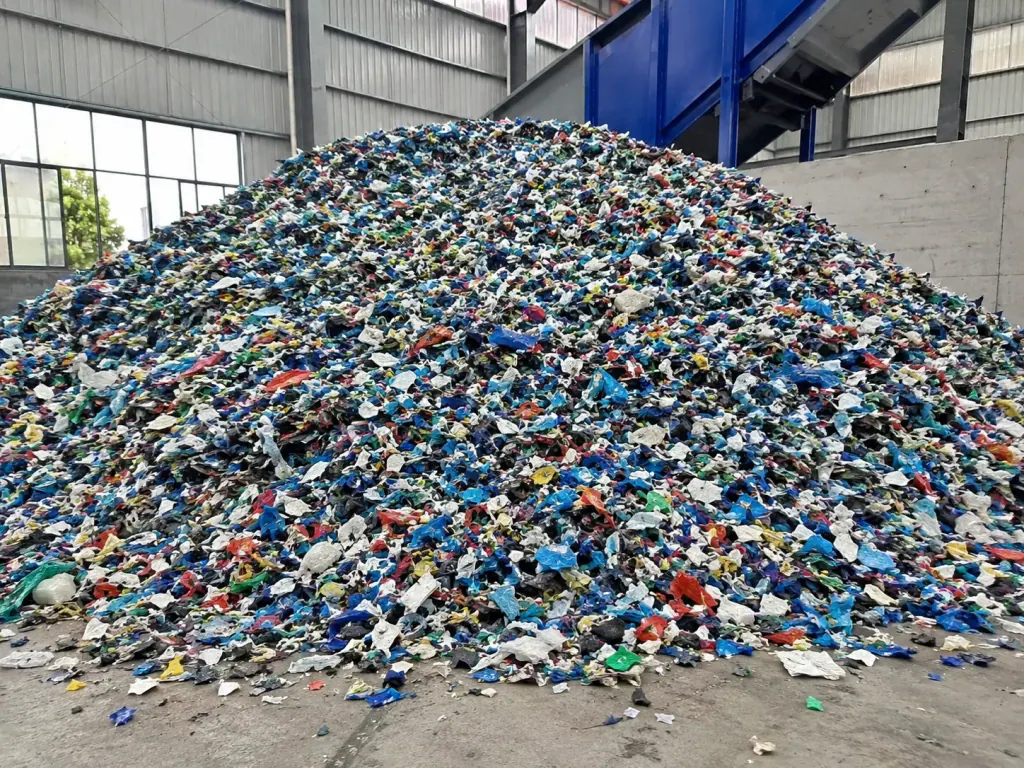
Machine in Action
FAQ
- What are the throughput capacity and discharge specs of the Mobile Shredder on waste plastics?
- The Mobile Shredder delivers a throughput of 20-80 t/h. Discharge size is adjustable from 30-200 mm, handling primary coarse shredding and volume reduction for scrap plastics and industrial solid waste.
- How should the rotor design be selected for specific plastic types in a Plastic Crushing & Recycling Line?
- Rigid plastics require wide-tooth grabbing rotors to ensure intake. Stretched films and woven bags require closely spaced cutting rotors fitted with cleaning scrapers and anti-wrapping seal collars to keep flexible material from wrapping around the shaft journals and causing overloads.
- How does the mobile unit protect internal components from damage when shredding hard engineering plastic purgings?
- The unit utilizes dual-shaft interleaved alloy blades paired with heavy-duty gearboxes to deliver cutting torque. If an uncrushable mass causes a stall, the electrical control system automatically triggers rotor reversal or an immediate shutdown, protecting drive shafts and transmission components from uneven strain.