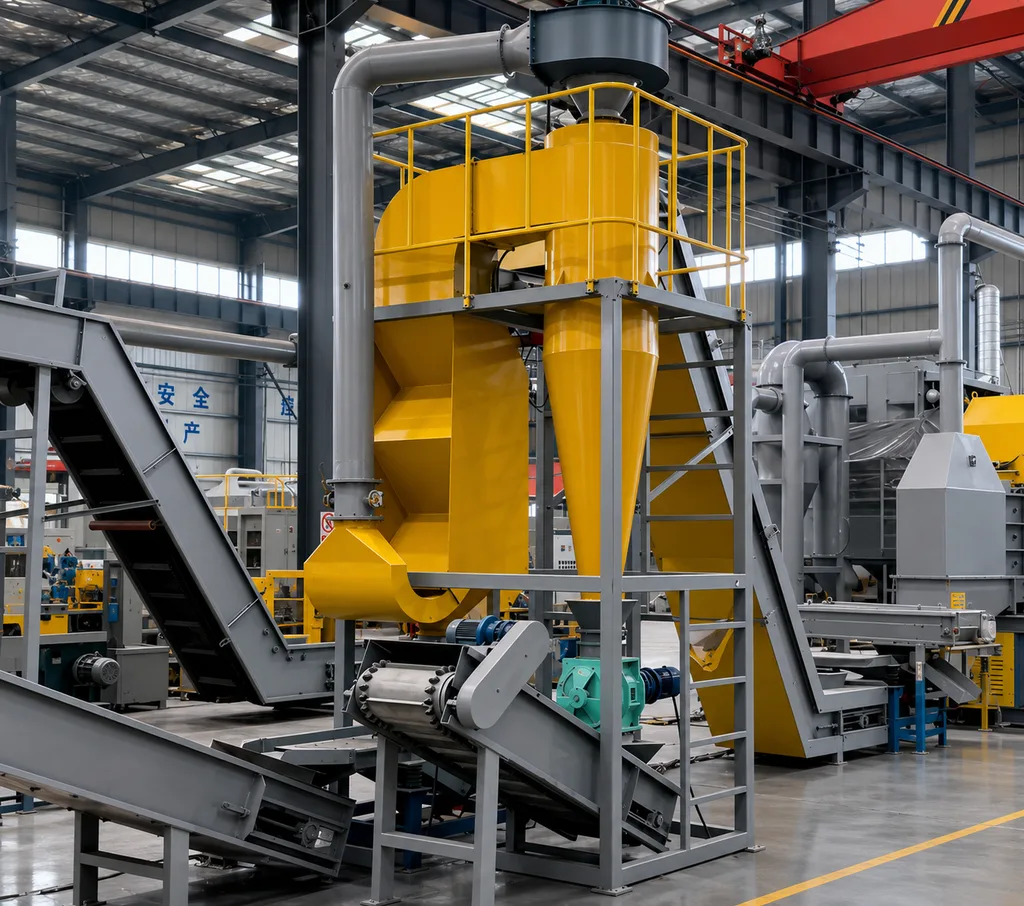
Which Appliances Can a WEEE Shredding & Dismantling Line Process? | Jushengding
Appliances are being replaced faster than ever, and recovery volumes of refrigerators, washing machines, air conditioners, televisions and computers climb year after year. Inside, these appliances are complex — steel, copper and aluminum, plastic housings, circuit boards, insulation foam and glass all mixed together. Manual dismantling is slow and metal sorting purity poor: valuable metal escapes with the plastic and residue, cutting straight into project margins. A fully automatic WEEE shredding and dismantling line — multi-stage shredding, fine crushing, multiple metal sorting and enclosed dust control in one process — recovers iron, copper, aluminum, plastics and foam as separately purified streams, each sellable on its own for full-fraction revenue. Jushengding builds standardized complete WEEE lines with the full range of coarse, intermediate and fine crushing, metal sorting and dust-control machinery — a one-stop answer to complex appliance dismantling and purification.
1. Appliance Feedstocks Suited to the WEEE Shredding Line
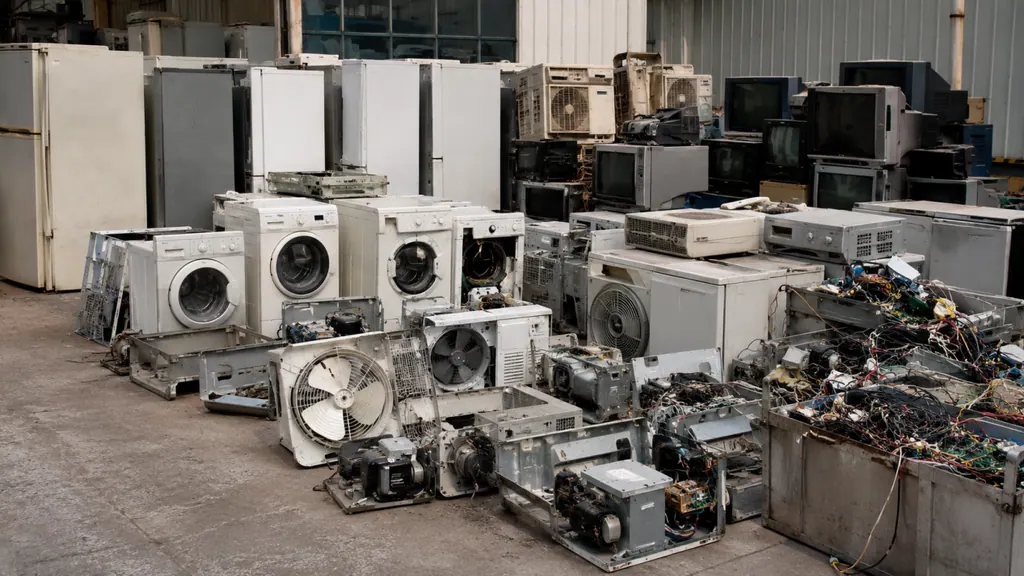
Jushengding's complete WEEE shredding equipment handles the full range of end-of-life consumer and commercial appliances, including complex feeds with metal frames, foam interlayers and composite plastic structures:
1. Large white goods
Scrapped refrigerators, freezers, drum and impeller washing machines, central air-conditioning outdoor units, floor-standing air conditioners, water heaters and range hoods — sheet-steel shells, copper tube, insulation foam, motor cores and plastic liners, with sticky foam that raises dust during shredding.
2. Brown goods and digital devices
Waste LCD televisions, old CRT sets, desktop towers, monitors, laptops, printers and copiers — aluminum-magnesium frames, copper busbars, circuit boards, plastic housings and glass substrates, with small non-ferrous parts scattered throughout.
3. Small household appliances
Waste microwaves, rice cookers, induction hobs, fans, air purifiers, water dispensers and vacuum cleaners — small, with jumbled components where copper and aluminum windings and small steel parts bond tightly to plastic.
4. Large commercial equipment
Scrapped commercial freezers, central air-conditioning units, industrial air compressors and dry-cleaning machines — thick steel shells, heavy copper tube and large cast-iron parts, hard and bulky, beyond ordinary equipment.
5. Mixed appliance residues
Mixed housings from dismantling, motor scrap, plastic-clad metal parts and appliance harnesses — multiple materials tangled and bonded, needing multi-stage liberation.
Appliances vary widely in steel thickness, foam content and copper/aluminum share. Jushengding matches multi-stage crushing combinations to the feed mix, avoiding jams, incomplete crushing and incomplete metal separation.
2. The Complete WEEE Line's Core Equipment in Detail
The full process: coarse shredding of whole units → secondary intermediate shredding → fine liberation in a vertical crusher → ferrous separation → copper/aluminum purification → line-wide dust collection. Six core machines run in automated concert:
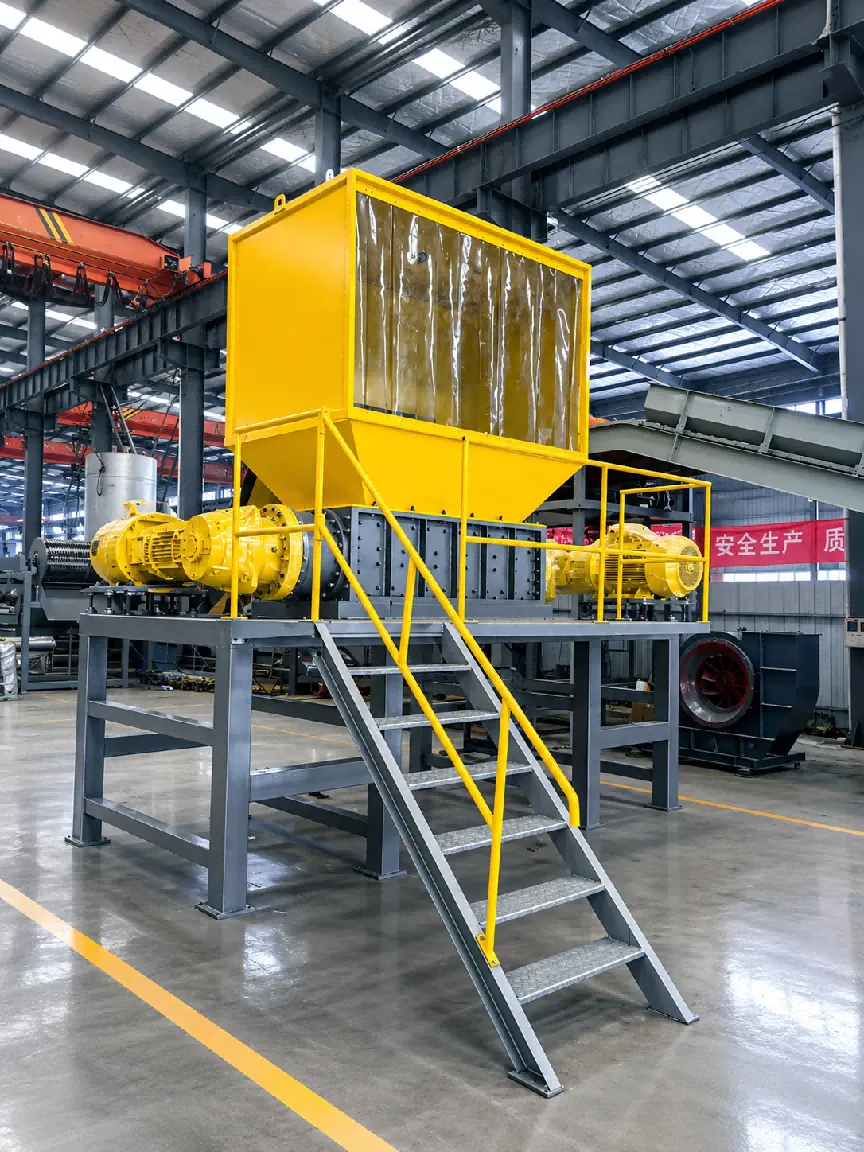
1. Double-Shaft Shredder (front-end coarse shredding)
The line's first pre-processing machine, using a low-speed, extra-high-torque twin-shaft shear structure to process whole refrigerators, washing machines and air-conditioner outdoor units. Core role: tears thick steel shells, insulation foam and complete frames apart in one pass, breaks up hard housings and caked foam, and cuts whole appliances into uniform large pieces — eliminating jamming risk and greatly easing the load on the single-shaft shredder and vertical crusher downstream. Thickened wear-resistant cutters withstand heavy sheet-steel impact through continuous heavy-appliance duty.
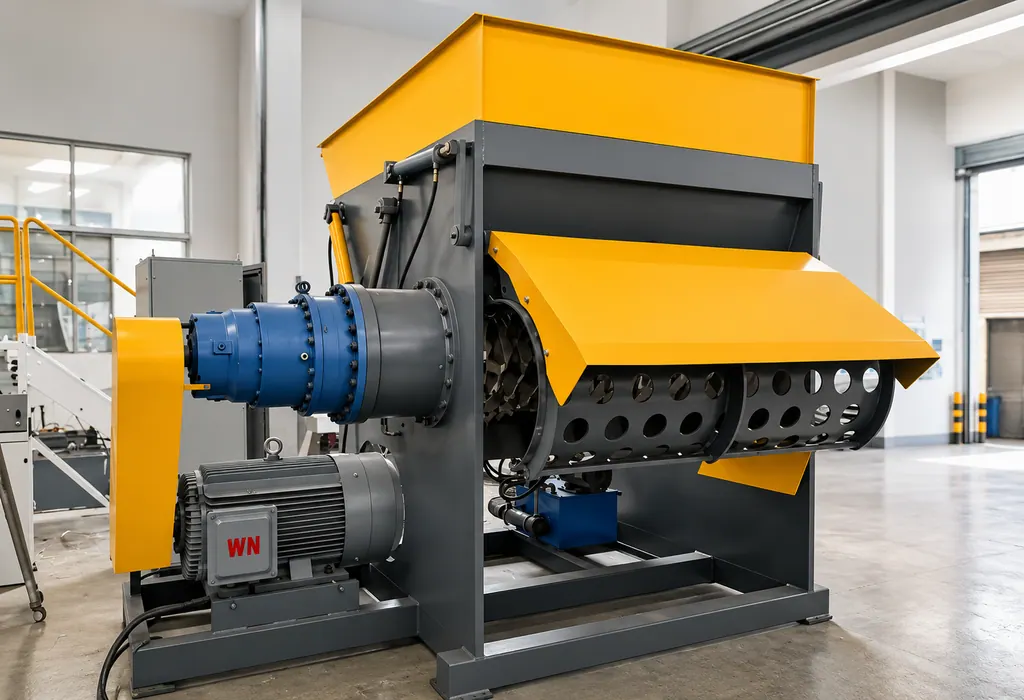
2. Single-Shaft Shredder (intermediate shredding)
Takes the large fragments from the double-shaft shredder for intermediate refinement, suited to thin-shelled, tangle-prone feeds such as televisions, computers and small appliances. It further breaks apart steel, plastic and foam composites so copper and aluminum tube, motor cores and plastic housings begin to separate, with uniform, controllable output size — the core intermediate machine for small and mid-sized dismantling plants, preparing ideal feed for the vertical crusher.
3. Vertical Crusher (fine liberation core)
The key fine-crushing machine for WEEE purification — and what distinguishes this line from ordinary shredding. Twice-shredded mixed material enters the vertical crusher, where high-speed impact and grinding fully liberate plastic, foam and glass from copper, aluminum and steel, breaking apart tightly bonded composite components. The output is fine and uniform with metal and non-metal completely separated, sharply raising metal recovery in the downstream magnetic and eddy current stages — solving the pain of stubborn appliance composites and valuable metal lost through entrainment.
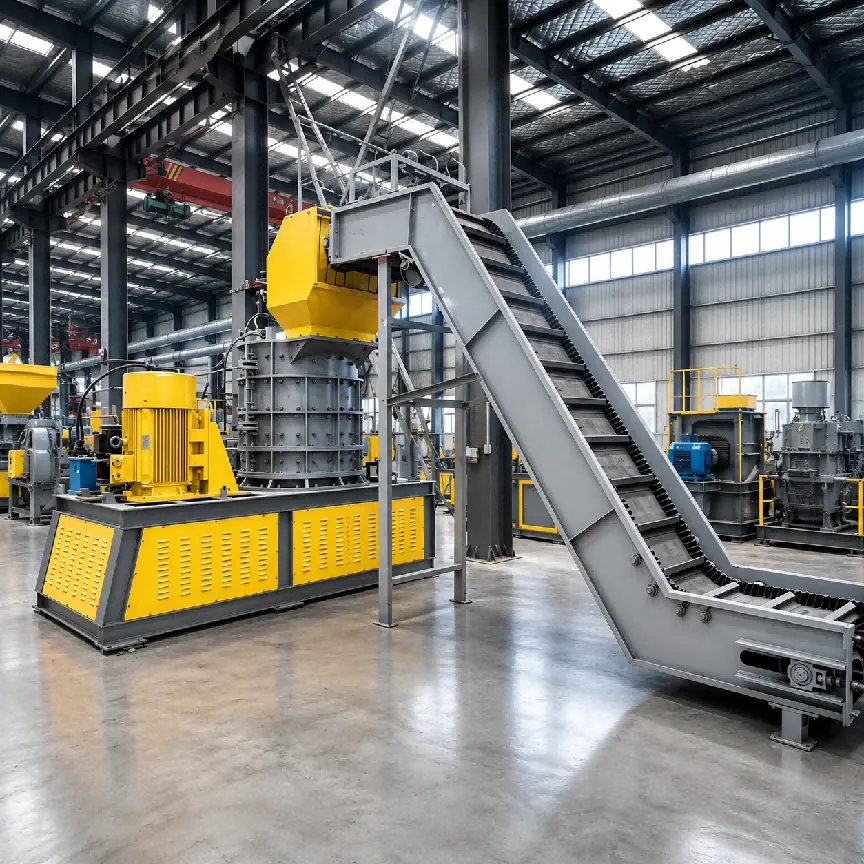
4. Magnetic Separator (ferrous separation)
Appliance shells, brackets and motor cores are mostly steel — and hard iron entering the vertical crusher wears hammers and liners quickly, keeping repair costs high. Mounted at the crusher discharge, the high-strength magnetic drum captures all ferrous metal automatically and discharges clean steel scrap. It protects the fine-crushing and sorting equipment downstream, while the recovered steel bales sell separately for steady added revenue.
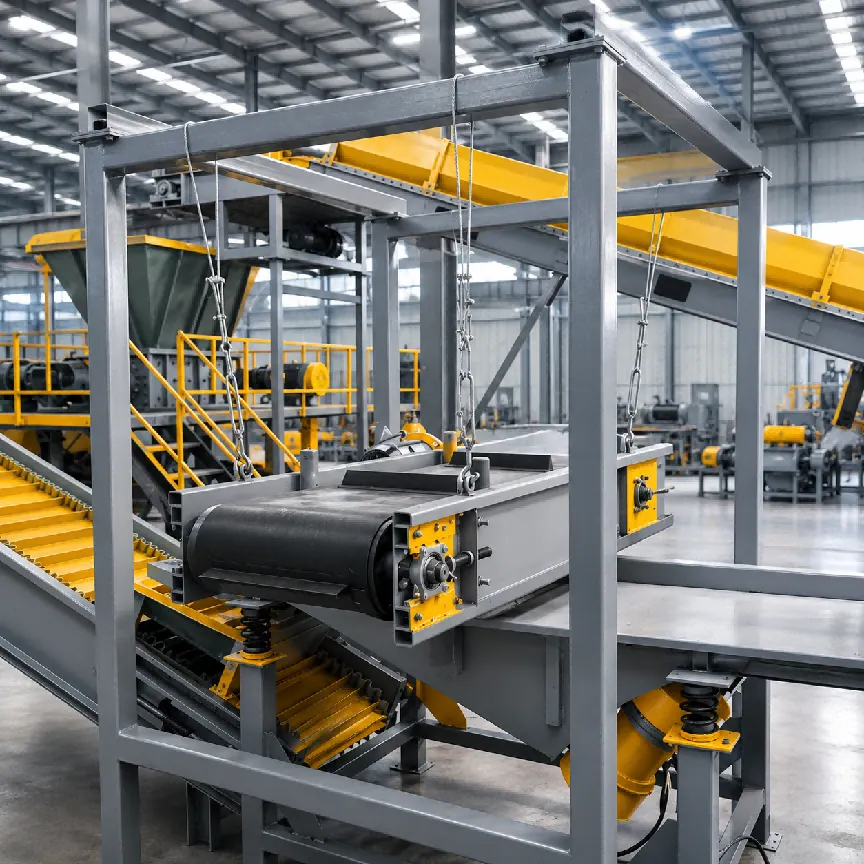
5. Eddy Current Separator (copper/aluminum purification)
Magnetic separation only removes iron — it cannot sort valuable non-ferrous metals such as copper, aluminum, magnesium and zinc. Using electromagnetic induction, the eddy current separator extracts copper tube, aluminum frames and metal windings precisely, splitting copper/aluminum granules cleanly away from plastic, foam and glass. A second deep-purification pass over the fine mixed material recovers non-ferrous metal to the fullest, directly lifting the whole line's revenue — standard high-value equipment at any industrial-scale WEEE base.
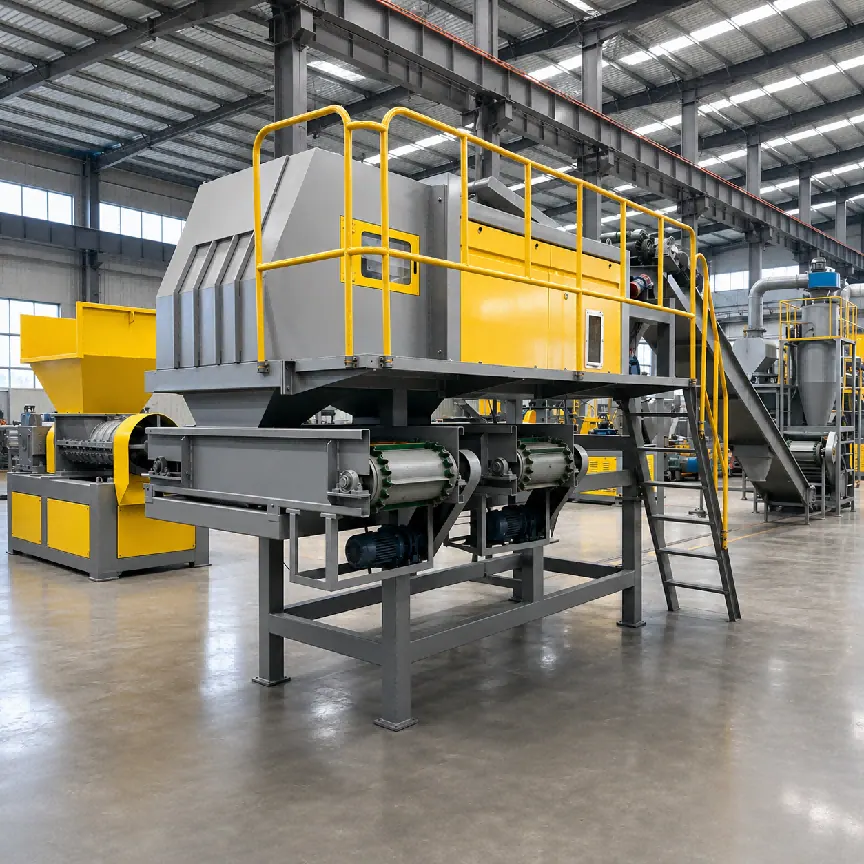
6. Pulse Dust Collector (line-wide dust control)
Shredding refrigerator foam, plastic housings and circuit boards raises fine dust and harmful fiber debris. Without enclosed dust control the workshop air fails inspection, and accumulated dust is a fire risk. The pulse dust collector encloses the whole crushing and sorting section under negative pressure with automatic pulse cleaning — dust is captured centrally with no spillover, meeting dismantling-industry emission standards, improving the working environment and avoiding shutdown orders.
3. Equipment Configurations for Different Appliance Feeds
- Light, thin feeds only (TVs, computers, small appliances): single-shaft shredder + vertical crusher + magnetic separator + eddy current separator + pulse dust collector.
- Comprehensive dismantling of heavy white goods (refrigerators, washing machines, air conditioners): the standard six-machine line — double-shaft coarse + single-shaft intermediate + vertical fine crushing + dual sorting + dust control.
- Small independent recyclers: single-shaft shredder + vertical crusher + pulse dust collector for basic crushing with dust control.
- Large standardized dismantling bases (mixed large and small appliances): the full line with automated conveying, running 24 hours for higher throughput and purer sorting.
4. Jushengding's Customization Advantages for WEEE Lines
WEEE profitability rests on high multi-metal recovery and selling each material stream separately. A lone crusher without multi-stage liberation and sorting leaves copper and aluminum trapped in the plastic residue, and returns shrink badly. Jushengding specializes in complete WEEE dismantling equipment with one-stop coverage of the whole process:
- Equipment combinations tailored to daily capacity, feed types, site footprint and local environmental requirements — no redundant machines, keeping plant investment controlled;
- Thickened, reinforced wear parts throughout, built for long high-intensity duty on steel sheet, foam and composites, with low failure rates;
- Dual magnetic + eddy current purification for high-purity iron, copper and aluminum that commands better buyer prices;
- A fully enclosed pulse dust-collection system across the process — compliant at first inspection, no later retrofit;
- One-stop delivery: plant layout design, on-site installation and commissioning, operator training, long-term wear-part supply and lifetime after-sales support.
If you are planning a WEEE recycling plant and need capacity assessment, a tailored crushing-and-sorting configuration or a metal-recovery revenue estimate, contact Jushengding anytime for a detailed process proposal and accurate quotation.