
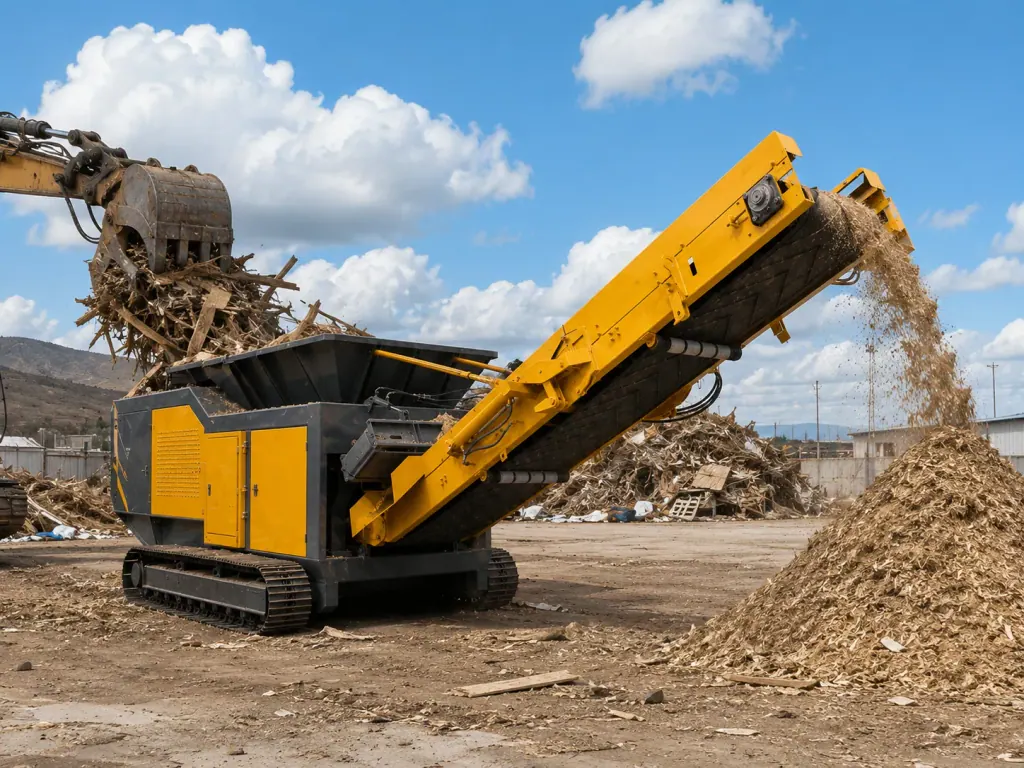
The Mobile Shredder features an integrated drive chassis and uses two sets of staggered alloy blades to shear and rip material. Positioned at the very front of the Waste Tire Granule Line, it shreds whole tires directly on site for immediate volume reduction.
Rubber deforms and rebounds heavily under stress, and it encases high-tensile steel wire. Selecting equipment requires looking beyond the motor nameplate rating in kW. The decisive factors are the impact force the rotor can withstand when blades engage steel wire, and whether the cutting clearance between the two shafts can firmly grip and sever the elastomer.
| Equipment | Capacity | Output Adjustment Range | Application Duty |
|---|---|---|---|
| Mobile Shredder | 20-80 t/h | 30-200 mm | Primary shredding and volume reduction at the head of a Waste Tire Granule Line |
1. Drivetrain and Shock Load Requirements for Highly Elastic Rubber
When a tire contacts the blades, it compresses and deforms first. The moment the cutting edges penetrate the sidewall and steel belt, severe reaction torque feeds back into the gearbox. If the drive system is built only to nominal torque ratings, teeth can chip on thick bead wire and the motor can stall out. The entire machine must incorporate a heavy-duty, shock-resistant gearbox paired with large-clearance heavy-duty bearings to absorb these alternating shock loads.
A dependable drive section proves itself by clearing steel wire jams automatically. The control cabinet must include current-overload monitoring and auto-reverse logic. When the cutter shafts meet hard resistance, they reverse immediately to discharge the obstruction, then rotate forward again to resume shredding. This prevents frequent plant stops and eliminates manual clearing with pry bars.
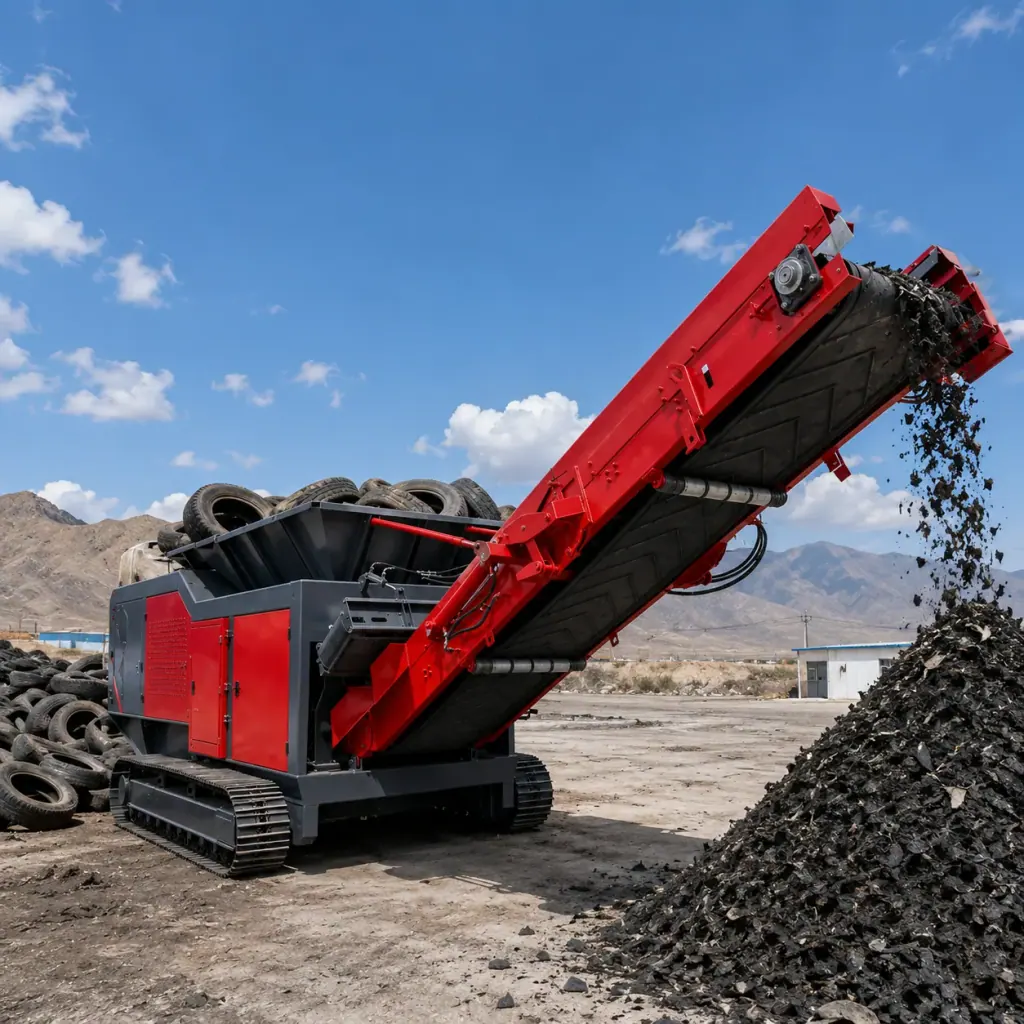
2. Stockyard Relocation and Continuous Feeding Chassis Selection
Most tire stockyards feature unpaved ground where scrap rubber mixes with mud. Tracked undercarriages have large ground contact areas and low ground pressure, allowing them to traverse soft mud and rutted ground directly between dispersed piles. Wheeled towable chassis travel easily on paved public roads, but repositioning and turning them once inside muddy yards is difficult.
Selecting the right chassis depends on the feeding method and how often the machine must relocate. If a material handler feeds from a fixed position and the unit shifts only once or twice a month, a wheeled chassis is more economical. If the shredder must track alongside a front-end loader along the stockpiles for continuous feeding, a tracked chassis is necessary.
3. Primary Shredding Rotor Geometry and Output Sizing Control
The primary shredder opens up whole tires, and its discharge piece size directly sets the intake rate of the secondary fine shredder downstream. Staggered alloy blades on two shafts tear whole tires into strips or chunks. Blade thickness and the number of integrated hooks determine the cross-sectional size of the sheared rubber blocks.
Primary shredder selection must align strictly with the maximum feed intake of downstream stages. The Mobile Shredder provides an adjustable output size from 30 to 200 mm and a processing capacity of 20-80 t/h. If material moves directly into a fine shredder or pulverizer, narrow the blade spacing to produce smaller cuts near the lower limit. If the objective is simply bulk size reduction for outbound transport, open the clearance to maximize hourly throughput.
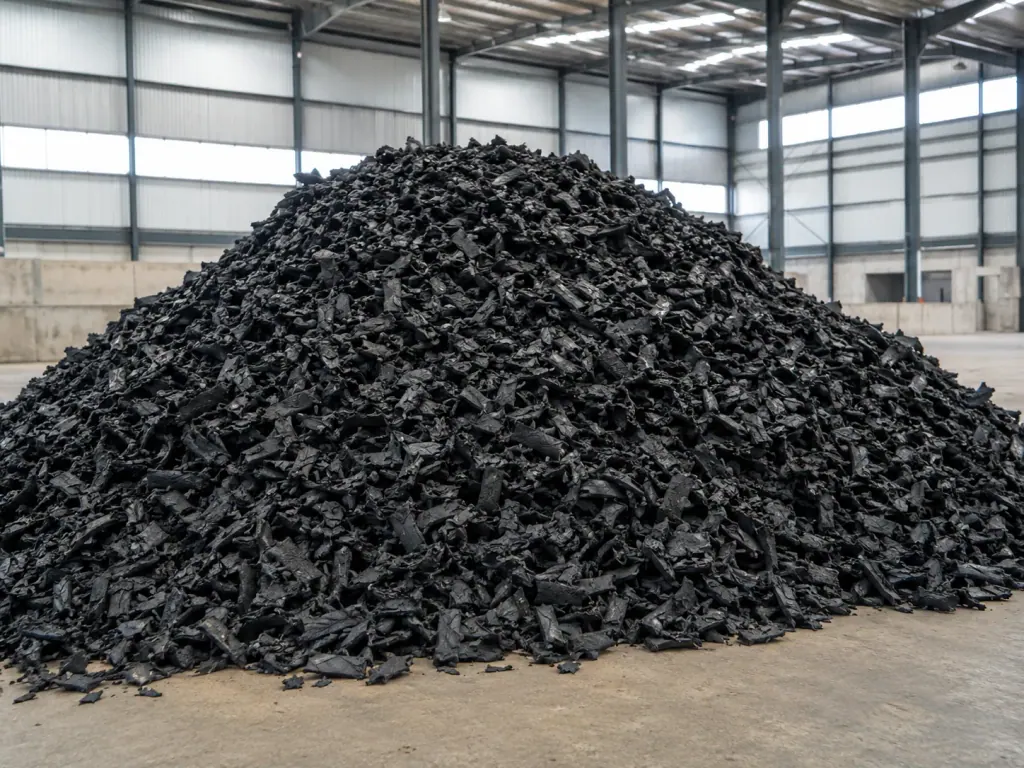
Machine in Action
FAQ
- Can the Mobile Shredder process whole truck and bus tires containing heavy steel wire directly?
- Yes. The unit uses low-speed, staggered alloy blades to rip and shear rubber. Paired with a heavy-duty, shock-resistant gearbox and heavy bearings, it cuts directly through thick tire bead wire.
- What are the main criteria when selecting a Mobile Shredder for a Waste Tire Granule Line?
- Key factors are throughput capacity and output sizing flexibility. The Mobile Shredder delivers a processing capacity of 20-80 t/h with output sizes adjustable between 30 and 200 mm, allowing precise feed matching for downstream fine shredding stages.
- Should a stockyard operation use a tracked or wheeled chassis?
- That depends on ground preparation and relocation frequency. For unpaved, muddy ground requiring continuous repositioning during feeding, choose a tracked chassis. For paved surfaces and stationary feeding stations, select a wheeled towable chassis.