
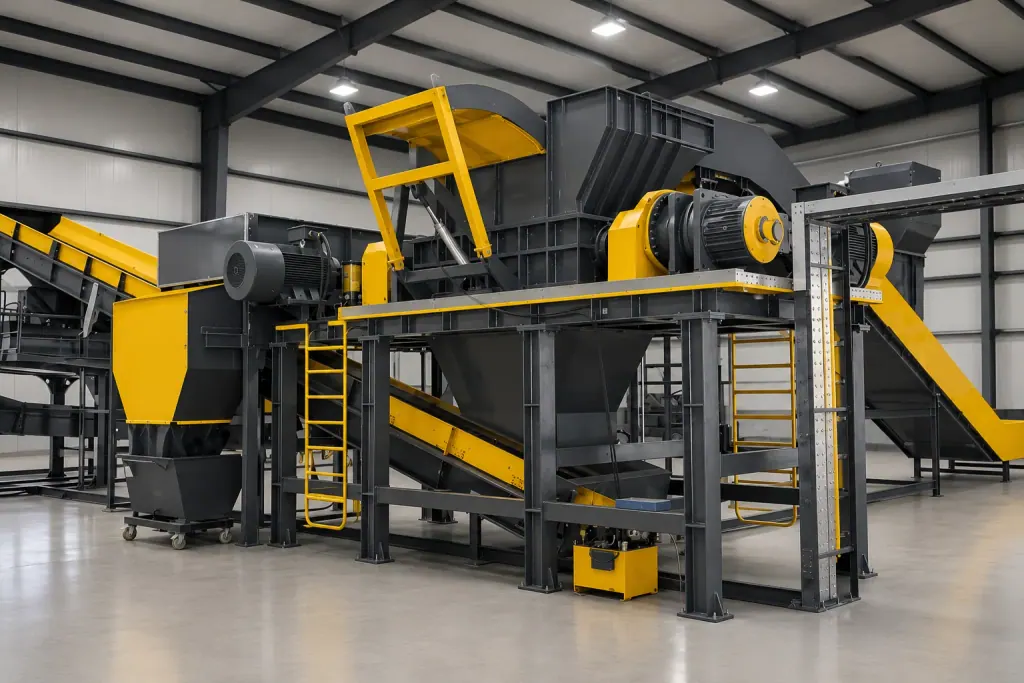
The Double-Shaft Shredder operates as primary coarse reduction equipment for ferrous metals. Interleaved alloy blades rotate at low speed and high torque to shear and tear feed material, reducing car bodies, industrial scrap steel, and mixed metals into fragments for downstream separation.
Selecting blade thickness and tooth profile depends on feed geometry and wall thickness. Processing sheet metal and heavy structural scrap with identical blades causes edge chipping or material slip. Factoring gearbox capacity and configuring current-based protection prevents repeat jamming under continuous operation.
| Equipment Type | Applicable Materials | Process Stage | Key Criteria |
|---|---|---|---|
| Double-Shaft Shredder | Car bodies, industrial scrap steel, bulky metal waste | Primary shredding | Wall thickness and ductility determine blade thickness and tooth profile; torque must absorb peak impacts |
| Vertical Crusher | Pre-shredded metal fragments, composite hardware scrap | Secondary fine crushing | Uses a vertical rotor for impact liberation, exposing mixed materials for downstream separation |
| Mobile Shredder | Demolition waste, end-of-life vehicles, industrial solid waste | On-site primary shredding | Discharge adjustable between 30-200mm, with jobsite mobility and heavy-duty tearing capability |
1. Feed Characteristics and Blade Matching Rules for Mixed Ferrous Metals
Processing high-surface-area thin materials such as automotive sheet and stamped panels requires thinner blades with multi-hook profiles. Dense shearing points bite into sheets and pull them down into the cutting chamber, preventing bouncing above the shafts. Processing heavy industrial scrap steel demands thicker blades with single or double hooks, concentrating shaft torque onto fewer teeth to prevent lateral breakage.
Blade selection depends on whether material deforms plastically or fractures under shear stress. Ductile thin-wall parts require multiple teeth to puncture and pull. Hard, thick-section steel requires concentrated downward force from single teeth to induce shear failure. An acute hook angle fails to grip thick stock, whereas an obtuse angle concentrates excessive stress at the tooth tip, resulting in chipping.
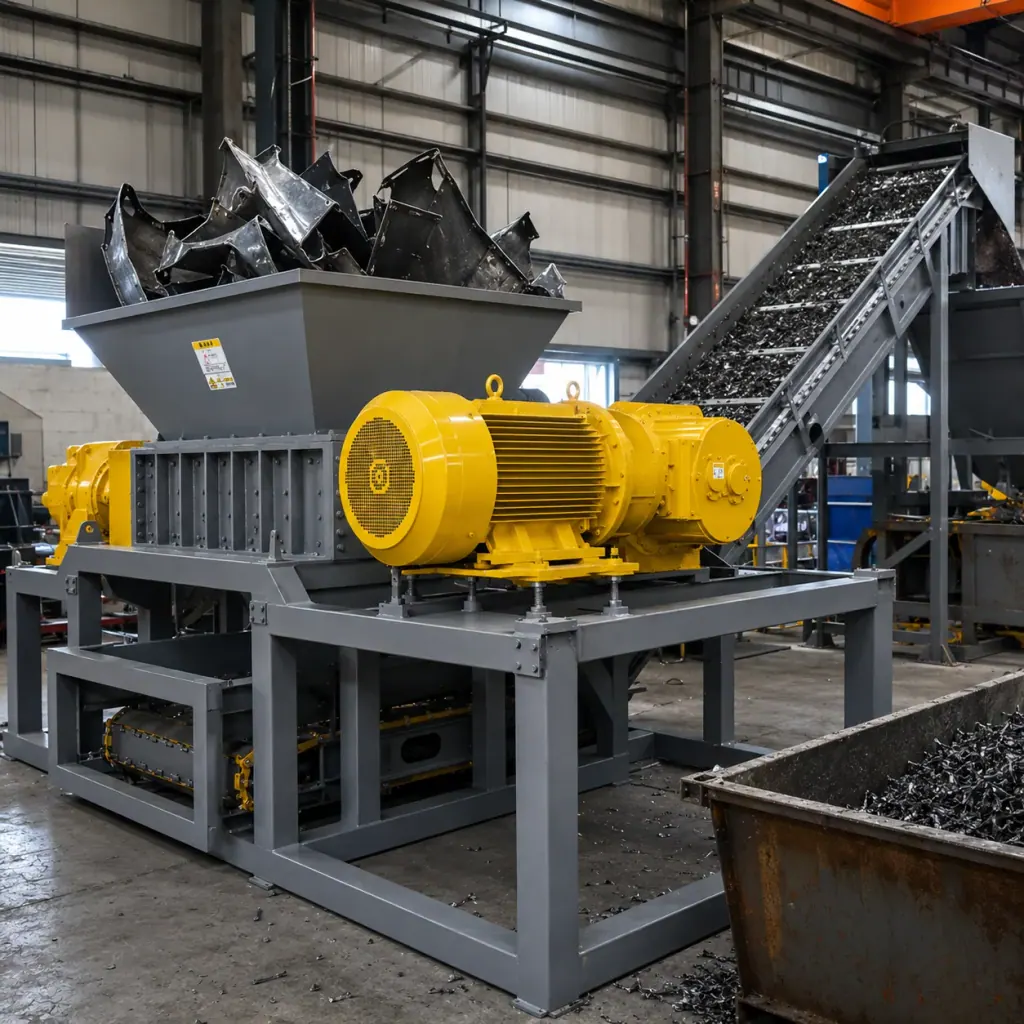
2. Shaft Drive Torque Sizing and Anti-Jam Auto-Reverse Controls for Heavy-Duty Applications
Crushing ferrous metal introduces alternating impact loads. Sizing drive components solely on rated motor power risks gearbox failure. Power calculations must take the peak transient torque required to sever the thickest single piece of scrap as the baseline, paired with reinforced gearboxes and heavy-duty bearings to cut through thick-walled sections at low speeds.
The electrical design relies on current monitoring and reversing response times. When oversized uncrushable material stalls the cutting chamber, sensors detect load spikes within milliseconds. The control logic stops the shafts and initiates reverse rotation to discharge the obstruction before re-engaging forward rotation, preventing mechanical damage to motors, gearboxes, and shafts.
3. Discharge Sizing Control and Wear-Resistant Rotor Maintenance Considerations
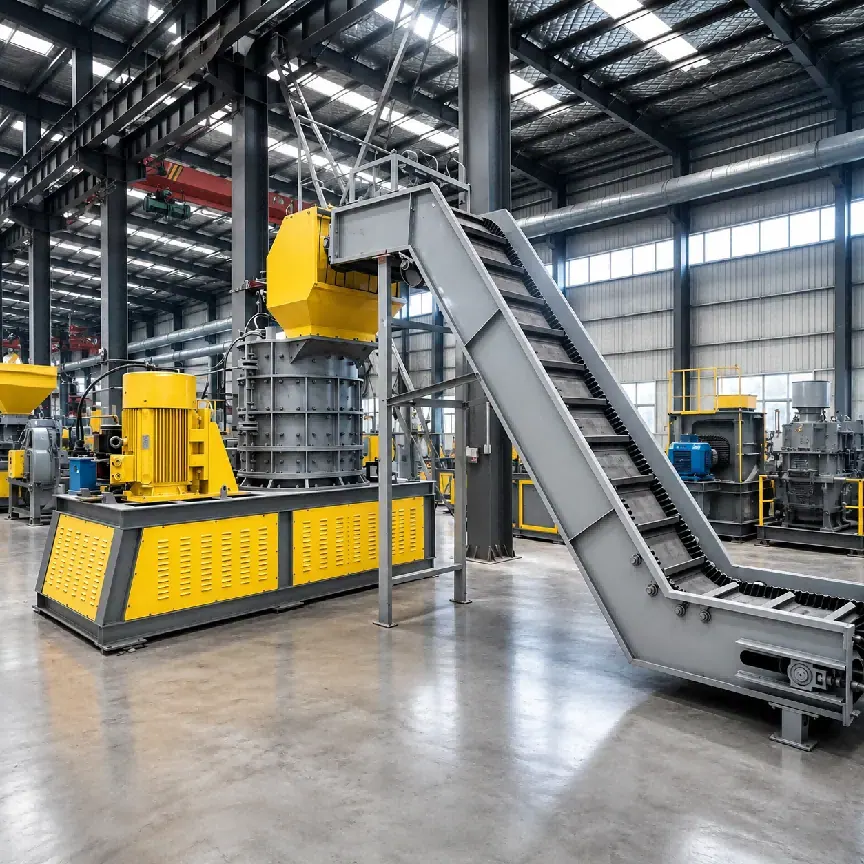
Double-shaft shredders do not use sizing screens. Shredded fragment width is set by blade thickness, and length is determined by hook count and speed differentials between shafts. Primary shredding cuts large items and breaks compacted bales. If downstream processes demand finer fractions, feeding output to a vertical crusher with 30% higher crushing efficiency than conventional units handles secondary reduction for magnetic separation.
Routine maintenance requires monitoring bearing seals and blade replacement intervals. Ferrous fines cause rapid bearing wear, requiring labyrinth seals on shaft ends to block metal dust. Drive shafts should feature whole-shaft lifting or modular mounting designs so blades can be replaced without stripping the frame and bearing housings, reducing downtime.
Machine in Action
FAQ
- In ferrous metal recycling, how do you decide between a Double-Shaft Shredder and a vertical crusher?
- A Double-Shaft Shredder operates at low speed and high torque, processing large volumes, medium plates, and baled scrap for initial shearing and volume reduction. A vertical crusher uses a vertical rotor to impact materials with 30% higher efficiency than conventional equipment, handling secondary liberation of pre-shredded scrap.
- What downstream separation equipment is used with a Double-Shaft Shredder?
- Shredded material passes under a magnetic separator to extract ferrous metals, followed by an eddy current separator to isolate non-ferrous fractions, reaching metal purity levels above 98%. If light fractions are present, positive/negative pressure air separators or optical sorters remove impurities.
- How does the equipment protect itself when uncrushable heavy objects cause a jam?
- The system monitors motor operating current continuously. When current draw exceeds the preset threshold, the control system halts forward rotation and runs the shafts in reverse to clear the blockage, protecting gearboxes and blades from mechanical shock.