
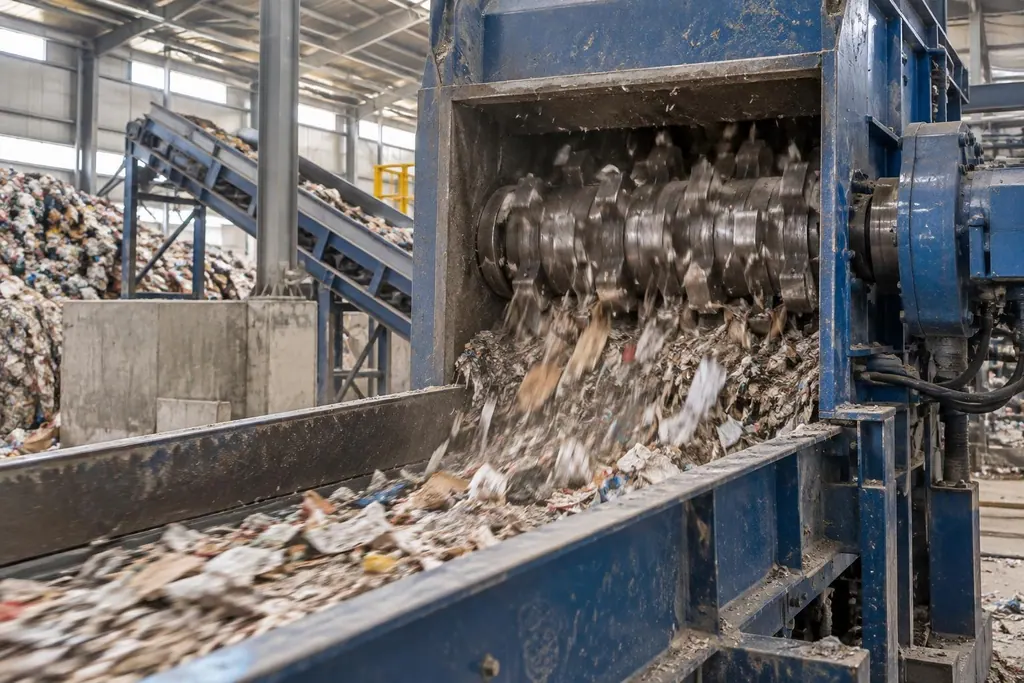
In scrap metal recycling operations, the proper selection of a Hammer Shredder and Magnetic Separator directly dictates the purification efficiency of secondary raw materials and overall plant operating costs. When processing complex scrap steel, car bodies, and industrial swarf, procurement managers must precisely match rotor load and separation flow sheets based on material hardness, feed dimensions, and downstream melting specifications.
A well-configured Ferrous Metal Shredding Line must not only deliver high wear resistance within the shredding chamber under continuous heavy impact, but also balance target discharge sizing with power consumption through upstream-downstream integration. Jushengding combines high-efficiency physical size reduction with precision magnetic separation via modular engineering and smart regulation systems, delivering stable conversion from bulky scrap into high-purity, clean metal.
1. Hammer Shredder Operating Principles and Critical Wear-Resistant Components
Featuring a high-torque rotor and proprietary alloy tools, the Hammer Shredder readily processes demanding feedstocks such as car bodies and industrial scrap steel through high-speed impact, compression, and shearing forces. An integrated intelligent monitoring system tracks operating loads in real time and automatically optimizes shredding parameters, driving up throughput by 30% while effectively curbing tool wear rates.
The shredded metal fragments feature uniform sizing, substantially increasing bulk density for seamless downstream sorting and beneficiation. This homogeneous output reduces melting energy consumption by 20% for end users such as steel mills, maximizing the commercial value of recycled metals.
2. Energy Consumption and Wear Control Across Diverse Scrap Metal Profiles
When handling mixed recycled feed streams composed of electronic scrap, industrial metal residues, and composite structural parts, shredding equipment must withstand relentless abrasion on hammers and wear liners caused by high-hardness metals. The system utilizes special composite wear-resistant materials paired with a modular configuration to process varied metal feedstocks with precision, safeguarding plant availability under extreme duty cycles.
Compared to primary mineral smelting, processing scrap steel using Jushengding metal recycling technology reduces energy consumption by more than 70%. Pairing advanced sensor-based sorting with energy-efficient shredding reduces power demand by 30% while achieving recovered metal purities of over 98%, helping recyclers eliminate valuable raw material losses.
3. Upstream-Downstream Magnetic Separator Integration for Ferrous Metal Shredding Lines
Throughout a complete Ferrous Metal Shredding Line, harmonizing processing cycles between upstream shredding and downstream sorting is vital. Material discharged from the Hammer Shredder is routed directly to high-gradient Magnetic Separators for dry extraction, selectively capturing ferrous fractions to achieve high-efficiency liberation between steel products and non-ferrous impurities.
The complete line supports flexible downstream sorting machine configurations tailored to specific material characteristics. Utilizing smart sensing technologies to monitor separation circuits in real time, the system automatically adapts operating parameters to fluctuating feed streams. The integrated circuit reduces power consumption by 15% while improving recovery yields and maintaining recovered metal purities above 98%, enabling standardized full-process recycling operations.