
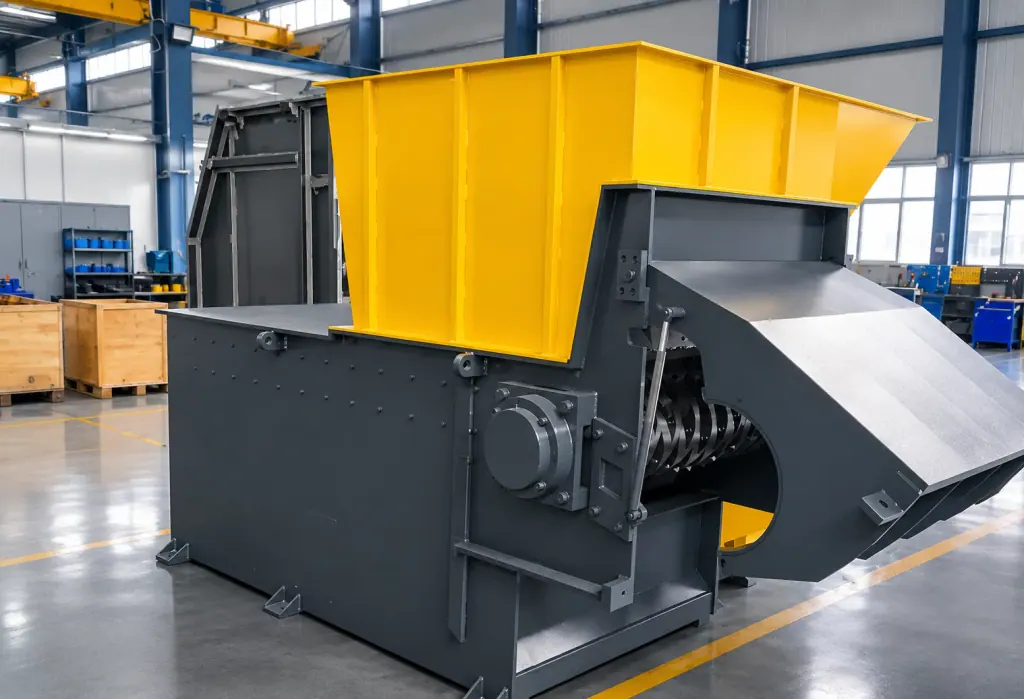
A Single-Shaft Shredder drives its rotor with an electric motor to shear material against a counter knife. This cuts coarse rubber shreds down to a set particle size, preparing the stock for subsequent fine milling and steel wire separation.
Many buyers choose a machine size based solely on the target mesh size of the final product. Tire rubber contains high-tensile cords and remaining bead wires, and the Single-Shaft Shredder handles intermediate liberation rather than final powder grinding.
Sizing requires evaluating the piece dimensions coming from the primary shredder, then matching the rotor cutting angle, knife density, and discharge screen aperture. An incorrect specification traps heat inside the cutting chamber, causing rubber to scorch and lowering cutting rates.
| Equipment Type | Target Material | Process Stage | Selection Criteria |
|---|---|---|---|
| Single-Shaft Shredder | Coarse tire rubber chunks | Pretreatment prior to fine crushing and granulation | Match screen aperture to downstream feed limits; link hydraulic ram pressure to main shaft drive current |
| Double-Shaft Shredder | Whole tires and bulky industrial solid waste | Primary coarse shredding | Select blade thickness based on feed profile and wire thickness; low-speed, high-torque shearing |
Function and Infeed Requirements for the Single-Shaft Shredder in Tire Rubber Secondary Sizing
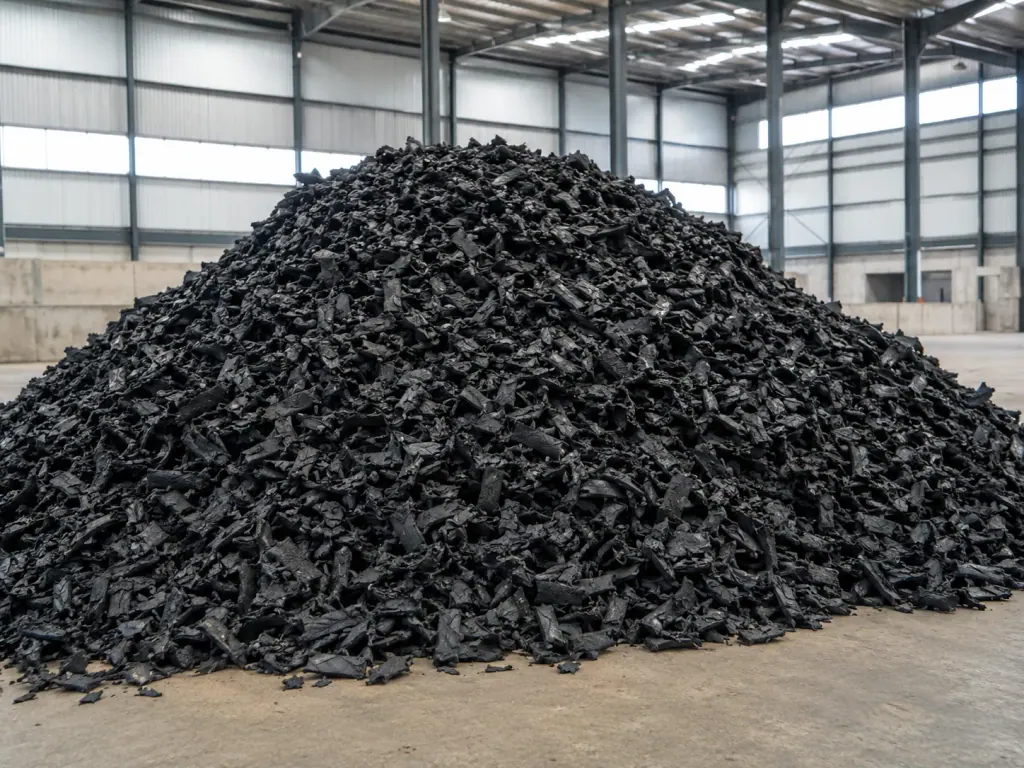
Primary shredders produce irregular rubber chunks. Feeding these oversized pieces directly into a fine granulator subjects the cutting tools to uneven loads and trips the main motor on overload.
The primary role of the single-shaft unit is reducing the size of coarse rubber chunks. As the cutting edges shear the feed, they break the bond between the rubber and cord fabrics, exposing remaining fine steel wires under the cutting impact.
Infeed dimensions determine the required chamber opening and shaft torque. If primary discharge contains unpulled thick bead wires, operators must install upstream sorting or restrict feed dimensions to prevent uncrushable tramp metals from jamming the gap between the rotor and counter knife. When infeed chunks vary widely in size and contain higher contamination levels, specify a larger chamber opening to provide adequate surge capacity.
Wear-Resistant Rotor Knives and Rotor Geometry in Tire Granulation Pretreatment
When cutting tire rubber, rotor knives experience cyclic shearing and abrasive wear. Standard flat knives tend to slip against resilient rubber, so operations typically fit square or polygonal indexable inserts with concave cutting faces.
A dense helical knife pattern handles rubber cutting better than an aligned straight-row layout. Staggering the knives along a helix distributes cutting resistance across the shaft circumference, preventing repeated torque peaks during rotation and smoothing loads on the gearbox.
Hardfacing the knife holder seats protects them against abrasion from steel wires. Once a cutting edge dulls, operators index the insert to expose a fresh edge, eliminating downtime for complete knife changes. For rubber stock containing fabric cords, select a dense helical rotor with concave inserts to maintain positive grip and stop rubber from bouncing inside the chamber.
Curved Screen Aperture Selection and Hydraulic Pusher Ram Parameter Matching
The curved screen at the bottom of the chamber dictates both residence time and discharge size. If screen openings are too small, rubber chunks rub and heat up inside the chamber, causing softened rubber to blind the holes and driving up electrical consumption.
Screen aperture sizing must align with the maximum intake size of downstream secondary reduction machines. If the subsequent step is fine granulation or milling, set the screen aperture to the largest intake threshold that the downstream unit can process reliably, keeping energy consumption within the single-shaft machine to a minimum.
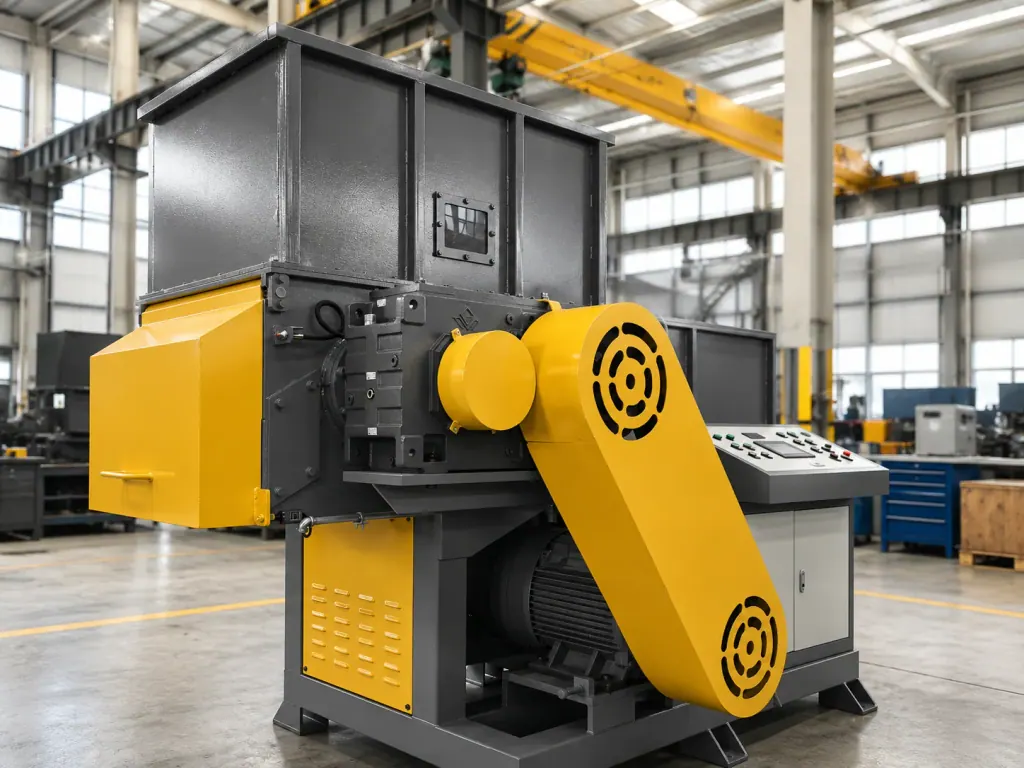
The hydraulic pusher ram forces floating, lightweight rubber chunks into the rotor. Ram operating pressure must tie directly to main shaft motor current: when the drive load nears rated current, the control system slows or retracts the ram to prevent material from bridging and packing over the rotor. When downstream processes tolerate wider particle variations, fitting a larger screen and lowering ram hold pressure avoids excessive material heating.
Machine in Action
FAQ
- Can a Single-Shaft Shredder process whole tires directly on a Waste Tire Granule Line?
- No. Single-Shaft Shredders require pre-shredded rubber chunks. Whole tires have excessive volume and concentrated bead wires, which will jam the pusher ram and chip or fracture the cutting knives.
- When should the rotor knives on a Single-Shaft Shredder be indexed or replaced?
- Excessive fraying on discharged particles, longer wire carry-over, and a sluggish drop in motor current at idle indicate dull edges. Stop the machine, check the cutting clearance, loosen the retaining bolts, and rotate the square inserts 90 degrees to engage a fresh cutting edge.
- What causes curved screens to blind?
- Screen blinding happens when openings are too small or the rubber chunks contain excessive fiber, causing friction and heat to soften the material inside the chamber until it smears across the screen. Installing the next larger screen size or reducing pusher ram cycle frequency drops the chamber temperature and clears the blockage.