
What Can a Disc-Type Soil-Stone Separation Line Process, and What Equipment Does It Include? | Jushengding
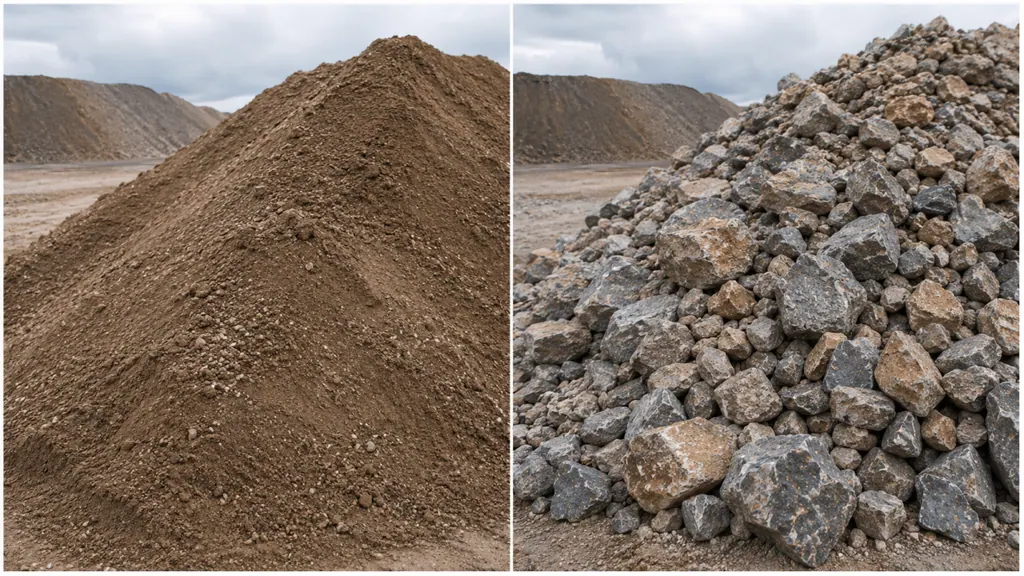
Infrastructure excavation, quarrying, demolition and river dredging all generate large volumes of mixed solid waste — soil, clay, stone and sand blended together. Because the soil is sticky and cakes when wet, conventional trommels and vibrating screens blind quickly: soil and stone never separate properly, clean aggregate yield stays low, and resources go to waste. The disc-type soil-stone separation line works on a rolling-disc screening principle, stripping clay, silt and humus from the feed efficiently and delivering clean stone and aggregate. The cleaned stone can go straight to batching plants and crushing yards for sale, while the separated soil can be used for backfill or brickmaking — two revenue streams from one waste stream. Jushengding's standardized separation line, built around a chain plate feeder and disc-type soil-stone separator, suits all kinds of high-clay solid waste screening and puts an end to screen blinding.
1. Feedstocks Suited to the Disc-Type Separation Line
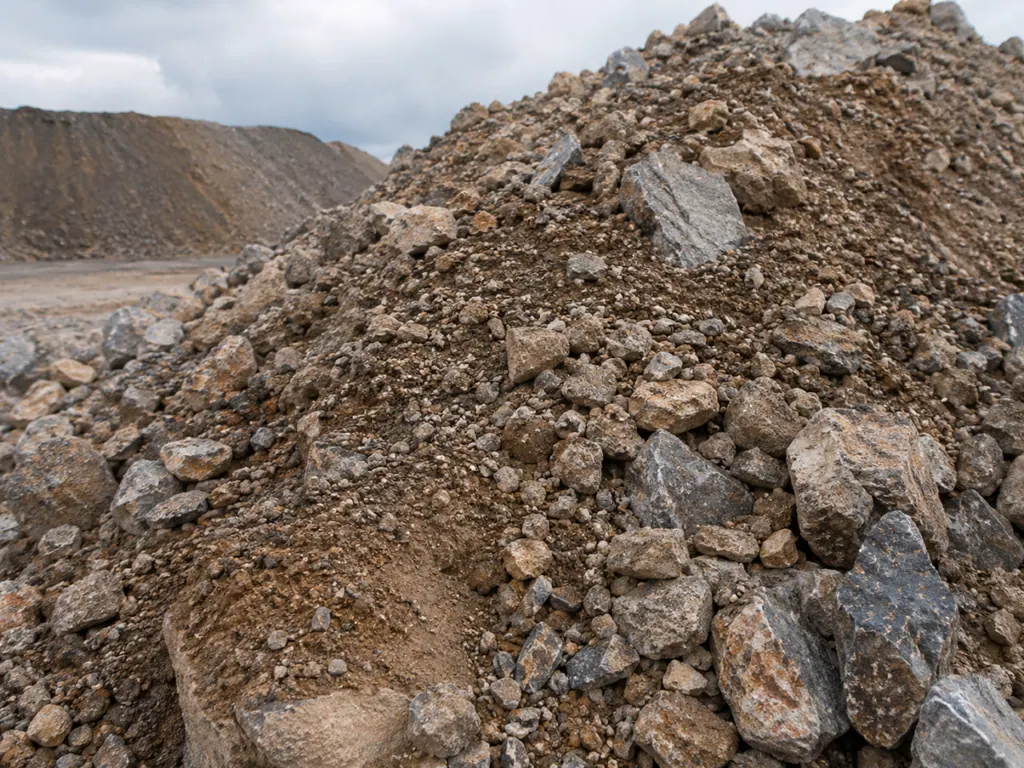
Jushengding's disc-type separation equipment is designed for high-clay, high-stickiness mixed solid waste, covering feeds from mining, infrastructure, demolition and river works:
1. Clay-bearing run-of-mine ore
Weathered surface ore from open pits, clay-wrapped rock, mountain-skin soil mixed with stone, and iron ore or limestone raw feed with clay — large rock mixed with caked clay that conventional screens cannot clean.
2. Demolition waste and spoil
Mixed demolition soil, muddy crushed concrete and brick-concrete rubble, where caked soil clings to the aggregate and drags down recycled-aggregate quality.
3. Excavation silt and stone from foundation works
Road-project foundation soil, tunneling muck and site excavation mixes — high moisture, strongly cohesive clay that clings readily to screen mesh.
4. River dredging silt and hillside humus
Dredged silt mixed with cobbles, hillside humus with stone fragments, and muddy field-surface rock — fine soil deeply blended with stone of all sizes.
5. Other clay-bearing solid waste
Muddy coal gangue, shale-mine mixed soil and clay-bearing tailings sand — all can be separated quickly into soil and hard aggregate.
Feedstocks differ in clay moisture, caking hardness and stone size. Jushengding adjusts disc spacing and rotating speed to the site material and customizes the model accordingly, sustaining high throughput without blockage.
2. The Complete Line's Core Equipment in Detail
The basic process: even, metered feeding → rolling-disc layered de-soiling and screening. Two core machines work in concert, each with a clear role:
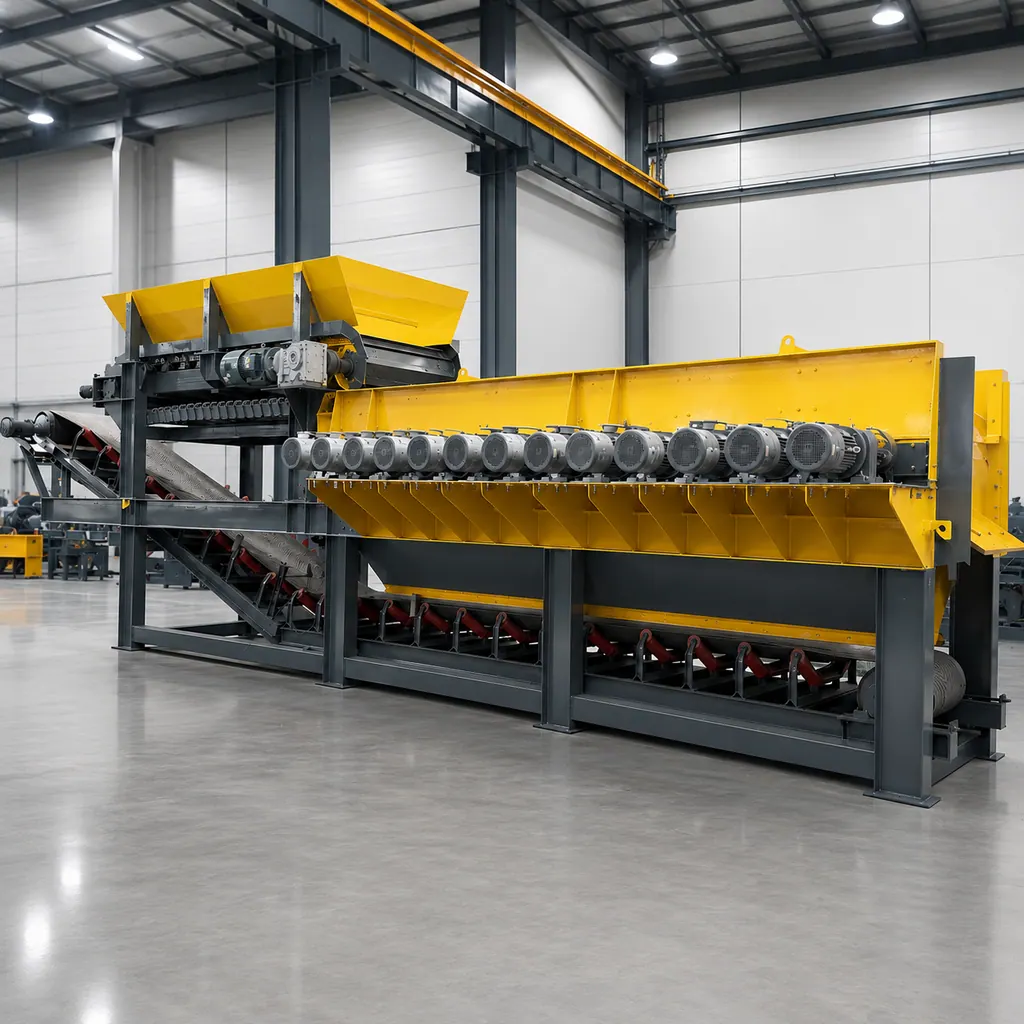
1. Chain Plate Feeder (front-end metered feeding)
The first machine on the line, designed for wet, sticky, lumpy clay-bearing feed where an ordinary belt conveyor falls short.
- Core function: receives lumpy, caked spoil and rock tipped in by loaders and delivers it continuously, evenly and at a metered rate on wear-resistant chain plates — preventing surges that would block or overload the separator.
- Advantages: impact- and wear-resistant plates unaffected by wet clay, with variable-frequency speed control that matches feed rate to the separator's load, keeping line throughput stable.
- Value in the line: buffers the impact of large lumps, protects the separator's disc assemblies, extends wear-part life and cuts routine maintenance costs.
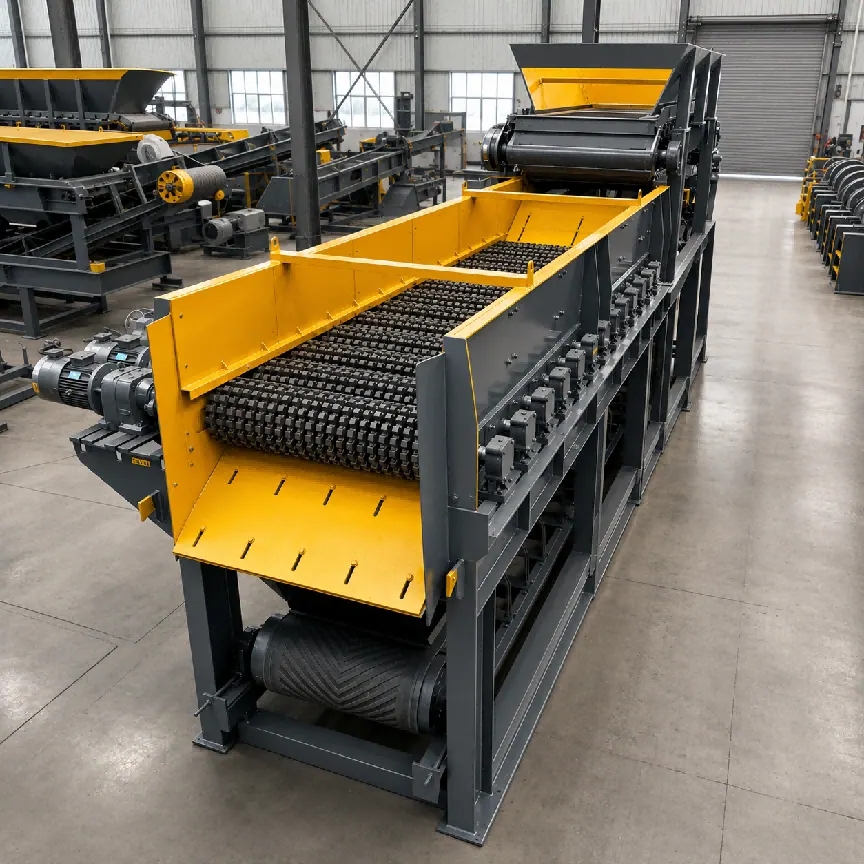
2. Disc-Type Soil-Stone Separator (the line's core screening machine)
The heart of the de-soiling process — and what sets this line apart from ordinary screens — built from multiple sets of staggered rotating discs.
- Screening principle: shafts drive wear-resistant discs in synchronized rotation; sticky clay, silt and fine soil drop through the disc gaps while stone, concrete aggregate and large ore ride forward along the discs. The discs scrape each other clean as they turn, so clay cannot cake into the gaps.
- Suitability: unafraid of wet mud, high-stickiness clay or caked feed — solving the blinding that plagues vibrating screens and trommels. Discs with different spacing can be fitted to control the separated particle size to the customer's aggregate requirements.
- Revenue value: the cleaned aggregate is high in purity and sells for far more than muddy mixed material, while the separated soil can be hauled for backfill or made into unfired brick — two material streams turned into income, lifting overall project returns.
3. Equipment Configurations for Different Site Conditions
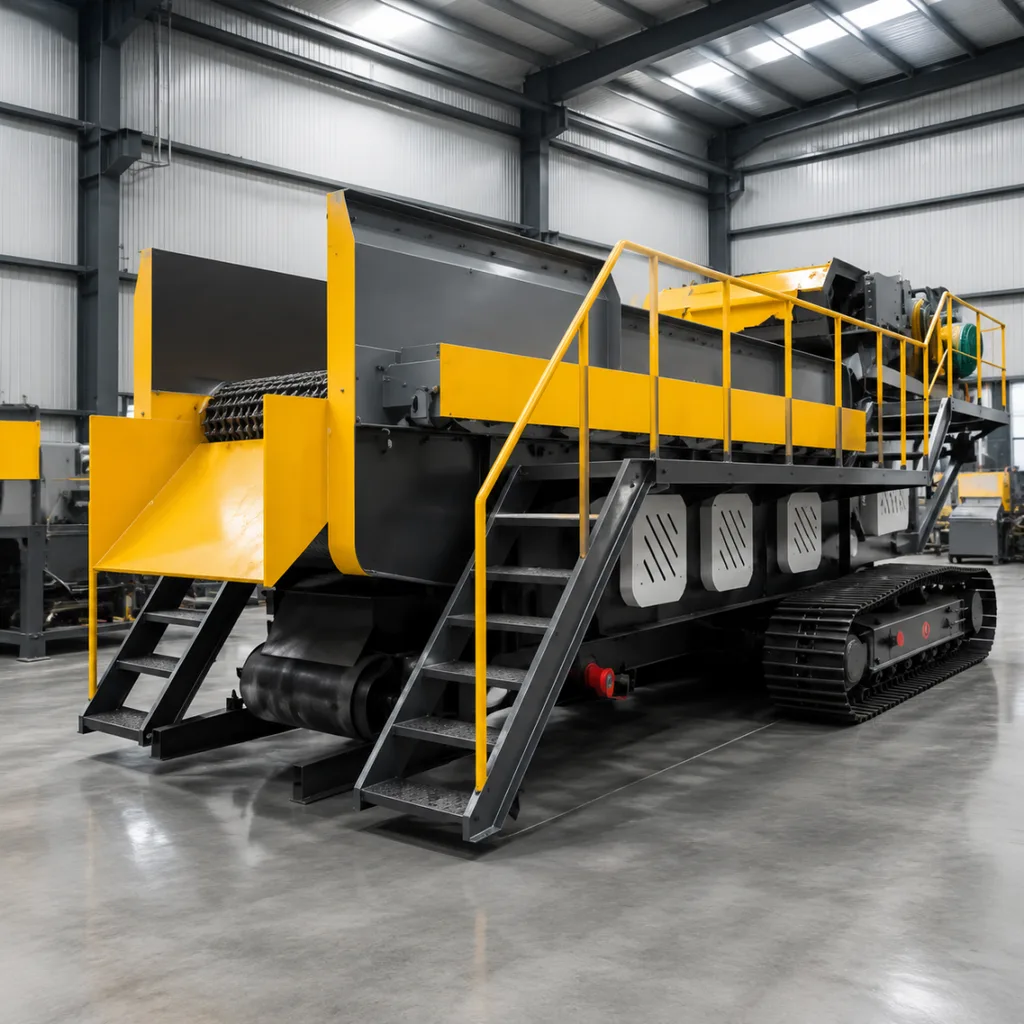
- Small sites and independent aggregate producers: the basic "chain plate feeder + disc separator" line — single-machine screening, low investment, small footprint.
- Large mines and industrial-scale demolition waste plants: chain plate feeder + multiple disc separators, optionally paired with downstream crushers and conveyors to form a complete aggregate processing line.
- High-moisture river silt and tunneling muck: widened, extended feeder and separator to raise wet-material throughput and reduce sticky holdup.
4. Jushengding's Customization Advantages for Complete Separation Lines
The biggest pain points in clay-bearing waste projects are screen blockage, low throughput and contaminated aggregate. A lone screening machine without a matched feeder invites uneven feeding and overload failures. Jushengding specializes in de-soiling and screening equipment, and its standardized feeder-plus-separator sets offer:
- Equipment width, length and disc spacing customized to demand — from tens to hundreds of tonnes per hour — so no investment is wasted;
- Reinforced, thickened wear parts throughout, built for rock impact and continuous operation on wet clay, with low failure rates;
- One-stop service covering site survey, line layout planning, on-site installation and commissioning, and operator training;
- Self-cleaning discs that eliminate frequent shutdowns for screen cleaning, substantially extending daily productive hours and overall project output.
If you are processing run-of-mine feed, construction spoil or demolition waste and need a disc-type soil-stone separation line, contact Jushengding anytime for equipment selection, capacity assessment and an accurate quotation.